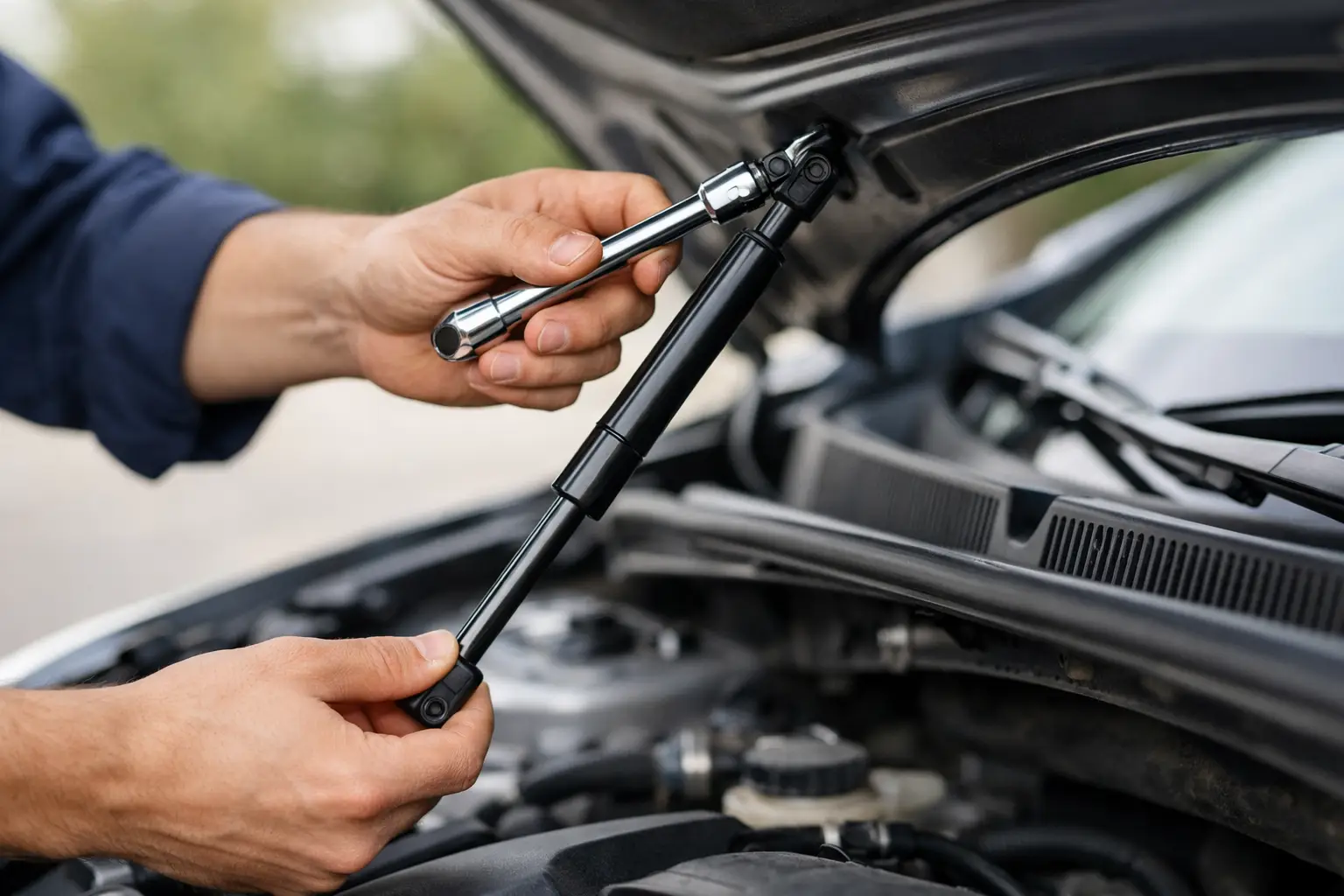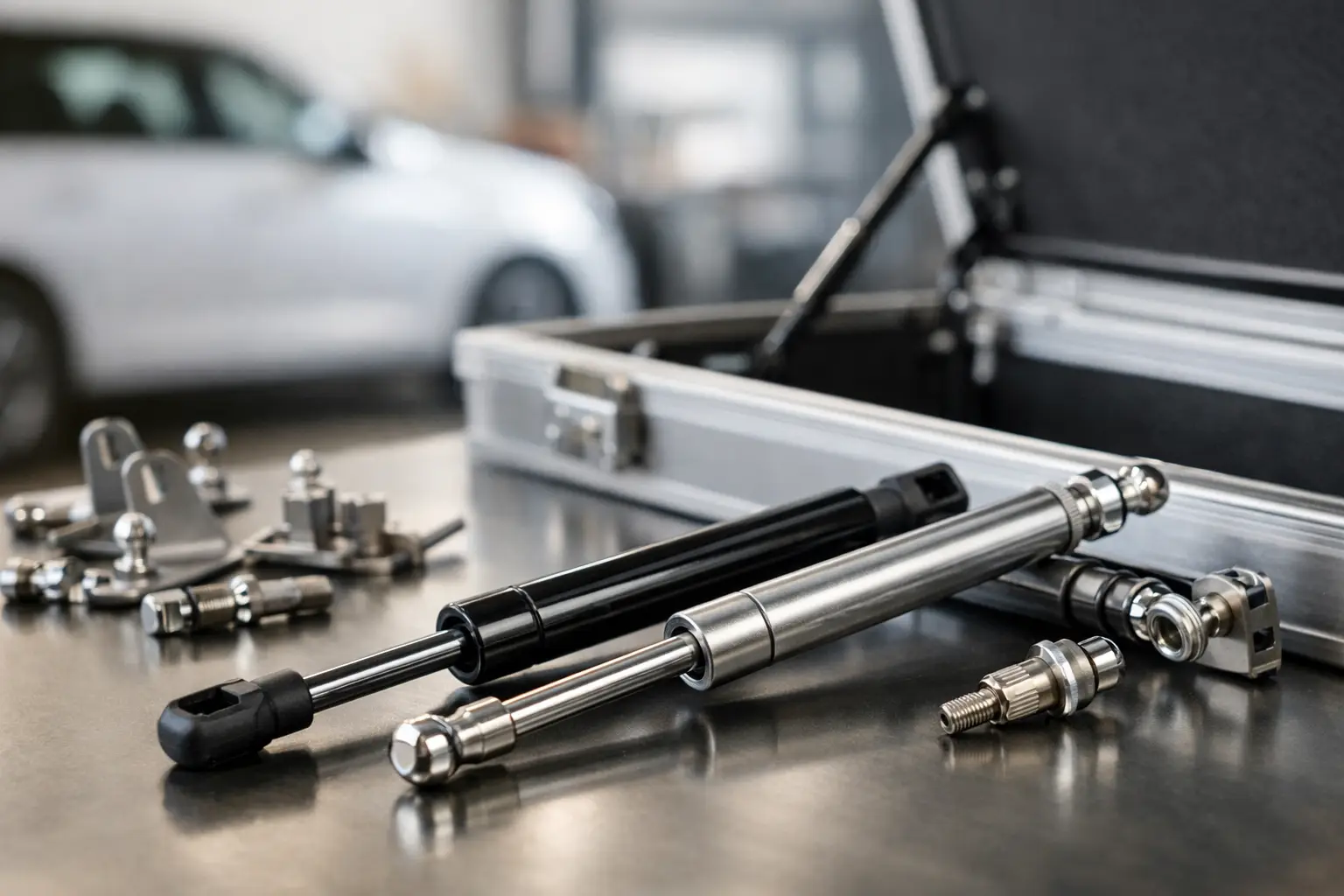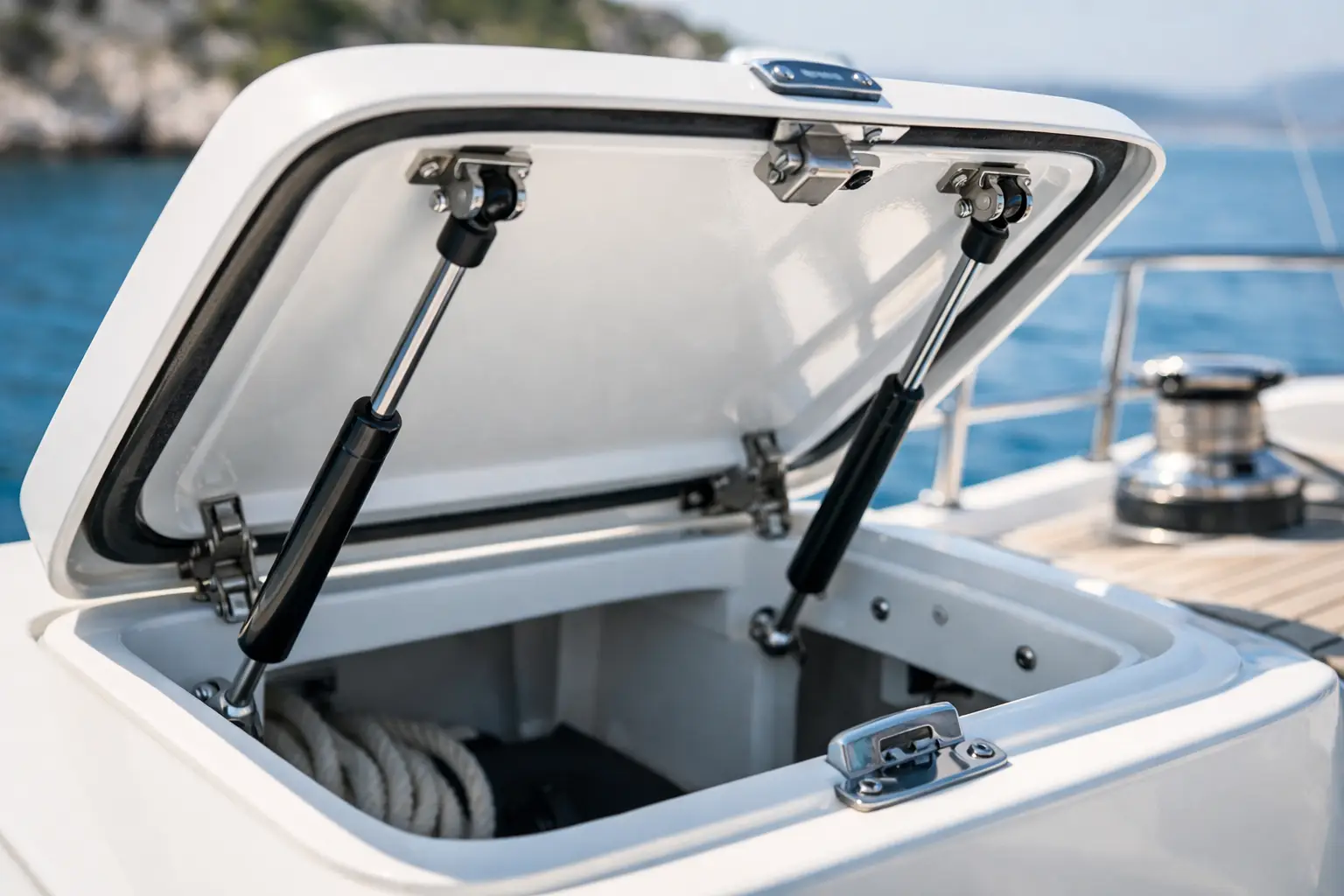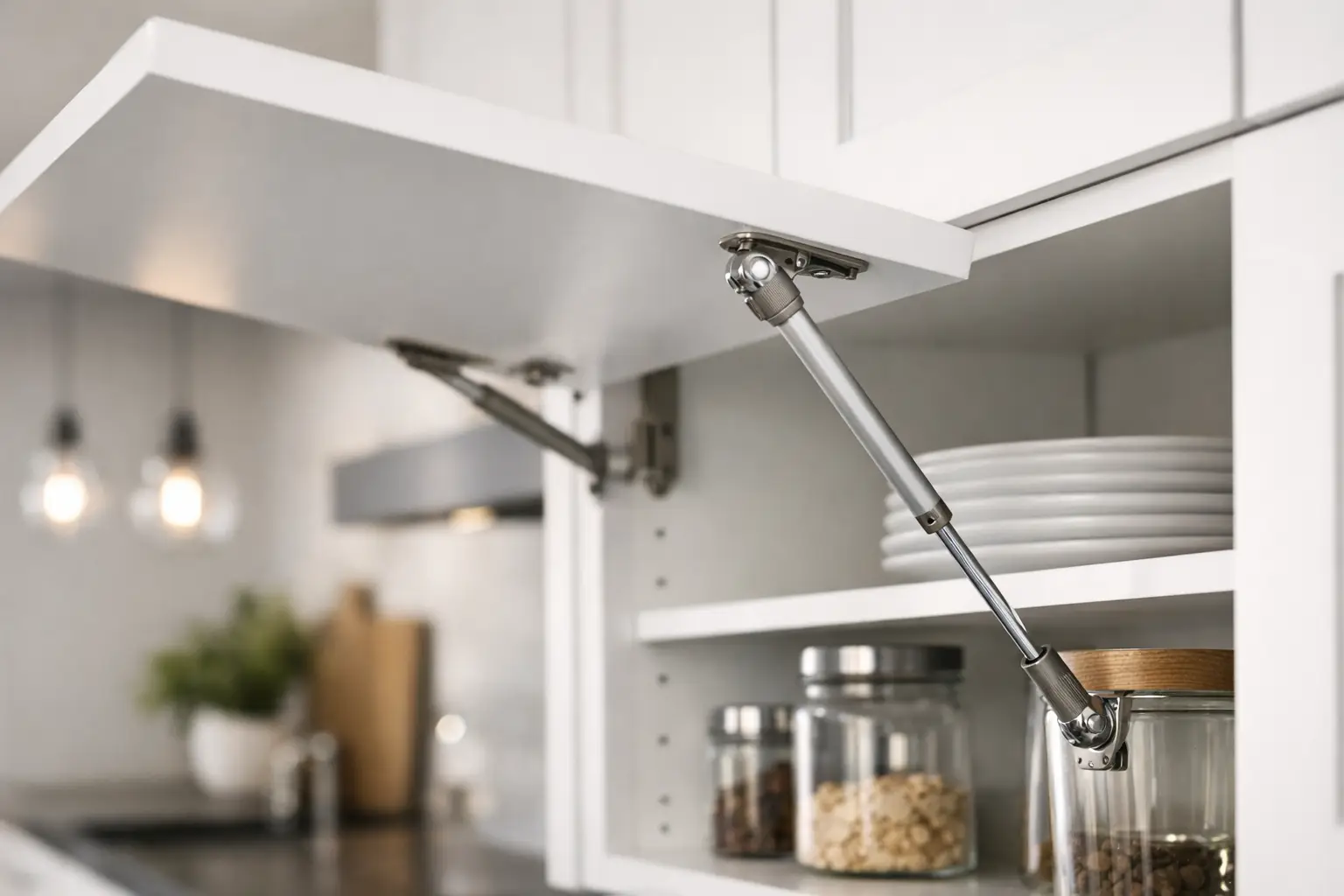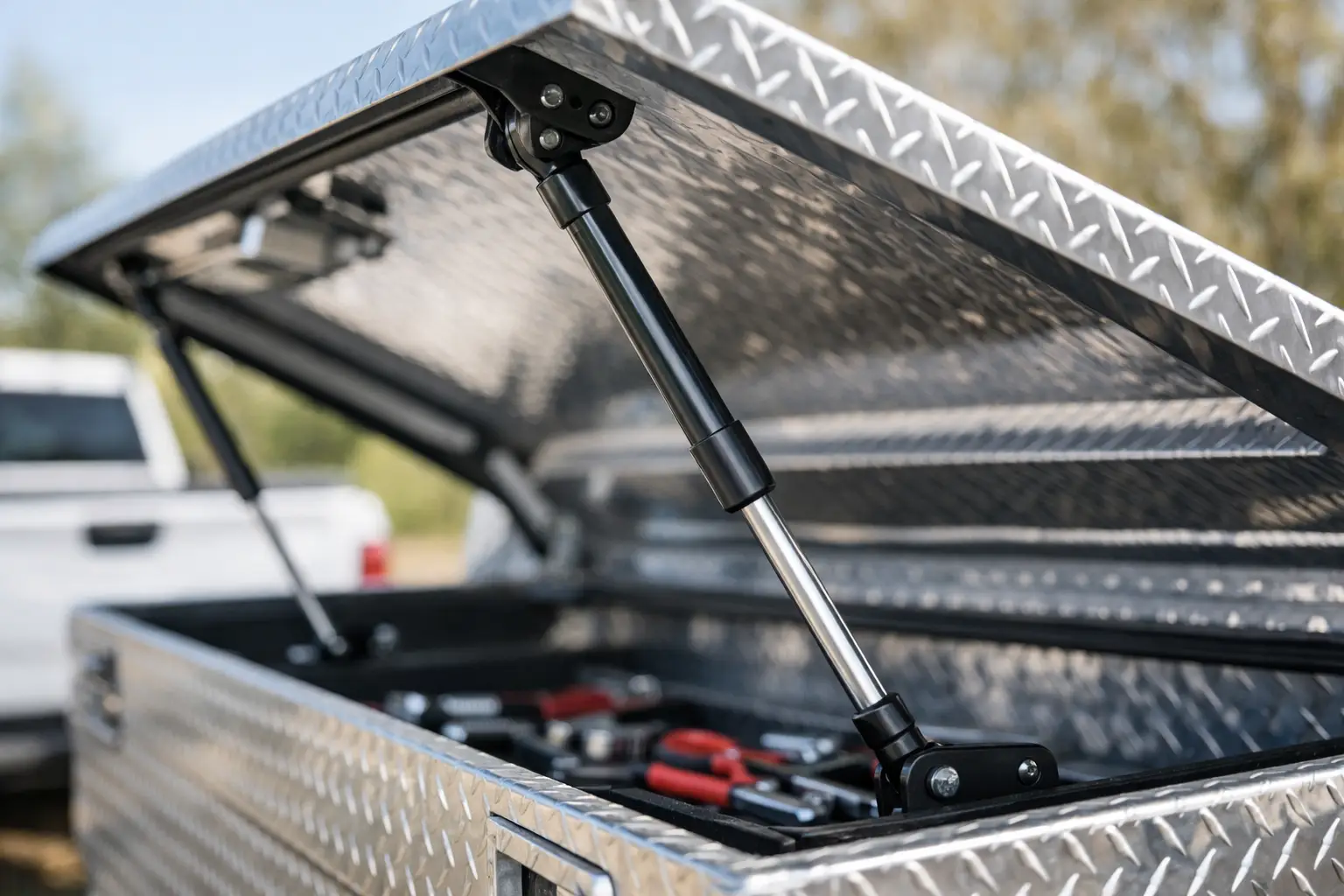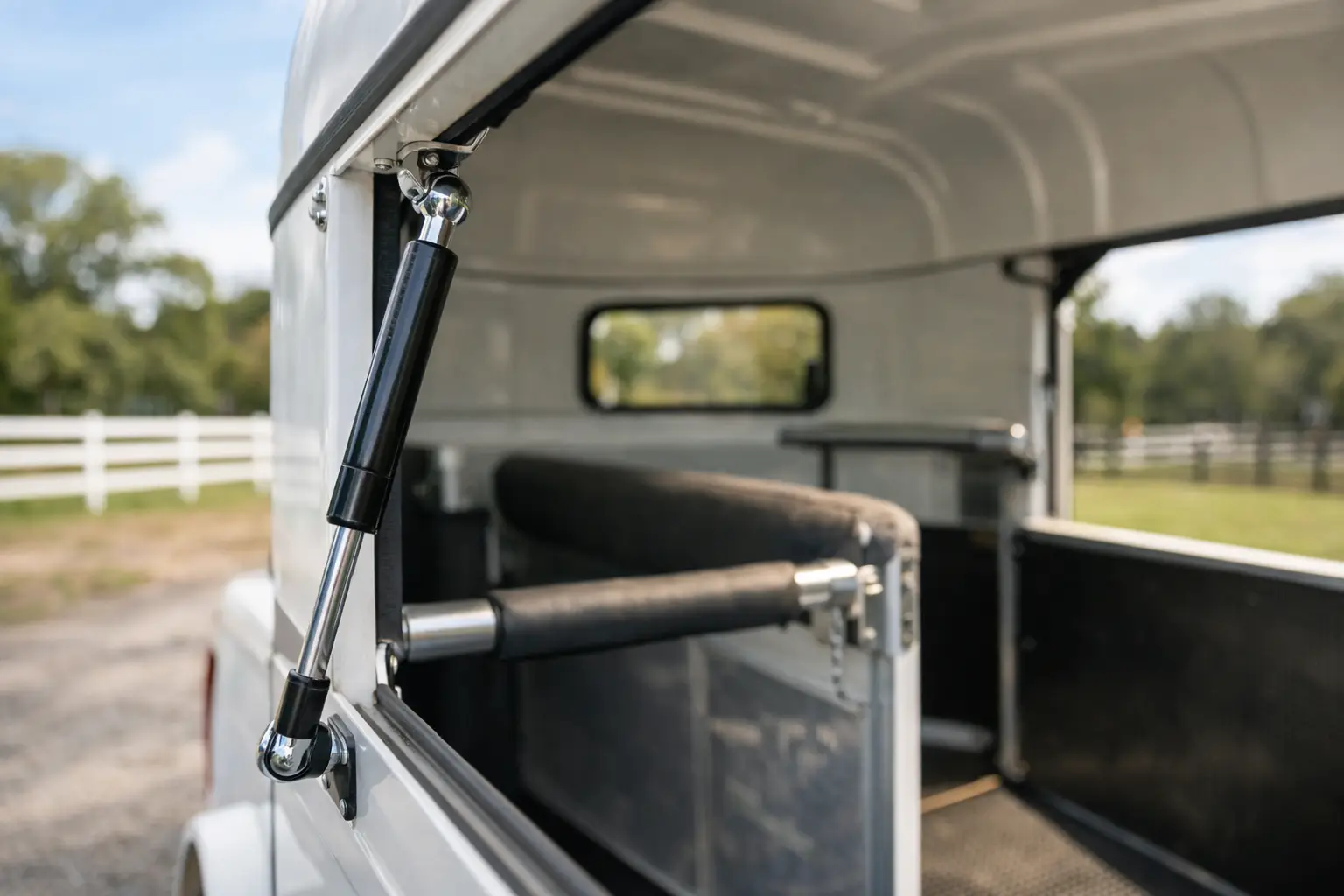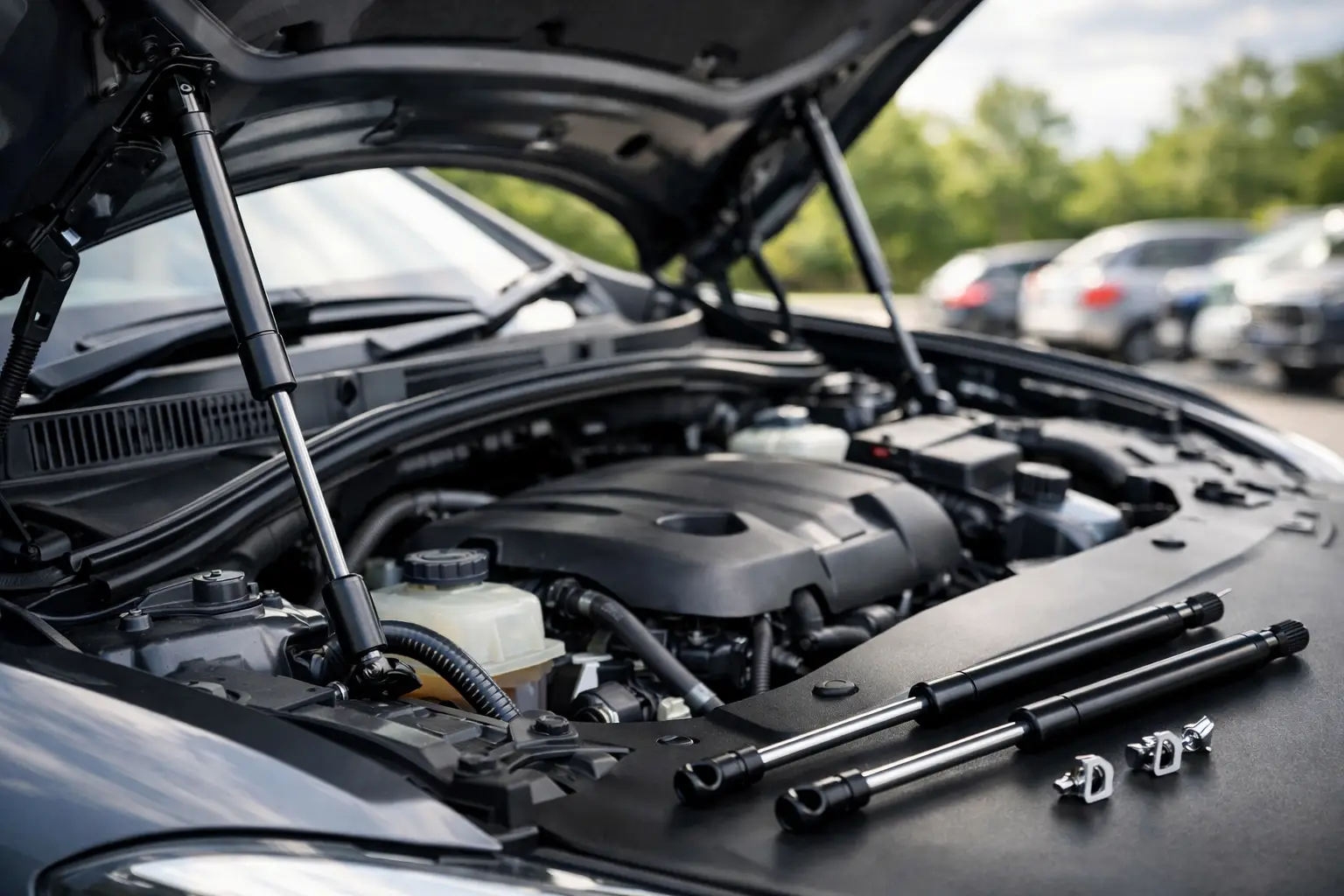
Choosing Caravan Boot Gas Struts

Choosing Caravan Boot Gas Struts

A caravan front boot that will not stay open is more than a nuisance. It slows down pack-up, makes access awkward, and can become a genuine safety issue when a heavy lid drops without warning. That is why getting the right caravan boot petrol struts matters. The correct strut keeps the lid controlled, supports the weight properly, and gives you reliable access every time you open the boot.

Not all caravan boot setups are the same. Lid size, hinge position, opening angle, frame weight and mounting geometry all affect what strut will work. Two struts may look similar on the bench, but if the force is wrong or the fittings do not suit the application, performance will be poor from day one.

Why caravan boot petrol struts fail

Most failed struts are not random failures. They usually wear out because the unit has reached the end of its service life, has been exposed to harsh conditions, or was never the correct match in the first place.

Caravans work in conditions that are hard on moving parts. Dust, corrugations, moisture and temperature swings all add stress. A strut that is opened and closed regularly, then left under load in heat, will eventually lose pressure. When that happens, the lid may drift down, lift unevenly, or refuse to stay fully open.

Incorrect specification also causes early problems. If the strut force is too low, the lid feels heavy and unsafe. If the force is too high, the lid may be difficult to close, place excess load on hinges or brackets, and twist the frame over time. Poor alignment can also side-load the rod and shorten service life.

What to check before ordering replacement struts

The fastest way to get the right part is to start with accurate details. In many cases, the old strut will have a part number or force rating printed on the body. That is useful, but it should not be the only thing you rely on, especially if the caravan has been modified or the old struts never worked properly.

Measure the extended length from centre of fitting to centre of fitting. Check the compressed length if possible, and identify the end fittings used on both ends. Ball sockets are common, but eyelets and other connection types are also used. Then confirm the force rating in Newtons, usually marked as N on the strut body.

You also need to look at the installation itself. Count how many struts are fitted. Note whether the boot opens upward in a standard arc or uses a more unusual hinge arrangement. If the lid is aluminium checker plate, composite panel or reinforced with internal framing, that changes the weight and how the load is carried.

Photos help. A clear image of the full boot open, the strut fitted in place, and close-ups of each mounting point can save time and prevent guesswork.

Size and force are not the same thing

This is where many buyers get caught. A strut can be the right length and still be wrong for the job.

Length controls travel and mounting geometry. Force controls how much assistance the strut gives. Both matter. A longer strut with the wrong compressed length may bottom out before the lid closes. A shorter one may not open the lid far enough. Even when the length is correct, the wrong Newton rating can make the boot feel unstable.

For caravan boot petrol struts, force selection depends on more than lid weight alone. The position of the brackets relative to the hinge changes leverage. A heavy lid with brackets mounted further from the hinge may need less force than a lighter lid with poor geometry. That is why matching by appearance alone is unreliable.

If you are replacing an existing pair and the old setup worked well before wear set in, matching the original specification is usually the safest option. If the lid always felt too heavy, was hard to close, or twisted under load, it is worth reviewing the full setup rather than repeating the same part.

Common signs you have the wrong strut

A few symptoms point clearly to specification issues rather than normal wear. If the boot springs open too aggressively, the force is probably too high or the mounting points are not right. If it drops in the last part of travel, the force may be too low. If one side lifts faster than the other, one strut may have failed or the pair may not be properly matched.

You may also notice bent brackets, cracking around fixings, or hinges taking extra strain. That often happens when oversized struts are fitted to compensate for a heavy lid. It can seem like a quick fix, but it shifts the problem into the hardware and structure.

Another issue is poor fitment at full close. If the strut is forced into position when the boot is shut, the compressed length is likely wrong. That places constant load on the body and fittings and will reduce service life.

When standard replacements work – and when custom matters

Many caravan boots use standard strut sizes and fittings, so a direct replacement is often straightforward. If the dimensions, force and mounts all match, a stocked replacement can get the boot back into service quickly.

Custom supply becomes important when the caravan has non-standard storage doors, upgraded toolboxes, altered brackets, or aftermarket boot lids. It also matters when you are fitting petrol struts to a boot that never had them, or redesigning the opening angle for easier access.

In those cases, the right result depends on application data, not trial and error. A supplier that understands force calculation, mounting geometry and hardware selection can save you from buying multiple struts to test. For trade customers, repairers and caravan builders, that means less downtime and fewer call-backs.

Fittings, brackets and mounting position

The strut itself is only part of the job. End fittings and brackets need to suit the load and the movement path of the lid. Worn ball studs, loose brackets or thin mounting material can cause the same symptoms as a weak strut.

Bracket position is especially important. Small changes in angle or distance from the hinge can significantly change how the lid lifts and holds. Moving a bracket may improve access and reduce closing effort, but it can also over-stroke the strut or change the load path into the frame. Any adjustment should be made with measurements in mind.

Material matters too. Caravan boots often use lightweight panels and alloy framing, so mounting points need proper support. If the substrate is thin or fatigued, replacing the struts alone may not solve the problem.

Installation and replacement tips

Replacing boot struts is usually a manageable job, but the lid must be safely supported before anything is removed. Never rely on one tired strut to hold the panel while you change the other side.

Replace struts in pairs where possible. A new strut working against an old weak one can cause uneven lift and twist. During installation, make sure each fitting is fully seated and the strut is oriented correctly for the application. In many setups, rod-down mounting helps keep the internal seal lubricated when closed, though the correct orientation depends on the design.

Check full travel once fitted. Open the boot slowly and confirm there is no binding, over-extension or bracket movement. Then close it and make sure the strut is not bottoming out before the lid is fully shut.

Getting the right advice the first time

If you can supply the extended length, compressed length, Newton rating, end fitting type, and a few clear photos, a specialist can usually narrow the options quickly. If no markings are visible, lid dimensions and an estimate of weight are the next best starting point.

This is where a dedicated supplier makes a difference. General hardware outlets may stock something close, but close is not always good enough on a heavy caravan boot. A proper match improves safety, reduces hardware stress and avoids repeat replacement. Businesses such as Petrol Struts also support custom applications, which matters when standard catalogue sizes do not suit the job.

For owners, workshops and trade buyers, the goal is simple: a boot lid that opens smoothly, stays where it should, and closes without fighting the hardware. That comes from correct specification, not guesswork.

If your caravan boot has started sagging, dropping or lifting unevenly, treat it as a fitment issue worth fixing properly. A well-matched strut is a small component, but it does a very practical job every time you stop, set up and get on with the trip.

Choosing Ute Canopy Gas Struts

Choosing Ute Canopy Gas Struts

A canopy door that drops without warning is more than annoying. It slows the job down, puts hinges and mounts under extra strain, and can become a genuine safety issue when you are reaching into the back of the ute. That is usually the point where ute canopy petrol struts stop being an afterthought and become a part you need to get right.

Why ute canopy petrol struts matter

On most canopies, the petrol strut does two jobs at once. It helps lift the door or window and then holds it in a stable open position while you load tools, access stock or work out of the tray. When the strut force is correct, the panel opens with control and stays where it should. When it is not, everything feels wrong.

A weak strut makes the door heavy and unreliable. An overpowered strut can be just as frustrating, because it puts unnecessary load on the mounting points and can make the canopy hard to close. In some cases, the issue is not force at all. The extended length, compressed length or end fitting may be wrong, which changes how the panel travels and where it sits when open or shut.

That is why replacing like for like based only on appearance can be a mistake. Ute canopies vary widely in door size, frame material, hinge position and accessory weight. A glazed lift-up window on a recreational canopy has different requirements from a heavy alloy service body door carrying central locking hardware, racks or internal shelving.

The signs your petrol struts need replacement

Most failed struts show themselves pretty clearly in daily use. The canopy door no longer lifts smoothly, drifts down in wind, needs a shoulder to keep it open, or slams shut once the seal breaks. In some cases, one strut has failed and the other is still working, which twists the panel and puts uneven pressure on hinges.

Visible oil around the rod or body is another common sign. So is corrosion on the shaft, bent end fittings, or brackets that have started to oval out because the strut is no longer operating through the correct range. If the canopy has been modified since the original struts were fitted, the problem may not be wear alone. Added weight changes the force requirement, and a previously suitable strut can become under-rated.

Struts also lose performance over time from normal cycling and heat exposure. On vehicles that spend their life in the sun, on worksites, or on corrugated roads, service life can shorten. The failure may feel sudden, but in practice it is often gradual loss that only gets noticed once the panel becomes inconvenient or unsafe.

How to match ute canopy petrol struts properly

The right replacement starts with measurements and markings, not guesswork. If the old strut still has a part number or force rating printed on it, that is the easiest place to start. Force is usually shown in newtons, often as N. But that alone is not enough.

You also need the extended length from centre of fitting to centre of fitting, the compressed length, and the type of end connection used at each side. Ball sockets, eyelets, forks and angled brackets are all common, and a small difference can stop the strut fitting correctly even if the force is close.

The orientation matters too. Many petrol struts are designed to be installed with the rod facing down in the closed position. That helps with lubrication of the internal seal and can improve service life. If a canopy layout forces a different mounting orientation, it is worth checking whether the selected strut suits that application.

Force rating is not the whole story

A common mistake is to focus only on the newton rating. Higher force does not automatically mean better support. The effective lift depends on mounting geometry, hinge position, panel weight, and the angle of the strut through its travel. Two canopies with similar rear windows may need different struts because the brackets are mounted differently.

That is why technical advice can save time. In some jobs, matching the original part is fine. In others, especially where brackets have been relocated or accessories added, a proper application check is the better option.

Measure both sides of the installation

If one side has bent or worn, the geometry may no longer be identical. Measure both mounting points and inspect the brackets before ordering. A fresh pair of struts fitted to damaged hardware will not solve the underlying problem. If the canopy door has dropped out of alignment, fix that first.

When standard struts are enough and when custom is the better option

There are plenty of straightforward canopy replacements where a stocked strut is the right answer. If the original strut dimensions, fittings and force are known, and the canopy has not changed, a standard replacement usually gets the job done quickly.

But some setups need more than a shelf part. Tradespeople often add ladder racks, mesh guards, central locking, internal fit-outs or heavier doors. Fleet vehicles can have application-specific bodies with non-standard opening angles. Workshop builds and service bodies may use custom bracket locations to suit drawers, inverter systems or compressor installs.

In those cases, custom ute canopy petrol struts can be the practical fix rather than a last resort. A strut specialist can work from measurements, panel weights, mounting geometry and intended opening angle to supply a better-matched unit. That matters when the panel is heavy, frequently used or part of a safety-sensitive work setup.

Installation points that affect performance

Even a correct strut can perform poorly if the install is rushed. Worn ball studs, loose rivnuts, cracked fibreglass mounts or fatigued alloy brackets all affect how the load is carried. If the old strut has been forcing the panel for some time, inspect the canopy carefully before fitting new units.

Replace struts in pairs unless there is a very clear reason not to. A new strut on one side and a tired strut on the other usually leads to uneven loading and shortened service life. During installation, support the canopy door properly rather than relying on one remaining strut to hold it up.

Do not grip the rod with multigrips or mark the shaft during fitting. Damage to the rod surface can shorten seal life. Once fitted, cycle the panel several times and check that it opens fully, closes cleanly and does not bind through the stroke.

Choosing for work conditions, not just fitment

Canopy struts on a weekend touring setup live a different life from struts on a service ute opening twenty times a day. Dust, vibration, heat and washdown all affect durability. If the vehicle works in agriculture, mining, marine environments or high-corrosion areas, material quality and seal performance matter as much as dimensions.

That is where product quality stops being a sales line and starts affecting downtime. Cheap struts can look fine out of the box, then lose force early or corrode around the fittings. For trade and fleet use, it pays to source from a supplier that understands heavy-use applications and can back product quality with proper warranty support and technical guidance.

At Petrol Struts, that usually means helping customers confirm dimensions, force and hardware before they order, rather than sending out a best guess and hoping it fits. For busy operators, that reduces repeat freight, wasted labour and vehicles sitting idle with a canopy door tied shut.

What to have ready before you order

The fastest way to get the right strut is to gather the useful details upfront. A clear photo of the installed strut, the markings on the body, centre-to-centre measurements when open and closed, and photos of both end fittings will usually narrow things down quickly. If the old strut is completely dead or missing, a few photos of the canopy door and bracket positions help assess the geometry.

If the canopy has been modified, say so early. Extra weight from glass, shelving, roof systems or internal accessories changes the job. The more accurate the information, the better the fit the first time.

A good petrol strut should make the canopy feel controlled, balanced and predictable. That is what you notice every time the door opens without a fight and stays put while you work. If your current setup does anything else, it is worth fixing properly rather than putting up with it for another season.

Tailgate Gas Strut Replacement Guide

Tailgate Gas Strut Replacement Guide

A tailgate that drops without warning is more than an inconvenience. On a ute canopy, wagon, trailer box or service body, it becomes a safety issue fast. A proper tailgate petrol strut replacement fixes the immediate problem, but only if the new strut matches the original load, length and fitting style.

Too many replacements are ordered off a rough guess – close enough on length, similar end fittings, maybe a higher force for good measure. That is where fitment problems start. The tailgate may not open fully, may be hard to close, or may twist because one strut is doing more work than the other. Getting it right means looking at the application, not just the old part.

When a tailgate petrol strut replacement is needed

Most failed struts are easy to spot. The tailgate will not stay open, lifts unevenly, drops in cold weather, or needs a shove to get moving. Sometimes the strut body is oily, which usually means the internal seal has failed and the petrol charge is no longer holding as it should.

There are also less obvious signs. If the tailgate opens but feels jerky, if one side sits higher than the other, or if the brackets are starting to flex, the struts may be the wrong force or have worn out gradually. In workshop and trade vehicles, that slow decline often gets ignored until someone takes the load on their shoulder.

Age, heat, dust, vibration and repeated cycling all shorten service life. On vehicles and equipment used every day, especially in commercial conditions, struts are consumable parts. Replacing them before complete failure often prevents bracket damage and avoids unnecessary strain on hinges and mounting points.

The measurements that matter

For a successful tailgate petrol strut replacement, three details matter most – extended length, force rating and end fittings. If one of those is wrong, the strut may install but still perform poorly.

Extended length

Measure the strut from centre of fitting to centre of fitting when fully extended. Do not measure the body alone. Even a small difference can change opening height and leverage, especially on shorter tailgates or compact canopies.

Force rating

Force is usually marked in Newtons, often shown as N on the tube. This is not a detail to estimate casually. A higher rating does not automatically mean a better result. Too much force can make the tailgate difficult to shut, overload the brackets, or cause the panel to spring open aggressively. Too little force and the tailgate will sag or refuse to stay up.

End fittings

Ball sockets, eyelets, forks and angled ends are all common, and thread size matters as well. Two struts with the same length and force can still be incompatible if the end fittings do not match the original mounting points.

If the printed rating is worn off or the strut has no visible markings, the next best approach is to measure accurately and provide the application details. Tailgate size, panel weight, mounting geometry and whether one or two struts are fitted all affect the correct selection.

Why matching the original strut is not always enough

In many cases, the best replacement is a direct equivalent. But not always. If the original struts failed early, if the tailgate has been modified, or if added accessories have changed the load, the original specification may no longer be ideal.

This comes up regularly with canopies fitted with internal shelving, rear ladders, spare wheel mounts or heavier glass. It also applies to custom toolboxes, service bodies and trailer compartments. The strut has to suit the real working load, not just the base model it started with.

That is where specialist advice matters. A supplier focused on petrol struts can work from dimensions, mounting positions and application details to confirm whether a standard replacement is right or whether a revised force or custom build is the better option.

How to remove old tailgate struts safely

Before removing anything, support the tailgate properly. Do not rely on one remaining strut to hold the load. Use a prop, get a second person to hold it, or secure it in place. This is especially important on large canopies, heavy rear doors and steel lids.

Most automotive-style petrol struts use retaining clips on the socket ends. These usually do not need to be removed completely. A small flat screwdriver can be used to lift the clip slightly so the socket releases from the ball stud. If the strut uses bolted eyelets or fork ends, remove the fastener while the panel is supported.

Replace struts in pairs where possible. If one has failed, the other is usually not far behind. A new strut on one side and a tired strut on the other often leads to uneven lifting and premature wear.

Installing the replacement correctly

A new strut should match the original orientation unless advised otherwise. In many applications, the rod end is installed facing downward when the panel is closed. That helps keep the internal seal lubricated and can extend service life.

Fit one end first, then align the second end without forcing the strut sideways. If the strut appears too short or too long at this stage, stop and check the dimensions. Forcing the panel to make it fit can damage the mounts or preload the hinges.

Once installed, cycle the tailgate a few times carefully. It should open smoothly, hold reliably and close without excessive effort. Minor stiffness in a brand-new strut is normal, but binding, twisting or over-centre movement is not.

Common mistakes that cause fitment problems

The most common error is ordering by appearance alone. A strut can look right in a photo and still be wrong by enough to affect operation. The second is assuming force should be increased to compensate for wear. If the original setup worked when new, a correct replacement usually restores proper function without upsizing.

Another issue is ignoring the brackets. Worn ball studs, bent mounts and elongated holes can make a correct strut seem faulty. If the fittings are loose or misaligned, replace or repair them at the same time.

It is also worth checking whether both struts are sharing the load equally. On a twisted tailgate frame or a canopy door that has settled over time, one side can carry more than intended. In that case, replacing struts alone may not fully solve the problem.

Choosing a supplier for tailgate petrol strut replacement

For standard passenger vehicles, common replacements are often straightforward. For work utes, trailers, canopies, custom bodies and industrial applications, accuracy matters more. You need the right force, the right hardware and a supplier who understands how the mounting geometry affects performance.

That is why many buyers prefer to work with a specialist rather than treating petrol struts as a generic hardware item. Good support saves time. It also reduces the chance of repeat orders, bracket damage and unsafe operation.

At Petrol Struts, customers can supply measurements, photos and application details to help identify a suitable replacement or custom solution. That is particularly useful where the original part number is missing, the setup is modified, or the tailgate is part of a non-standard build.

What to have ready before you order

The quickest way to source the right strut is to gather the practical details first. Measure the extended length centre-to-centre, note any part numbers still visible, identify the end fittings, and confirm the force rating if it is marked. A clear photo of the strut installed and another of the mounting points can help as well.

If the old strut is missing or completely unreadable, provide the tailgate dimensions, approximate panel weight, and whether one or two struts are used. Mention any modifications such as racks, glass changes, storage fit-outs or reinforced doors. Those details make a real difference.

A tailgate should open cleanly, stay put and close without a fight. If it does not, the fix is usually simple – but only when the replacement is specified properly from the start. A few careful measurements now are cheaper than ordering twice, and a lot safer than trusting a worn strut for one more week.

Choosing Replacement Bonnet Gas Struts

Choosing Replacement Bonnet Gas Struts

When a bonnet stops staying up, it stops being a small problem

A weak bonnet strut is easy to ignore until the bonnet drops while you’re checking oil, swapping a battery or working in the engine bay. At that point it is not just inconvenient – it is a safety issue.

Choosing replacement bonnet petrol struts sounds simple, but the wrong part can leave the bonnet too heavy to lift, too forceful to close, or sitting under constant stress at the hinges and mounting points. If you want a proper fit, the job starts with matching the original strut properly rather than guessing from the vehicle alone.

What replacement bonnet petrol struts actually need to do

Bonnet struts are designed to control lift and hold the bonnet open through a specific range of movement. That means the correct strut is not just about length. It also needs the right force, stroke, end fittings and orientation for the vehicle.

A bonnet on a light passenger car and a bonnet on a 4WD, ute or commercial vehicle can look similar in size, but the weight distribution can be very different. Bonnet construction, insulation, accessories and hinge geometry all change the force requirement. Even two vehicles from the same model range can need different struts if one has a heavier bonnet setup.

That is why direct replacement matters. A strut that is close enough on paper can still perform badly once installed.

How to identify the right replacement bonnet petrol struts

The fastest path is usually to read the details printed on the old strut. Many existing units will show a part number, extended length and force rating in Newtons. If that information is still legible, it gives you a solid starting point.

If the print has worn off, measure the old strut carefully while it is removed from the vehicle. You need the extended length from centre of fitting to centre of fitting, the compressed length, the stroke, and the end fitting type. Ball sockets, eyelets and brackets are not interchangeable unless the mounting hardware is changed to suit.

Force matters just as much as physical size. A bonnet strut that is too weak will not hold safely at full extension. One that is too strong can make the bonnet jump upward, become harder to close, or put unnecessary load on sheet metal and hinge points.

For anyone replacing a pair, it is best practice to change both struts at the same time. When one fails, the other is usually well into the same wear cycle. Replacing only one often leaves you with uneven lifting and shortened service life for the new unit.

Why matching by vehicle alone is not always enough

Vehicle make, model and year are useful, but they do not always tell the whole story. Running changes, imported variants, aftermarket bonnet conversions and accessory fit-outs can all affect what is fitted.

This comes up regularly with 4WDs, work utes and modified touring vehicles. Bonnet protectors, insulation, under-bonnet equipment and prior hardware swaps can change the original setup. In workshop and fleet settings, vehicles may also have had struts replaced before with something that was never quite correct.

That is why a proper supplier will often ask for measurements, photos or the number stamped on the old strut rather than relying only on registration details. It is a more accurate way to avoid ordering a part that is almost right but not right enough.

Common signs your bonnet struts are due for replacement

The obvious sign is a bonnet that no longer stays open on its own. Sometimes the failure is more gradual. The bonnet may lift part way and then slow down, or it may need extra effort to reach full height.

Cold weather can make worn struts feel worse because petrol pressure drops with temperature. If the bonnet behaves properly only on warm days, the struts are usually already on the way out. Oil residue around the rod seal, bent shafts, damaged sockets or cracked brackets are also clear signs that replacement should not be delayed.

If the bonnet opens unevenly or one side seems to lag behind the other, stop forcing it. That can point to one failed strut, a mounting issue, or a mismatch in force between the pair.

The measurements that matter most

When ordering replacement bonnet petrol struts, there are four details that matter most.

First is extended length. This affects how high the bonnet opens and whether the strut reaches the mounting points correctly. Second is compressed length, which determines whether the bonnet can close fully without bottoming out the strut. Third is stroke, which is the travel between those two positions. Fourth is force rating, shown in Newtons, which determines lifting assistance and holding strength.

After that, check the rod diameter, tube diameter and fitting style. These details become especially important when the application is older, modified or outside standard passenger vehicle setups.

If you are unsure, photos of both ends of the old strut and the mounting points can save time. A clear image often confirms fitting style faster than a written description.

Standard replacement or custom solution?

For many vehicles, a standard direct-fit strut is the cleanest option. It keeps installation straightforward and avoids changes to brackets or hinge geometry.

But there are cases where a custom solution is the better choice. That includes imported vehicles with limited local parts coverage, modified bonnets, engine bay conversions, specialist fleet applications or older equipment where original parts are no longer practical to source.

In those situations, the correct approach is not to force a near match. It is to work from actual dimensions and load requirements so the replacement performs properly in service. That is particularly important in trade, agricultural, mining and industrial environments where downtime or unsafe access is not acceptable.

Installation is simple, but details matter

Bonnet struts are generally straightforward to replace, but there are a few points worth getting right. Always support the bonnet securely before removing the old struts. Do not rely on one tired strut to hold while you disconnect the other.

Check whether the original strut is mounted rod-down or rod-up. In most applications, rod-down mounting helps keep the internal seal lubricated and extends service life. If the vehicle is designed for a specific orientation, follow that layout.

Inspect the ball studs, brackets and surrounding panelwork while the struts are off. If sockets are loose or mounting points are distorted, fitting a new strut alone may not solve the problem. The new part can only perform properly if the hardware it connects to is sound.

Once installed, test opening and closing through the full range. The bonnet should rise smoothly, hold securely and close without excessive effort. If it feels wrong, stop and recheck the specification before forcing repeated cycles.

What separates a reliable strut from a short-lived one

Not all petrol struts are built to the same standard. For a bonnet application, consistency matters. The unit needs stable gas pressure, good seal quality, durable end fittings and proper surface protection on the rod and tube.

Cheap struts can look fine out of the box but lose pressure early, corrode faster or develop rough movement that puts strain on mounts. That becomes expensive when the vehicle is in regular use or forms part of a working fleet.

A better-quality replacement is usually the cheaper option over time because it reduces repeat failures and keeps the bonnet safe to use. Warranty support, technical guidance and access to application advice also matter. If there is any doubt around force or fitment, having specialist support available saves guesswork.

For buyers who need quick, accurate supply across automotive and heavy-use applications, Gas Struts supports both standard replacements and custom specification work through https://gasstruts.net.au/.

When to ask for technical help

If the old strut has no readable markings, the bonnet has been modified, the vehicle is uncommon, or previous replacements have never worked quite right, it is worth getting specialist advice before ordering.

The same applies if you are buying for a workshop, fleet or equipment maintenance program. A single bonnet strut for a private vehicle is one thing. Multiple vehicles across different configurations is another. In that case, technical accuracy and repeatable fitment matter more than simply finding a close match.

A good supplier should be able to work from measurements, photos, mounting details and application notes to narrow the correct option quickly. That reduces delays and lowers the risk of fitting the wrong strut twice.

The practical way to get it right first time

If you need replacement bonnet petrol struts, treat the job like any other functional component replacement. Match the dimensions, match the force, match the fittings, and do not assume every bonnet setup is identical just because the badge says it should be.

That extra care at the ordering stage is what gives you a bonnet that lifts cleanly, stays up safely and does not create a new problem at the hinges or mounts. A proper strut should feel unremarkable in use – and that is exactly the point.

How a Gas Strut Force Calculator Helps

How a Gas Strut Force Calculator Helps

Why force guesses cause expensive problems

A petrol strut that is only slightly wrong can turn a simple lid, hatch or canopy into a daily nuisance. Too little force and the panel drops, sags or needs two hands to hold open. Too much force and it can kick up hard, twist hinges, stress mounts or refuse to close properly. In workshop, vehicle and industrial applications, that is not a small issue. It affects safety, fitment and service life.

That is where a petrol strut force calculator becomes useful. It gives you a starting point for the force required to support or lift a panel based on weight, dimensions and mounting position. It does not replace proper measurement or application advice, but it helps narrow the numbers before you buy.

For anyone replacing failed struts on a toolbox, canopy window, caravan bed base, engine cover, access hatch or machinery guard, getting the force close matters just as much as getting the length and end fittings right.

What a petrol strut force calculator is actually doing

At a basic level, a petrol strut force calculator works out leverage. The panel weight is not acting directly on the strut. It acts through the hinge, and the strut pushes at a point along the panel through a particular mounting angle. That geometry changes everything.

A small, heavy hatch with the strut mounted far from the hinge may need less force than a lighter panel with poor mounting geometry. Likewise, two struts sharing the load will need a different force each than a single-centre-mounted unit. This is why matching a strut by eye, or by what “looks about right”, often ends badly.

Most force calculations are based on a few core inputs. The panel weight is one. The distance from hinge to the panel’s centre of gravity is another. Then there is the mounting point of the strut on the lid and on the fixed frame, plus the open and closed angles. From there, the calculation estimates the force needed to hold or assist movement through the stroke.

The numbers you need before using a petrol strut force calculator

If you want a useful result, the input data has to be realistic. Approximate dimensions can be enough for a first pass, but guessing the weight usually creates trouble.

Start with the panel or lid mass. If possible, weigh it. If that is not practical, calculate it from the material and dimensions, but allow for glass, seals, framing, lining, locks and accessories. A canopy side window with glass and hardware will be heavier than many people expect. A checker plate toolbox lid may be lighter than it looks.

Next, find the centre of gravity. On a plain rectangular lid with even material thickness, that is often near the middle. On an irregular panel, or one with mounted components, it can shift noticeably. This matters because the centre of gravity changes the turning force around the hinge.

Then measure the intended mounting positions. You need the hinge line, the strut bracket position on the moving panel, and the bracket position on the fixed structure. Small changes here can significantly alter the force required and the way the strut behaves near fully open or fully closed.

Finally, think about how the panel is meant to behave. Should it lift by itself once cracked open? Should it stay neutral and only hold at the top? Should it be easy to pull down from full extension? Those are different outcomes, and the target force may change depending on the job.

Why calculator results are a guide, not the final answer

A petrol strut force calculator is only as good as the assumptions behind it. Real-world installations involve friction in hinges, seal drag, body flex, wind load, uneven weight distribution and bracket limitations. On heavy-use equipment, vibration and repeated cycling also affect performance over time.

Temperature is another factor. Petrol struts generally feel firmer in higher temperatures and softer in lower ones. If a strut is fitted to a canopy, boat hatch or outdoor cabinet, seasonal conditions can change how it behaves. A setup that feels perfect in mild weather might be sluggish on a cold morning or over-energetic in summer heat.

Orientation matters as well. Most petrol struts are designed to be mounted rod-down where possible. That helps internal lubrication and can improve service life. If an application forces a different orientation, the strut may not perform exactly as expected from a simple calculator output.

That is why experienced suppliers treat the calculator result as a working number, then check it against known geometry, available lengths, stroke options, bracket travel and practical usage.

Common applications where force calculation matters

Some jobs are more forgiving than others. A lightweight cabinet flap may tolerate a bit of over-force without much trouble. A steel machinery cover or caravan storage hatch usually will not.

Automotive and 4WD applications often need careful force matching because the panels are used frequently and mounting space is tight. Canopy windows, ute toolboxes, rear glass sections and service bodies all rely on a strut that opens smoothly without overloading the frame.

In caravan, camper and trailer fit-outs, strut force affects day-to-day usability. Bed platforms, tunnel boots, external storage doors and kitchen lids need enough support to stay open, but not so much that they are difficult to close in confined spaces.

Industrial, agricultural and mining equipment tends to push harder on reliability. Access doors, guarding, inspection hatches and control box covers may be heavier, used in harsher conditions and expected to operate consistently despite dust, vibration and weather.

Marine installations add another layer. Corrosion resistance, changing temperatures and awkward opening angles make proper sizing more critical than many buyers expect.

One force figure is not enough on its own

A common mistake is to focus only on Newton force and ignore everything else. For a petrol strut to work properly, the extended length, compressed length, stroke and end fittings must all suit the application.

If the strut is the right force but the wrong length, the lid may not open far enough, may bottom out before full travel, or may place the brackets under unnecessary stress. If the fittings do not match the available space or articulation angle, the installation can bind or wear prematurely.

There is also the question of pair matching. If you are replacing two struts, replace them as a pair unless there is a very specific reason not to. An old weakened strut paired with a new unit often creates uneven lift and side loading.

For replacement work, the markings on the original strut can help if they are still legible. Force is often stamped in Newtons, and part numbers may identify the original specification. Even then, if the old setup never performed properly, copying it exactly may not be the best fix.

When to use the calculator and when to ask for help

A calculator is useful when you are planning a new setup, checking whether your current force makes sense, or narrowing options before ordering. It is particularly handy for straightforward lids and hatches with clear hinge geometry.

It becomes less reliable when the application is unusual – offset hinges, compound movement, very heavy panels, custom frames, multiple pivot points or non-standard opening arcs. In those cases, supplier input can save time and rework.

The practical approach is to gather the dimensions first, use the calculator to estimate force, then confirm the selection against the actual strut sizes and mounting geometry available. If you have photos, measurements, old part markings and the approximate panel weight, a specialist can usually identify whether the number is in the right range or needs adjustment.

That is also the point where custom force charging may come into play. Standard stocked forces suit many jobs, but not all. On specialised equipment, a custom-spec strut can be the better option if the geometry or load sits between standard ratings.

Getting a better result from your petrol strut force calculator

The best calculator results come from measured inputs, not estimates from memory. Measure from the hinge centreline, not the panel edge. Check dimensions in the closed and open positions. Confirm whether the load is shared across one strut or two. If there are added accessories such as racks, spare wheel mounts, insulation panels or tools fixed to the lid, include them.

It also helps to think about the user. A service hatch on a work vehicle might need more controlled movement than a storage lid opened once a month. A machine guard may need compliance-minded behaviour, where stable holding force matters more than light opening effort.

If you are replacing a failed unit and the old strut number is known, compare that information with the actual performance issue. If the lid used to fly open too aggressively, the answer may not be another strut with the same force. It may be a geometry correction, a different mounting point or a revised force rating.

For buyers who need a dependable starting point and direct technical guidance, Gas Struts can assist with sizing, replacement matching and custom applications through https://gasstruts.net.au/.

A calculator gets you closer to the right force. Good measurements, correct geometry and application advice are what turn that number into a strut that works properly every day.

How to Measure Gas Struts Properly

How to measure gas struts without guesswork

A gas strut that is only slightly wrong can still create a major fitment problem. Too long, and the lid or hatch may not close. Too short, and it may not open high enough. Wrong force, and you end up with a panel that drops, twists, or needs both hands to move.

That is why knowing how to measure gas struts properly matters before you order a replacement. Whether you are replacing struts on a ute canopy, toolbox, caravan bed, engine cover, cabinet, boat hatch or industrial enclosure, the right dimensions and specifications save time and avoid repeat freight, downtime and unsafe operation.

The good news is that measuring a gas strut is usually straightforward if you know which dimensions matter and which common mistakes to avoid.

The four measurements that matter most

When customers ask how to measure gas struts, they are usually looking at the body length and assuming that is enough. It is not. In most cases, you need four key details – extended length, stroke, end fitting type and force rating.

Extended length is the eye-to-eye, centre-to-centre or socket-to-socket distance when the strut is fully open. This is one of the most important measurements because it determines how far the application opens.

Stroke is the amount of shaft travel from fully closed to fully open. This tells you how much movement the strut actually provides. Two struts can have a similar overall length but very different strokes, so this figure should never be guessed.

End fittings matter because a strut is only useful if it connects correctly to the existing mounts. Ball sockets, eyes, forks and brackets all affect fitment.

Force rating, usually shown in Newtons or N, determines how strongly the strut pushes. If the old strut has faded or failed, the printed number may still tell you what was originally fitted.

How to measure gas struts step by step

The easiest way to measure is with the old strut removed, although that is not always possible. If the old strut is still attached and under load, use care. Support the lid, hatch or panel securely before removing anything.

Measure the extended length

Open the strut fully, or use the existing open position if it is still installed. Measure from the centre of one mounting point to the centre of the other. If it has ball socket ends, measure from the centre of one ball socket to the centre of the other. If it has eyelets, measure centre to centre.

Do not measure just the steel cylinder or the rod. Suppliers need the full extended mounting length, not only the visible body dimensions.

Measure the closed length

Now compress the strut fully and measure the same way, from centre to centre. This gives you the closed length.

If the strut is too stiff to compress by hand, that is normal for many units. In that case, use the printed specifications if available, or provide the extended length and photos along with the application details.

Work out the stroke

Stroke is the difference between extended length and closed length. For example, if the strut is 500 mm extended and 300 mm closed, the stroke is 200 mm.

Some gas struts also have part numbers stamped or printed on the tube. If that label is still legible, it can confirm the stroke and save time.

Identify the end fittings

Look closely at both ends. Measure thread size if the fitting screws onto the strut. Common end styles include ball sockets, metal eyes and fork ends. Brackets also matter if they need replacing along with the strut.

A clear photo is often useful here, especially on older trailers, machinery, marine hatches or custom-built canopies where previous modifications may have changed the original hardware.

Check the force rating

Most gas struts have a force marking on the tube, such as 250N, 400N or 800N. Record that exact figure if you can still read it.

If there is no visible marking, the right force depends on the weight of the panel, the mounting geometry and where the strut attaches. This is where replacement is not always a straight like-for-like exercise. If a hatch has been modified, fitted with extra accessories or changed from one strut to two, the original rating may no longer be correct.

Common measuring mistakes

A lot of ordering errors come from one of a few simple mistakes. The most common is measuring the strut body instead of the full length between mounting centres. Another is estimating the force because the old unit feels weak. A worn-out gas strut does not tell you its original pressure by feel.

It is also easy to ignore end fittings and assume they are standard. They are not. A 10 mm ball socket and an eye end may suit entirely different mounting setups, even if the strut length is correct.

The other trap is measuring while the application is twisted or under uneven load. On dual-strut setups, one failed strut can cause the lid to sit crooked. That can throw out your measurement if you only check one side without supporting the panel squarely.

If the old gas strut is missing or unreadable

Sometimes there is no old part to copy. That is common on imported trailers, older machinery, custom toolboxes and second-hand caravans. In that case, measure the application rather than the strut.

Start by measuring the distance between the mounting points when the lid is fully open and fully closed. That helps determine the required extended and compressed lengths. Then note the weight of the lid or panel if possible, along with where the hinges sit and how many struts are being used.

This is also where mounting angle matters. A gas strut fitted close to the hinge works differently from one mounted further out. The same lid weight can require a different force depending on leverage. That is why application photos and measurements together are often enough for a specialist supplier to recommend the correct unit, even when the original part number is gone.

Measuring for different applications

The basics stay the same, but the job can vary depending on where the strut is used.

On automotive applications such as bonnets, boots and canopies, replacement is often straightforward if the original strut is still present. Matching length, stroke and end fittings usually gets you close, provided the force rating is known.

On caravans, campers and horse floats, lids and bed platforms are often customised. Added solar gear, storage modifications or heavier panels can change what force is needed.

On marine, agricultural and industrial equipment, corrosion resistance and duty cycle can matter as much as size. A strut in a saltwater hatch or dusty machinery enclosure may need different materials or sealing, not just the same dimensions.

For cabinets, toolboxes and access doors, space is tighter and bracket location becomes more critical. Even small differences in closed length can stop a lid from shutting properly.

What to send when ordering a replacement

If you want fast, accurate advice, send more than one measurement. The best starting point is the extended length, closed length, end fitting style and any visible part number or Newton rating. Add a couple of clear photos showing both ends and the full installation.

It also helps to include the application itself – for example, caravan front boot, toolbox lid, ute canopy side hatch, tractor window or generator enclosure. If the old strut has failed early, mention that too. It may point to an incorrect force rating or a mounting issue rather than just normal wear.

For custom jobs, include the lid dimensions, approximate weight, hinge position and how far you want it to open. That gives the supplier enough information to recommend a proper specification rather than guessing from length alone.

When replacement is not a direct match

There are times when the best replacement is not an exact copy of what came off. If brackets were fitted poorly, if the original strut allowed limited opening, or if the panel has changed weight, a revised spec may perform better.

That is especially relevant in trade and industrial settings where repeated opening cycles, vibration and weather exposure can shorten service life. A strut that technically fits is not always the right strut for the workload.

This is where specialist support matters. A supplier focused on gas struts can usually spot whether the issue is length, force, fitting type or mounting geometry from a good set of measurements and photos. At Gas Struts, that practical detail is what helps customers avoid ordering the same wrong part twice.

Getting the dimensions right at the start makes the whole job easier. If you can provide accurate measurements, photos and application details, you are far more likely to get a strut that fits properly, lifts safely and lasts where it is actually used.

How to Measure Gas Struts Properly

How to measure gas struts without guesswork

A gas strut that is only slightly wrong can still create a major fitment problem. Too long, and the lid or hatch may not close. Too short, and it may not open high enough. Wrong force, and you end up with a panel that drops, twists, or needs both hands to move.

That is why knowing how to measure gas struts properly matters before you order a replacement. Whether you are replacing struts on a ute canopy, toolbox, caravan bed, engine cover, cabinet, boat hatch or industrial enclosure, the right dimensions and specifications save time and avoid repeat freight, downtime and unsafe operation.

The good news is that measuring a gas strut is usually straightforward if you know which dimensions matter and which common mistakes to avoid.

The four measurements that matter most

When customers ask how to measure gas struts, they are usually looking at the body length and assuming that is enough. It is not. In most cases, you need four key details – extended length, stroke, end fitting type and force rating.

Extended length is the eye-to-eye, centre-to-centre or socket-to-socket distance when the strut is fully open. This is one of the most important measurements because it determines how far the application opens.

Stroke is the amount of shaft travel from fully closed to fully open. This tells you how much movement the strut actually provides. Two struts can have a similar overall length but very different strokes, so this figure should never be guessed.

End fittings matter because a strut is only useful if it connects correctly to the existing mounts. Ball sockets, eyes, forks and brackets all affect fitment.

Force rating, usually shown in Newtons or N, determines how strongly the strut pushes. If the old strut has faded or failed, the printed number may still tell you what was originally fitted.

How to measure gas struts step by step

The easiest way to measure is with the old strut removed, although that is not always possible. If the old strut is still attached and under load, use care. Support the lid, hatch or panel securely before removing anything.

Measure the extended length

Open the strut fully, or use the existing open position if it is still installed. Measure from the centre of one mounting point to the centre of the other. If it has ball socket ends, measure from the centre of one ball socket to the centre of the other. If it has eyelets, measure centre to centre.

Do not measure just the steel cylinder or the rod. Suppliers need the full extended mounting length, not only the visible body dimensions.

Measure the closed length

Now compress the strut fully and measure the same way, from centre to centre. This gives you the closed length.

If the strut is too stiff to compress by hand, that is normal for many units. In that case, use the printed specifications if available, or provide the extended length and photos along with the application details.

Work out the stroke

Stroke is the difference between extended length and closed length. For example, if the strut is 500 mm extended and 300 mm closed, the stroke is 200 mm.

Some gas struts also have part numbers stamped or printed on the tube. If that label is still legible, it can confirm the stroke and save time.

Identify the end fittings

Look closely at both ends. Measure thread size if the fitting screws onto the strut. Common end styles include ball sockets, metal eyes and fork ends. Brackets also matter if they need replacing along with the strut.

A clear photo is often useful here, especially on older trailers, machinery, marine hatches or custom-built canopies where previous modifications may have changed the original hardware.

Check the force rating

Most gas struts have a force marking on the tube, such as 250N, 400N or 800N. Record that exact figure if you can still read it.

If there is no visible marking, the right force depends on the weight of the panel, the mounting geometry and where the strut attaches. This is where replacement is not always a straight like-for-like exercise. If a hatch has been modified, fitted with extra accessories or changed from one strut to two, the original rating may no longer be correct.

Common measuring mistakes

A lot of ordering errors come from one of a few simple mistakes. The most common is measuring the strut body instead of the full length between mounting centres. Another is estimating the force because the old unit feels weak. A worn-out gas strut does not tell you its original pressure by feel.

It is also easy to ignore end fittings and assume they are standard. They are not. A 10 mm ball socket and an eye end may suit entirely different mounting setups, even if the strut length is correct.

The other trap is measuring while the application is twisted or under uneven load. On dual-strut setups, one failed strut can cause the lid to sit crooked. That can throw out your measurement if you only check one side without supporting the panel squarely.

If the old gas strut is missing or unreadable

Sometimes there is no old part to copy. That is common on imported trailers, older machinery, custom toolboxes and second-hand caravans. In that case, measure the application rather than the strut.

Start by measuring the distance between the mounting points when the lid is fully open and fully closed. That helps determine the required extended and compressed lengths. Then note the weight of the lid or panel if possible, along with where the hinges sit and how many struts are being used.

This is also where mounting angle matters. A gas strut fitted close to the hinge works differently from one mounted further out. The same lid weight can require a different force depending on leverage. That is why application photos and measurements together are often enough for a specialist supplier to recommend the correct unit, even when the original part number is gone.

Measuring for different applications

The basics stay the same, but the job can vary depending on where the strut is used.

On automotive applications such as bonnets, boots and canopies, replacement is often straightforward if the original strut is still present. Matching length, stroke and end fittings usually gets you close, provided the force rating is known.

On caravans, campers and horse floats, lids and bed platforms are often customised. Added solar gear, storage modifications or heavier panels can change what force is needed.

On marine, agricultural and industrial equipment, corrosion resistance and duty cycle can matter as much as size. A strut in a saltwater hatch or dusty machinery enclosure may need different materials or sealing, not just the same dimensions.

For cabinets, toolboxes and access doors, space is tighter and bracket location becomes more critical. Even small differences in closed length can stop a lid from shutting properly.

What to send when ordering a replacement

If you want fast, accurate advice, send more than one measurement. The best starting point is the extended length, closed length, end fitting style and any visible part number or Newton rating. Add a couple of clear photos showing both ends and the full installation.

It also helps to include the application itself – for example, caravan front boot, toolbox lid, ute canopy side hatch, tractor window or generator enclosure. If the old strut has failed early, mention that too. It may point to an incorrect force rating or a mounting issue rather than just normal wear.

For custom jobs, include the lid dimensions, approximate weight, hinge position and how far you want it to open. That gives the supplier enough information to recommend a proper specification rather than guessing from length alone.

When replacement is not a direct match

There are times when the best replacement is not an exact copy of what came off. If brackets were fitted poorly, if the original strut allowed limited opening, or if the panel has changed weight, a revised spec may perform better.

That is especially relevant in trade and industrial settings where repeated opening cycles, vibration and weather exposure can shorten service life. A strut that technically fits is not always the right strut for the workload.

This is where specialist support matters. A supplier focused on gas struts can usually spot whether the issue is length, force, fitting type or mounting geometry from a good set of measurements and photos. At Gas Struts, that practical detail is what helps customers avoid ordering the same wrong part twice.

Getting the dimensions right at the start makes the whole job easier. If you can provide accurate measurements, photos and application details, you are far more likely to get a strut that fits properly, lifts safely and lasts where it is actually used.

How to Measure Gas Struts Properly

How to measure gas struts without guesswork

A gas strut that is only slightly wrong can still create a major fitment problem. Too long, and the lid or hatch may not close. Too short, and it may not open high enough. Wrong force, and you end up with a panel that drops, twists, or needs both hands to move.

That is why knowing how to measure gas struts properly matters before you order a replacement. Whether you are replacing struts on a ute canopy, toolbox, caravan bed, engine cover, cabinet, boat hatch or industrial enclosure, the right dimensions and specifications save time and avoid repeat freight, downtime and unsafe operation.

The good news is that measuring a gas strut is usually straightforward if you know which dimensions matter and which common mistakes to avoid.

The four measurements that matter most

When customers ask how to measure gas struts, they are usually looking at the body length and assuming that is enough. It is not. In most cases, you need four key details – extended length, stroke, end fitting type and force rating.

Extended length is the eye-to-eye, centre-to-centre or socket-to-socket distance when the strut is fully open. This is one of the most important measurements because it determines how far the application opens.

Stroke is the amount of shaft travel from fully closed to fully open. This tells you how much movement the strut actually provides. Two struts can have a similar overall length but very different strokes, so this figure should never be guessed.

End fittings matter because a strut is only useful if it connects correctly to the existing mounts. Ball sockets, eyes, forks and brackets all affect fitment.

Force rating, usually shown in Newtons or N, determines how strongly the strut pushes. If the old strut has faded or failed, the printed number may still tell you what was originally fitted.

How to measure gas struts step by step

The easiest way to measure is with the old strut removed, although that is not always possible. If the old strut is still attached and under load, use care. Support the lid, hatch or panel securely before removing anything.

Measure the extended length

Open the strut fully, or use the existing open position if it is still installed. Measure from the centre of one mounting point to the centre of the other. If it has ball socket ends, measure from the centre of one ball socket to the centre of the other. If it has eyelets, measure centre to centre.

Do not measure just the steel cylinder or the rod. Suppliers need the full extended mounting length, not only the visible body dimensions.

Measure the closed length

Now compress the strut fully and measure the same way, from centre to centre. This gives you the closed length.

If the strut is too stiff to compress by hand, that is normal for many units. In that case, use the printed specifications if available, or provide the extended length and photos along with the application details.

Work out the stroke

Stroke is the difference between extended length and closed length. For example, if the strut is 500 mm extended and 300 mm closed, the stroke is 200 mm.

Some gas struts also have part numbers stamped or printed on the tube. If that label is still legible, it can confirm the stroke and save time.

Identify the end fittings

Look closely at both ends. Measure thread size if the fitting screws onto the strut. Common end styles include ball sockets, metal eyes and fork ends. Brackets also matter if they need replacing along with the strut.

A clear photo is often useful here, especially on older trailers, machinery, marine hatches or custom-built canopies where previous modifications may have changed the original hardware.

Check the force rating

Most gas struts have a force marking on the tube, such as 250N, 400N or 800N. Record that exact figure if you can still read it.

If there is no visible marking, the right force depends on the weight of the panel, the mounting geometry and where the strut attaches. This is where replacement is not always a straight like-for-like exercise. If a hatch has been modified, fitted with extra accessories or changed from one strut to two, the original rating may no longer be correct.

Common measuring mistakes

A lot of ordering errors come from one of a few simple mistakes. The most common is measuring the strut body instead of the full length between mounting centres. Another is estimating the force because the old unit feels weak. A worn-out gas strut does not tell you its original pressure by feel.

It is also easy to ignore end fittings and assume they are standard. They are not. A 10 mm ball socket and an eye end may suit entirely different mounting setups, even if the strut length is correct.

The other trap is measuring while the application is twisted or under uneven load. On dual-strut setups, one failed strut can cause the lid to sit crooked. That can throw out your measurement if you only check one side without supporting the panel squarely.

If the old gas strut is missing or unreadable

Sometimes there is no old part to copy. That is common on imported trailers, older machinery, custom toolboxes and second-hand caravans. In that case, measure the application rather than the strut.

Start by measuring the distance between the mounting points when the lid is fully open and fully closed. That helps determine the required extended and compressed lengths. Then note the weight of the lid or panel if possible, along with where the hinges sit and how many struts are being used.

This is also where mounting angle matters. A gas strut fitted close to the hinge works differently from one mounted further out. The same lid weight can require a different force depending on leverage. That is why application photos and measurements together are often enough for a specialist supplier to recommend the correct unit, even when the original part number is gone.

Measuring for different applications

The basics stay the same, but the job can vary depending on where the strut is used.

On automotive applications such as bonnets, boots and canopies, replacement is often straightforward if the original strut is still present. Matching length, stroke and end fittings usually gets you close, provided the force rating is known.

On caravans, campers and horse floats, lids and bed platforms are often customised. Added solar gear, storage modifications or heavier panels can change what force is needed.

On marine, agricultural and industrial equipment, corrosion resistance and duty cycle can matter as much as size. A strut in a saltwater hatch or dusty machinery enclosure may need different materials or sealing, not just the same dimensions.

For cabinets, toolboxes and access doors, space is tighter and bracket location becomes more critical. Even small differences in closed length can stop a lid from shutting properly.

What to send when ordering a replacement

If you want fast, accurate advice, send more than one measurement. The best starting point is the extended length, closed length, end fitting style and any visible part number or Newton rating. Add a couple of clear photos showing both ends and the full installation.

It also helps to include the application itself – for example, caravan front boot, toolbox lid, ute canopy side hatch, tractor window or generator enclosure. If the old strut has failed early, mention that too. It may point to an incorrect force rating or a mounting issue rather than just normal wear.

For custom jobs, include the lid dimensions, approximate weight, hinge position and how far you want it to open. That gives the supplier enough information to recommend a proper specification rather than guessing from length alone.

When replacement is not a direct match

There are times when the best replacement is not an exact copy of what came off. If brackets were fitted poorly, if the original strut allowed limited opening, or if the panel has changed weight, a revised spec may perform better.

That is especially relevant in trade and industrial settings where repeated opening cycles, vibration and weather exposure can shorten service life. A strut that technically fits is not always the right strut for the workload.

This is where specialist support matters. A supplier focused on gas struts can usually spot whether the issue is length, force, fitting type or mounting geometry from a good set of measurements and photos. At Gas Struts, that practical detail is what helps customers avoid ordering the same wrong part twice.

Getting the dimensions right at the start makes the whole job easier. If you can provide accurate measurements, photos and application details, you are far more likely to get a strut that fits properly, lifts safely and lasts where it is actually used.

How to Measure Gas Struts Properly

How to measure gas struts without guesswork

A gas strut that is only slightly wrong can still create a major fitment problem. Too long, and the lid or hatch may not close. Too short, and it may not open high enough. Wrong force, and you end up with a panel that drops, twists, or needs both hands to move.

That is why knowing how to measure gas struts properly matters before you order a replacement. Whether you are replacing struts on a ute canopy, toolbox, caravan bed, engine cover, cabinet, boat hatch or industrial enclosure, the right dimensions and specifications save time and avoid repeat freight, downtime and unsafe operation.

The good news is that measuring a gas strut is usually straightforward if you know which dimensions matter and which common mistakes to avoid.

The four measurements that matter most

When customers ask how to measure gas struts, they are usually looking at the body length and assuming that is enough. It is not. In most cases, you need four key details – extended length, stroke, end fitting type and force rating.

Extended length is the eye-to-eye, centre-to-centre or socket-to-socket distance when the strut is fully open. This is one of the most important measurements because it determines how far the application opens.

Stroke is the amount of shaft travel from fully closed to fully open. This tells you how much movement the strut actually provides. Two struts can have a similar overall length but very different strokes, so this figure should never be guessed.

End fittings matter because a strut is only useful if it connects correctly to the existing mounts. Ball sockets, eyes, forks and brackets all affect fitment.

Force rating, usually shown in Newtons or N, determines how strongly the strut pushes. If the old strut has faded or failed, the printed number may still tell you what was originally fitted.

How to measure gas struts step by step

The easiest way to measure is with the old strut removed, although that is not always possible. If the old strut is still attached and under load, use care. Support the lid, hatch or panel securely before removing anything.

Measure the extended length

Open the strut fully, or use the existing open position if it is still installed. Measure from the centre of one mounting point to the centre of the other. If it has ball socket ends, measure from the centre of one ball socket to the centre of the other. If it has eyelets, measure centre to centre.

Do not measure just the steel cylinder or the rod. Suppliers need the full extended mounting length, not only the visible body dimensions.

Measure the closed length

Now compress the strut fully and measure the same way, from centre to centre. This gives you the closed length.

If the strut is too stiff to compress by hand, that is normal for many units. In that case, use the printed specifications if available, or provide the extended length and photos along with the application details.

Work out the stroke

Stroke is the difference between extended length and closed length. For example, if the strut is 500 mm extended and 300 mm closed, the stroke is 200 mm.

Some gas struts also have part numbers stamped or printed on the tube. If that label is still legible, it can confirm the stroke and save time.

Identify the end fittings

Look closely at both ends. Measure thread size if the fitting screws onto the strut. Common end styles include ball sockets, metal eyes and fork ends. Brackets also matter if they need replacing along with the strut.

A clear photo is often useful here, especially on older trailers, machinery, marine hatches or custom-built canopies where previous modifications may have changed the original hardware.

Check the force rating

Most gas struts have a force marking on the tube, such as 250N, 400N or 800N. Record that exact figure if you can still read it.

If there is no visible marking, the right force depends on the weight of the panel, the mounting geometry and where the strut attaches. This is where replacement is not always a straight like-for-like exercise. If a hatch has been modified, fitted with extra accessories or changed from one strut to two, the original rating may no longer be correct.

Common measuring mistakes

A lot of ordering errors come from one of a few simple mistakes. The most common is measuring the strut body instead of the full length between mounting centres. Another is estimating the force because the old unit feels weak. A worn-out gas strut does not tell you its original pressure by feel.

It is also easy to ignore end fittings and assume they are standard. They are not. A 10 mm ball socket and an eye end may suit entirely different mounting setups, even if the strut length is correct.

The other trap is measuring while the application is twisted or under uneven load. On dual-strut setups, one failed strut can cause the lid to sit crooked. That can throw out your measurement if you only check one side without supporting the panel squarely.

If the old gas strut is missing or unreadable

Sometimes there is no old part to copy. That is common on imported trailers, older machinery, custom toolboxes and second-hand caravans. In that case, measure the application rather than the strut.

Start by measuring the distance between the mounting points when the lid is fully open and fully closed. That helps determine the required extended and compressed lengths. Then note the weight of the lid or panel if possible, along with where the hinges sit and how many struts are being used.

This is also where mounting angle matters. A gas strut fitted close to the hinge works differently from one mounted further out. The same lid weight can require a different force depending on leverage. That is why application photos and measurements together are often enough for a specialist supplier to recommend the correct unit, even when the original part number is gone.

Measuring for different applications

The basics stay the same, but the job can vary depending on where the strut is used.

On automotive applications such as bonnets, boots and canopies, replacement is often straightforward if the original strut is still present. Matching length, stroke and end fittings usually gets you close, provided the force rating is known.

On caravans, campers and horse floats, lids and bed platforms are often customised. Added solar gear, storage modifications or heavier panels can change what force is needed.

On marine, agricultural and industrial equipment, corrosion resistance and duty cycle can matter as much as size. A strut in a saltwater hatch or dusty machinery enclosure may need different materials or sealing, not just the same dimensions.

For cabinets, toolboxes and access doors, space is tighter and bracket location becomes more critical. Even small differences in closed length can stop a lid from shutting properly.

What to send when ordering a replacement

If you want fast, accurate advice, send more than one measurement. The best starting point is the extended length, closed length, end fitting style and any visible part number or Newton rating. Add a couple of clear photos showing both ends and the full installation.

It also helps to include the application itself – for example, caravan front boot, toolbox lid, ute canopy side hatch, tractor window or generator enclosure. If the old strut has failed early, mention that too. It may point to an incorrect force rating or a mounting issue rather than just normal wear.

For custom jobs, include the lid dimensions, approximate weight, hinge position and how far you want it to open. That gives the supplier enough information to recommend a proper specification rather than guessing from length alone.

When replacement is not a direct match

There are times when the best replacement is not an exact copy of what came off. If brackets were fitted poorly, if the original strut allowed limited opening, or if the panel has changed weight, a revised spec may perform better.

That is especially relevant in trade and industrial settings where repeated opening cycles, vibration and weather exposure can shorten service life. A strut that technically fits is not always the right strut for the workload.

This is where specialist support matters. A supplier focused on gas struts can usually spot whether the issue is length, force, fitting type or mounting geometry from a good set of measurements and photos. At Gas Struts, that practical detail is what helps customers avoid ordering the same wrong part twice.

Getting the dimensions right at the start makes the whole job easier. If you can provide accurate measurements, photos and application details, you are far more likely to get a strut that fits properly, lifts safely and lasts where it is actually used.

How to Measure Gas Struts Properly

How to measure gas struts without guesswork

A gas strut that is only slightly wrong can still create a major fitment problem. Too long, and the lid or hatch may not close. Too short, and it may not open high enough. Wrong force, and you end up with a panel that drops, twists, or needs both hands to move.

That is why knowing how to measure gas struts properly matters before you order a replacement. Whether you are replacing struts on a ute canopy, toolbox, caravan bed, engine cover, cabinet, boat hatch or industrial enclosure, the right dimensions and specifications save time and avoid repeat freight, downtime and unsafe operation.

The good news is that measuring a gas strut is usually straightforward if you know which dimensions matter and which common mistakes to avoid.

The four measurements that matter most

When customers ask how to measure gas struts, they are usually looking at the body length and assuming that is enough. It is not. In most cases, you need four key details – extended length, stroke, end fitting type and force rating.

Extended length is the eye-to-eye, centre-to-centre or socket-to-socket distance when the strut is fully open. This is one of the most important measurements because it determines how far the application opens.

Stroke is the amount of shaft travel from fully closed to fully open. This tells you how much movement the strut actually provides. Two struts can have a similar overall length but very different strokes, so this figure should never be guessed.

End fittings matter because a strut is only useful if it connects correctly to the existing mounts. Ball sockets, eyes, forks and brackets all affect fitment.

Force rating, usually shown in Newtons or N, determines how strongly the strut pushes. If the old strut has faded or failed, the printed number may still tell you what was originally fitted.

How to measure gas struts step by step

The easiest way to measure is with the old strut removed, although that is not always possible. If the old strut is still attached and under load, use care. Support the lid, hatch or panel securely before removing anything.

Measure the extended length

Open the strut fully, or use the existing open position if it is still installed. Measure from the centre of one mounting point to the centre of the other. If it has ball socket ends, measure from the centre of one ball socket to the centre of the other. If it has eyelets, measure centre to centre.

Do not measure just the steel cylinder or the rod. Suppliers need the full extended mounting length, not only the visible body dimensions.

Measure the closed length

Now compress the strut fully and measure the same way, from centre to centre. This gives you the closed length.

If the strut is too stiff to compress by hand, that is normal for many units. In that case, use the printed specifications if available, or provide the extended length and photos along with the application details.

Work out the stroke

Stroke is the difference between extended length and closed length. For example, if the strut is 500 mm extended and 300 mm closed, the stroke is 200 mm.

Some gas struts also have part numbers stamped or printed on the tube. If that label is still legible, it can confirm the stroke and save time.

Identify the end fittings

Look closely at both ends. Measure thread size if the fitting screws onto the strut. Common end styles include ball sockets, metal eyes and fork ends. Brackets also matter if they need replacing along with the strut.

A clear photo is often useful here, especially on older trailers, machinery, marine hatches or custom-built canopies where previous modifications may have changed the original hardware.

Check the force rating

Most gas struts have a force marking on the tube, such as 250N, 400N or 800N. Record that exact figure if you can still read it.

If there is no visible marking, the right force depends on the weight of the panel, the mounting geometry and where the strut attaches. This is where replacement is not always a straight like-for-like exercise. If a hatch has been modified, fitted with extra accessories or changed from one strut to two, the original rating may no longer be correct.

Common measuring mistakes

A lot of ordering errors come from one of a few simple mistakes. The most common is measuring the strut body instead of the full length between mounting centres. Another is estimating the force because the old unit feels weak. A worn-out gas strut does not tell you its original pressure by feel.

It is also easy to ignore end fittings and assume they are standard. They are not. A 10 mm ball socket and an eye end may suit entirely different mounting setups, even if the strut length is correct.

The other trap is measuring while the application is twisted or under uneven load. On dual-strut setups, one failed strut can cause the lid to sit crooked. That can throw out your measurement if you only check one side without supporting the panel squarely.

If the old gas strut is missing or unreadable

Sometimes there is no old part to copy. That is common on imported trailers, older machinery, custom toolboxes and second-hand caravans. In that case, measure the application rather than the strut.

Start by measuring the distance between the mounting points when the lid is fully open and fully closed. That helps determine the required extended and compressed lengths. Then note the weight of the lid or panel if possible, along with where the hinges sit and how many struts are being used.

This is also where mounting angle matters. A gas strut fitted close to the hinge works differently from one mounted further out. The same lid weight can require a different force depending on leverage. That is why application photos and measurements together are often enough for a specialist supplier to recommend the correct unit, even when the original part number is gone.

Measuring for different applications

The basics stay the same, but the job can vary depending on where the strut is used.

On automotive applications such as bonnets, boots and canopies, replacement is often straightforward if the original strut is still present. Matching length, stroke and end fittings usually gets you close, provided the force rating is known.

On caravans, campers and horse floats, lids and bed platforms are often customised. Added solar gear, storage modifications or heavier panels can change what force is needed.

On marine, agricultural and industrial equipment, corrosion resistance and duty cycle can matter as much as size. A strut in a saltwater hatch or dusty machinery enclosure may need different materials or sealing, not just the same dimensions.

For cabinets, toolboxes and access doors, space is tighter and bracket location becomes more critical. Even small differences in closed length can stop a lid from shutting properly.

What to send when ordering a replacement

If you want fast, accurate advice, send more than one measurement. The best starting point is the extended length, closed length, end fitting style and any visible part number or Newton rating. Add a couple of clear photos showing both ends and the full installation.

It also helps to include the application itself – for example, caravan front boot, toolbox lid, ute canopy side hatch, tractor window or generator enclosure. If the old strut has failed early, mention that too. It may point to an incorrect force rating or a mounting issue rather than just normal wear.

For custom jobs, include the lid dimensions, approximate weight, hinge position and how far you want it to open. That gives the supplier enough information to recommend a proper specification rather than guessing from length alone.

When replacement is not a direct match

There are times when the best replacement is not an exact copy of what came off. If brackets were fitted poorly, if the original strut allowed limited opening, or if the panel has changed weight, a revised spec may perform better.

That is especially relevant in trade and industrial settings where repeated opening cycles, vibration and weather exposure can shorten service life. A strut that technically fits is not always the right strut for the workload.

This is where specialist support matters. A supplier focused on gas struts can usually spot whether the issue is length, force, fitting type or mounting geometry from a good set of measurements and photos. At Gas Struts, that practical detail is what helps customers avoid ordering the same wrong part twice.

Getting the dimensions right at the start makes the whole job easier. If you can provide accurate measurements, photos and application details, you are far more likely to get a strut that fits properly, lifts safely and lasts where it is actually used.