How to Replace Gas Struts Properly

How to Replace Gas Struts Properly

A rear canopy door that will not stay up, a toolbox lid that drops without warning, or a bonnet that suddenly feels heavier than it should usually points to one thing – it is time to learn how to replace petrol struts properly. The job is often straightforward, but only if you match the right strut, fit it the right way, and work safely around any load the strut is supporting.

Replacing a strut is not just a matter of swapping one cylinder for another that looks similar. Extended length, compressed length, force rating, end fittings and mounting orientation all matter. Get one of those wrong and you can end up with poor lift, binding, premature wear, or a lid that becomes unsafe in service.

Before you replace petrol struts, check the basics

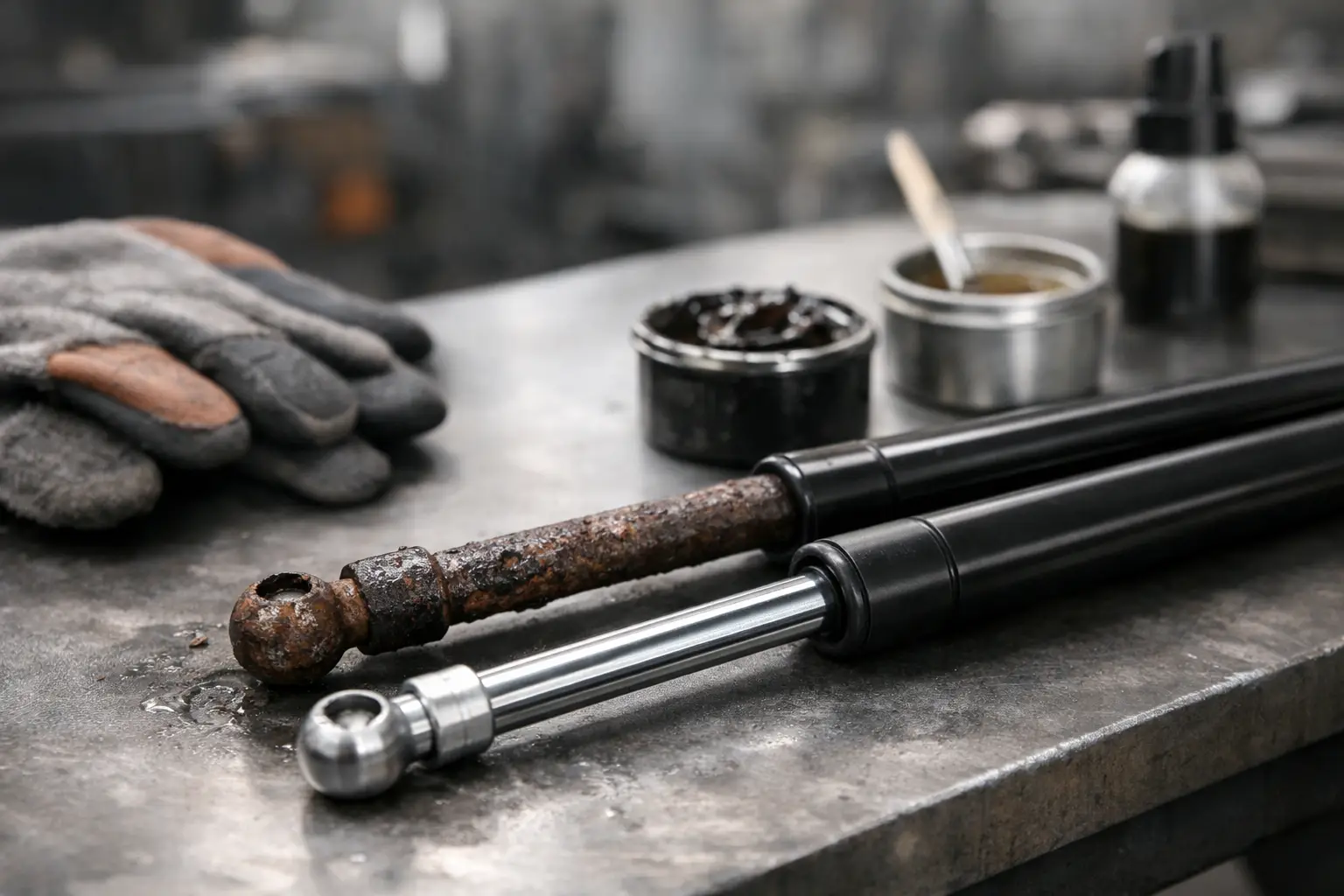
A failed petrol strut is usually easy to spot. The lid, hatch, seat base or access panel will not stay open, opens unevenly, or needs extra force to lift. In some cases the strut may show oil residue around the rod seal, corrosion on the shaft, or bent end fittings after heavy use.

That said, the strut is not always the only issue. Worn brackets, misaligned mounts, seized hinges and overloaded lids can all mimic strut failure. If the panel has twisted, the hinges are dragging, or someone has fitted a heavier canopy window, replacing the struts alone may not solve the problem. It pays to inspect the full setup before ordering parts.

If the existing struts still have legible markings, note the part number, force in Newtons, and any sizing data. That can save time and remove guesswork. If the label is gone or the strut is not original, measure it manually and confirm the application.

How to replace petrol struts safely

The biggest mistake in this job is removing a strut before the lid or panel is properly supported. Petrol struts often carry more load than people expect, especially on canopies, caravan boots, marine hatches and industrial access covers. Once one strut is removed, the remaining support may not be enough.

Use a prop, support stand or a second person to hold the panel securely in the fully open position. On heavier applications, support both sides evenly so the structure does not twist. If you are working on machinery or plant, isolate the equipment first and make sure no stored movement can occur while the strut is off.

Wear eye protection and gloves if access is tight or the mounting area is dirty. Keep hands clear of pinch points near hinges and brackets. A strut under normal service pressure should never be punctured, heated, crushed or modified.

The tools you usually need

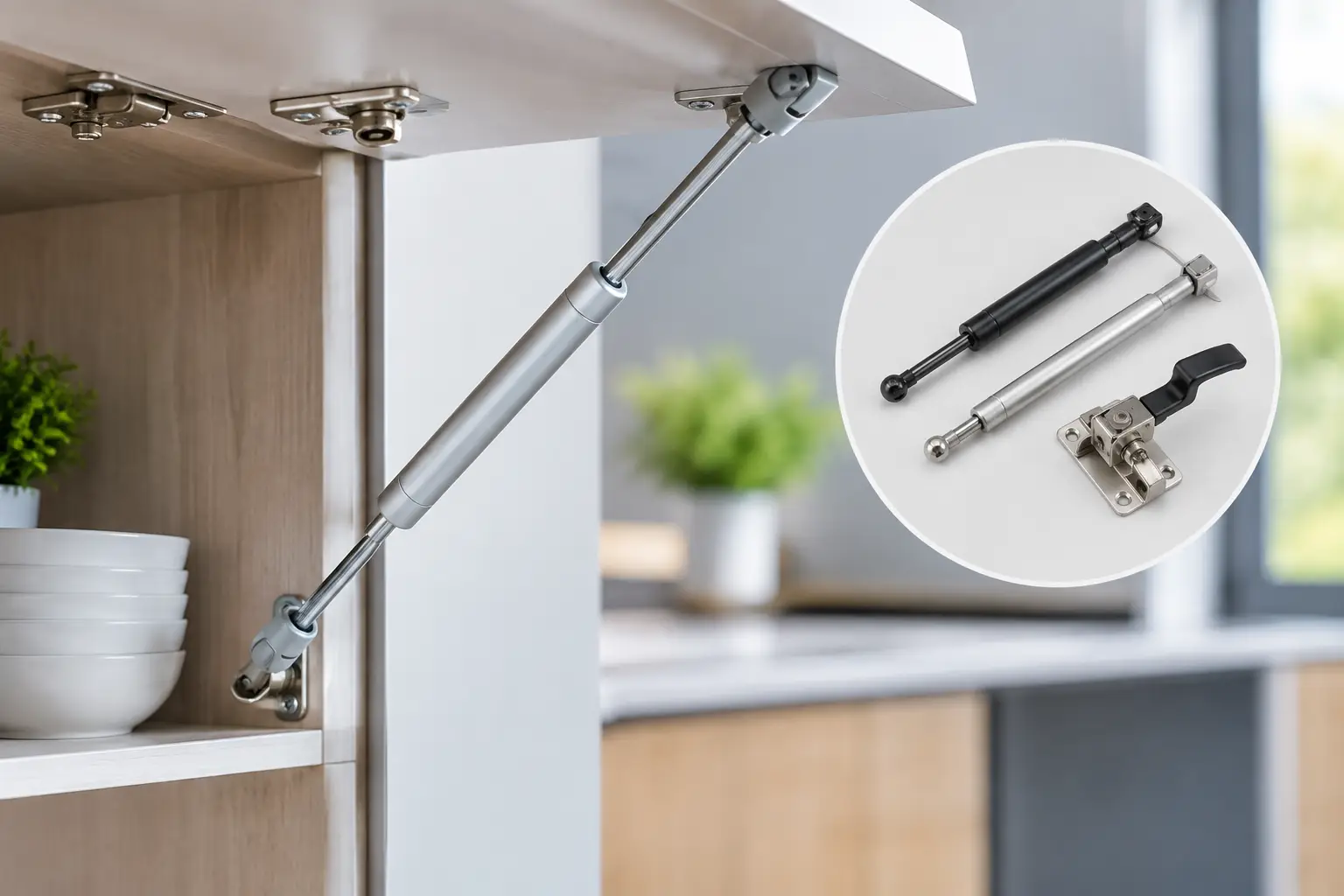
Most replacements only require basic hand tools. A small flat screwdriver is commonly used to lift the retaining clip on socket-style end fittings. Some setups use bolts, nyloc nuts, washers or clevis pins instead, so you may also need spanners or sockets.

You do not usually need to fully remove the retaining clip from a ball socket fitting. In most cases, lifting it slightly is enough to release the socket from the ball stud. Forcing the clip right out can make refitting harder and increases the chance of losing it.

Measuring the old strut before ordering

If you want to know how to replace petrol struts without repeat downtime, measurement is the part to get right. A close-looking substitute is not necessarily a correct replacement.

Measure the extended length from the centre of one end fitting to the centre of the other when the strut is fully open. Then measure the compressed length centre-to-centre with the strut closed, if it is still operable. You should also note the rod diameter, tube diameter, and the exact style of end fitting on each end.

Force rating is just as important. This is usually marked in Newtons, often shown as N. If the original says 400N, 500N or 800N, that figure should not be treated as a rough guide. Too little force and the panel will not stay up. Too much force and it may be difficult to close, place stress on hinges, or cause the lid to spring open too aggressively.

Where the strut has no visible rating, the application details become critical. The lid weight, hinge position, mounting point geometry and opening angle all affect the force required. This is where specialist guidance matters, particularly for custom canopies, toolboxes, machinery guards and marine fitouts.

Removing the old strut

Once the panel is safely supported, remove one strut at a time. That helps preserve alignment and makes it easier to compare the new unit with the old one during fitment.

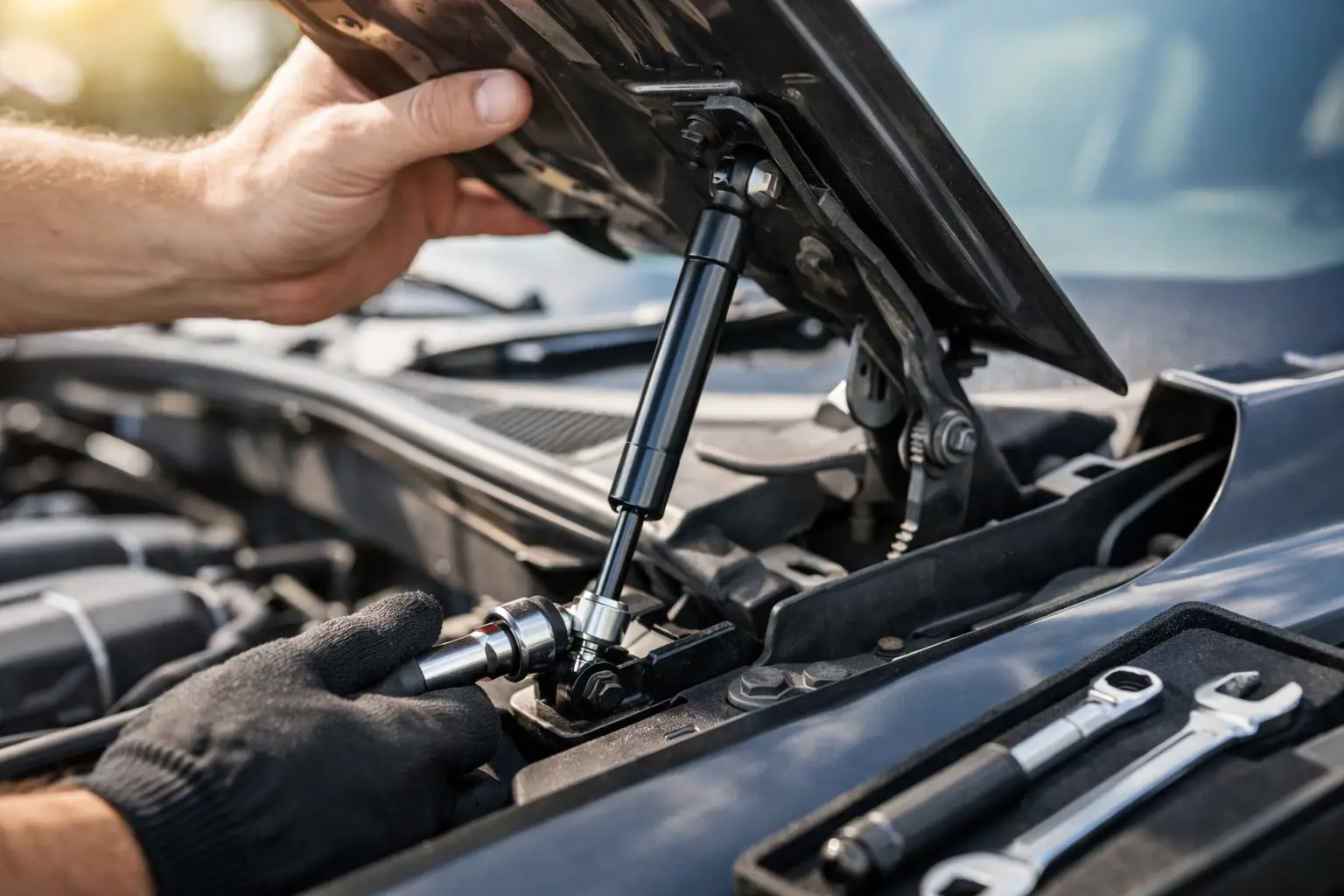
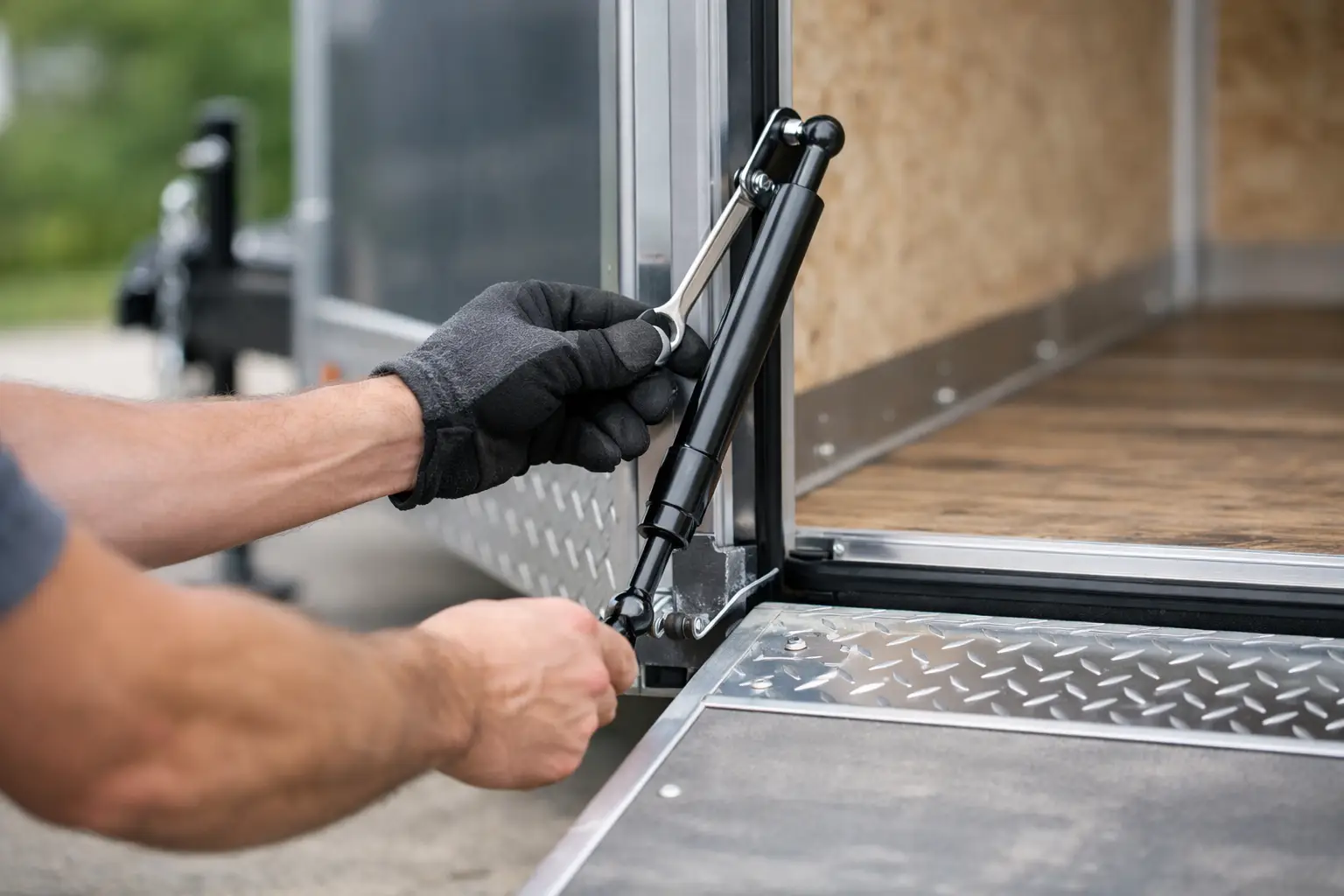
On ball socket ends, use a flat screwdriver to lift the retaining clip just enough to release the socket, then pull the fitting off the ball stud. Start at the easier end to access. On bolted or pinned ends, remove the fastener while keeping the strut from twisting against the bracket.

As soon as the old strut is free, compare it directly with the replacement. Check overall length, end fittings, body diameter and rod diameter before you attempt installation. A mismatch is easier to fix at this stage than after forcing the part into place.

Fitment direction matters

In most standard applications, petrol struts should be installed with the rod pointing down when the panel is closed. That orientation helps keep the internal seal lubricated and can extend service life. There are exceptions, particularly in unusual mounting positions or motion-control setups, but rod-down is the usual rule for lift-assist struts.

If the old strut was fitted rod-up, do not assume that was correct. It may have been installed that way for clearance reasons, or it may have been a poor previous repair. Check the mounting geometry before copying the old orientation.

Installing the new petrol strut

Fit the new unit to the same mounting points as the original unless you are deliberately correcting a known bracket issue. Push socket ends onto the ball studs until they snap into place, or refit pins and fasteners with the correct hardware. Do not hammer a strut into position. If the lengths or angles do not line up naturally with the panel supported in the right position, stop and recheck the specification.

After one side is installed, repeat the process on the second strut if the application uses a pair. Struts fitted as a pair should generally be replaced as a pair. If one has failed, the other is usually not far behind, and uneven performance side to side can twist the panel and overload hinges.

Once both are fitted, remove the support carefully and cycle the panel through its full range of movement. It should open smoothly, hold reliably, and close without excessive force. Watch for signs of binding, bracket flex, uneven lift or contact between the strut body and surrounding structure.

Common mistakes when replacing petrol struts

Most fitment problems come back to specification errors rather than installation technique. Choosing the wrong force is the biggest one. A strut that is too strong is not better quality – it is simply the wrong part for the job.

Another common issue is ordering by appearance alone. Two struts can look almost identical while having different stroke lengths, end fittings or force ratings. That is why measurements and application details matter.

Bracket condition is also often overlooked. If a ball stud is loose, bent or worn, a new strut will not perform properly for long. The same goes for damaged hinges. Replacing the strut without fixing the mounting hardware can shorten the life of the new part.

Finally, avoid mixing old and new struts on the same lid. The imbalance can cause uneven opening and unnecessary side load. For workshop vehicles, caravans, trailers and industrial equipment that see regular use, replacing both sides together is usually the sensible option.

When the replacement is not straightforward

Some applications are simple, such as a toolbox or cabinet lid with standard end fittings and a visible part number. Others are more technical. Canopy windows, marine hatches, agricultural equipment, mining plant and custom machinery often use non-standard lengths, unusual brackets or force ratings selected around specific load paths.

That is where application support can save time. If you can provide the extended length, compressed length, end fitting type, Newton rating if known, and a few photos of the mounted position, a specialist supplier can usually narrow down the correct replacement quickly. For custom jobs, the lid dimensions, weight and mounting geometry may also be needed.

For Australian users who need a standard replacement or a custom-fit option, Petrol Struts can help match the correct part from measurements, markings or application details at https://gasstruts.net.au/.

A good replacement job is not about forcing a quick swap. It is about restoring safe, predictable movement so the lid, hatch or access panel works properly every time. If you measure carefully, support the load properly and fit the right strut for the application, the job is usually simple and the result is worth doing once.

Custom Gas Struts Australia Buyers Need

Custom Gas Struts Australia Buyers Need

A rear canopy that will not stay up, a toolbox lid that drops without warning, or a machinery cover that opens too fast are not minor annoyances. They are fitment and safety problems. When you need custom petrol struts Australia-wide, the real job is not just finding a strut that looks close. It is getting the force, travel, fittings and mounting geometry right so the lid or panel works properly under load, in real conditions, day after day.

When custom petrol struts make more sense

A standard replacement is often the quickest answer when the original strut part number is known and the application has not changed. But plenty of jobs do not fall into that category. Modified canopies, aftermarket toolboxes, marine hatches, caravan storage, plant guards and fabricated machinery covers often need a strut matched to the actual setup rather than the nearest shelf item.

That is where custom work matters. A strut can be the correct overall length and still perform badly if the force is wrong or the mounting points are in the wrong position. Too much force and the lid can be hard to close, put stress on hinges, or spring open aggressively. Too little force and it will not hold safely at full extension. The right result comes from matching the strut to the moving load and the way that load travels through the opening arc.

What determines the right custom petrol strut

Most buyers start with length and end fittings, which is reasonable, but it is only part of the picture. Petrol struts are specified by extended length, compressed length, stroke, force rating and fitting type. In practice, mounting angle, hinge position, lid weight and where the strut attaches along the lid all affect how the unit behaves.

Force is not just about weight

A common mistake is assuming the lid weight equals the required Newton rating. It does not. A 20 kg hatch mounted close to the hinge may need a different force from a 20 kg hatch mounted further out, because leverage changes everything. The opening angle also matters. Some applications need firm support right near full open. Others need better control through the first part of the lift.

On heavy-use applications such as trailers, mining equipment, agricultural machinery and industrial access panels, there is also the issue of dynamic loading. Vibration, uneven surfaces and repeated cycling can change how a strut needs to perform. That is one reason a measured, application-specific approach gives a better outcome than guessing from weight alone.

Length, stroke and end fittings all need to match

The extended length determines how far the panel can open. The compressed length determines whether the strut can close without binding. Stroke affects travel between the two. Then there are the end fittings – ball sockets, eyelets, forks and threaded ends are common examples – and each needs to suit both the bracket and the clearance available.

Even small differences matter. A few millimetres in compressed length can stop a hatch from shutting cleanly. The wrong end fitting can twist the strut or create side load, which reduces service life. In a marine or off-road setting, that extra strain shows up quickly.

Custom petrol struts Australia-wide applications often require exact details

Across Australian conditions, petrol struts do more than hold up car bonnets. They are used on ute canopies, caravans, horse floats, boat hatches, farm equipment, service bodies, cabinets, seating bases and machine guards. Each application has its own demands.

A caravan tunnel boot, for example, may need compact closed length and moderate force so the door can be opened easily by hand. A heavy checker plate toolbox lid may need a higher force pair with corrosion-resistant hardware. A machinery guard may need controlled, repeatable opening to meet site safety expectations. In marine environments, salt exposure shifts the focus toward materials and long-term corrosion resistance. There is no single strut that suits all of these jobs.

That is why accurate information upfront saves time. If the application is unusual, modified, or safety-critical, custom specification is usually the better path.

What to measure before you ask for a quote

If you want the right strut first go, measure the existing unit if there is one. Record the extended length from centre to centre of the mounting points, the compressed length, the stroke if known, and the end fitting style. If the original force is marked on the tube, note that too. It is usually shown in Newtons, such as 250N or 600N.

If there is no existing strut, or the current setup is wrong, the application details become more important than the part itself. Measure the lid or hatch weight, overall dimensions, hinge position, current mounting point locations and desired opening angle. Photos of the open and closed position help, especially where space is limited or brackets are non-standard.

For trade and maintenance buyers, this is often the difference between a quick quote and a long back-and-forth. The clearer the information, the easier it is to specify a strut that works properly rather than merely fitting in the space.

Details worth supplying

A good enquiry usually includes the application type, whether one or two struts are used, environmental conditions, and whether the panel carries added weight such as racks, lining or mounted hardware. Temperature can matter as well. Gas pressure changes with heat and cold, so an application exposed to harsh weather or engine-bay conditions may need that factored in.

If brackets are damaged or missing, mention that early. In some jobs the strut is not the only issue. Worn hinges, bent mounts and poor alignment can make a correct strut seem faulty when the real problem is elsewhere.

Why quality matters more on working equipment

Cheap petrol struts can look fine on paper and still fail early in service. Seals, rod finish, tube quality and manufacturing consistency all affect life and performance. On a vehicle, trailer or machine that opens every day, those differences are not theoretical. They show up as weak lift, inconsistent motion, oil leakage and premature loss of pressure.

That is why buyers in trade, industrial and fleet settings tend to focus on certified quality and proven construction rather than the lowest ticket price. A strut that lasts and performs properly reduces callbacks, downtime and safety complaints. It also means less time spent pulling apart a lid or hatch for a second replacement.

For customers who need both stocked replacements and custom-built options, specialist suppliers such as Petrol Struts can usually assess whether an off-the-shelf part will do the job or whether the application calls for something more specific. That advice is often as valuable as the part itself.

Getting the fit right the first time

There is always a balance between speed and precision. If your machine or vehicle is down, you want a fast answer. But rushing the spec can create more delay than it saves. A strut with the wrong force, stroke or fittings can arrive quickly and still leave you with a lid that will not open safely or will not shut at all.

The practical approach is simple. Start with the measurable facts. Confirm whether the application is a direct replacement or a changed setup. Flag any harsh conditions, unusual loads or non-standard brackets. Then get the strut matched to the job rather than hoping a near enough option will hold.

That approach works whether you are replacing bonnet struts on a work ute, fitting out a caravan, maintaining mobile plant, or ordering multiple units for fabricated equipment. It is less about buying a gas strut and more about specifying a motion-control part that has to perform reliably every time it is used.

If you are ordering custom petrol struts Australia-wide, the best results usually come from a short, accurate brief rather than a long guess. A few measurements, a few photos and a clear description of the application can save a lot of wasted time – and make sure the next time that hatch opens, it stays exactly where it should.

Mining Equipment Gas Struts That Last

Mining Equipment Gas Struts That Last

When a service hatch drops without warning or a heavy access panel stops holding at full extension, the problem is rarely minor. In mining operations, mining equipment petrol struts do more than make lids easier to lift. They help protect technicians, reduce strain during routine checks, and keep plant access points working as intended in hard conditions.

A failed strut on a light commercial vehicle is inconvenient. A failed strut on mining equipment can slow maintenance, create a safety risk, or leave critical compartments awkward to access in the middle of a shift. That is why replacement should never be based on guesswork alone.

Why mining equipment petrol struts matter

Mining gear works in an environment that exposes every moving part to punishment. Dust gets into seals, vibration works fasteners loose, and temperature swings can change how a strut behaves from morning startup to the hottest part of the day. Add in oversized doors, tool compartments, inspection covers and engine bay panels, and it becomes clear that the strut is a working component, not a convenience item.

A properly specified petrol strut supports controlled motion. It helps an operator lift a panel without excessive effort, holds that panel in a predictable open position, and assists with safe closing. On machines where access is frequent, that support adds up quickly. Maintenance crews notice the difference when they are not fighting dead weight every time they inspect filters, hydraulics or electrical systems.

The other side of the equation is wear. Mining equipment often carries more mass in each hatch or door than standard industrial equipment, and the mounting geometry is not always forgiving. If the force is wrong, the strut can overload brackets, twist mounting points or make the panel difficult to close. If the body material or seal quality is poor, service life can be short.

What makes a strut suitable for mining use

Not every petrol strut sold for industrial use is automatically suitable for mining equipment. The application usually demands closer attention to force, stroke, closed length, end fittings and corrosion resistance.

Force rating is the first point most buyers look at, and for good reason. Heavy access doors and covers need enough support to lift and hold safely. But higher force is not always better. If the strut is overpowered, the panel may spring open too aggressively or put extra stress on hinges and brackets. The right force depends on panel weight, centre of gravity, mounting position and the angle through the opening arc.

Material quality also matters. On-site conditions can include moisture, slurry, washdown procedures and abrasive dust. That combination is hard on rods, seals and mounting hardware. Better quality struts are built to resist contamination and maintain more consistent performance over time, especially where the machine is exposed continuously.

Then there is cycle demand. Some struts are opened occasionally during scheduled servicing. Others are used multiple times a day across fleets and fixed plant. The more frequently an access point is used, the less room there is for a low-grade part.

Common mining applications for petrol struts

Petrol struts turn up across a wider range of mining assets than many people expect. They are commonly fitted to engine covers, battery box lids, side access doors, generator housings, compressor enclosures, pump cabinets and control compartments. On support vehicles and field service units, they are also used on canopy doors, toolbox lids and storage systems.

Each application creates its own set of requirements. A battery box lid may need compact closed length and moderate force in a tight mounting area. An engine cover may need significantly higher force and stronger end fittings because of size, weight and vibration. A service body canopy might require smooth opening behaviour and reliable holding force for technician safety when parked on uneven ground.

This is where a generic replacement often falls short. Two struts can look similar on the bench and still behave very differently once installed.

Replacing mining equipment petrol struts without guesswork

The safest way to replace a mining strut is to match the original specification as closely as possible, then check whether the original design itself caused repeated failures. If a strut has been changed before, painted over, or fitted with non-standard ends, that assessment becomes even more important.

Start with the core measurements. You need the extended length from centre to centre, the closed length, and the stroke. Then identify the force, usually marked in Newtons on the strut body. End fitting type matters as well, whether that is a ball socket, eyelet, fork or another configuration.

Mounting orientation should also be checked. Petrol struts are typically designed to work with the rod facing down in the closed position where possible, which helps lubrication and seal life. If the machine layout forces a different arrangement, that does not rule the part out, but it may affect longevity and performance.

If no markings remain, the job becomes more technical. In that case, the panel weight, hinge position, opening angle and mounting point locations all help determine the correct replacement. This is often where specialist advice saves time. Instead of trialling multiple parts, you can work from actual application data and get a strut that behaves properly from the start.

Why custom fitment is often the better option

Mining fleets are rarely made up of textbook applications. Equipment gets modified, guards are reworked, replacement panels differ from OEM dimensions, and site-specific service bodies introduce extra access points. In these cases, an off-the-shelf strut may be close, but close is not always good enough.

A custom solution can address force changes, altered mounting geometry, unusual stroke requirements or higher durability needs. That matters when an access panel has to stay open reliably in the field, not just in a workshop test fit.

For trade buyers and maintenance managers, custom fitment also helps standardise across equipment where practical. That can reduce downtime spent chasing mismatched replacements and lower the risk of staff fitting whatever looks nearest on the shelf. If the strut is a known spec for a known application, replacement becomes much more straightforward.

Signs your current struts are not up to the job

The obvious sign is loss of holding force. If a hatch drifts down, will not stay fully open, or needs a prop to remain safe, the strut should be replaced. But there are less obvious warning signs as well.

Jerky movement can indicate internal wear or contamination. Visible rod damage can shorten seal life quickly. Bent shafts, loose end fittings and bracket fatigue often suggest the force or geometry is wrong, even if the strut still works for now. Difficulty closing a panel can also point to over-specification, not strength.

Where a strut fails repeatedly in the same position, it is worth looking beyond the part itself. Vibration, heat exposure, poor bracket alignment and side loading can all reduce service life. Replacing the strut without addressing the cause usually leads to the same result.

What to have ready before you order

A quicker quote usually comes down to the details provided upfront. The most useful information includes the extended and closed lengths, Newton rating, end fitting style, rod and tube diameter if known, and clear photos of the mounted strut and brackets. If the original part number is legible, that helps as well.

For an unmarked or non-standard unit, photos of the full hatch or panel in both open and closed positions are valuable. So are basic details about the machine type and what the strut supports. The more complete the picture, the easier it is to recommend a correct replacement rather than a rough substitute.

For buyers managing multiple assets, it can be worth recording these details as part of maintenance history. That turns the next replacement into a planned task instead of a rushed measure after a breakdown.

Choosing a supplier that understands hard-use applications

Mining applications leave little room for vague product matching. A supplier should be able to help with more than just a catalogue lookup. They should understand force selection, mounting variables, end fitting options and the difference between a standard replacement and a strut intended for ongoing heavy use.

That support is especially useful when the equipment is older, modified or fitted with struts that are no longer readily identified. Access to stocked sizes helps for common replacements, but technical guidance matters just as much when the application is specific. That is why many trade and industrial buyers deal with Petrol Struts at https://gasstruts.net.au/ when fit, force and reliability need to be right the first time.

The best result is not simply getting a hatch to open again. It is getting a strut that suits the equipment, protects the operator and stands up to the actual work being done. On mining gear, that difference shows up quickly in safety, maintenance efficiency and how often the same part needs replacing.

If a strut on site is failing early, hard to identify or no longer matched to the job, it is worth stopping to measure it properly before ordering the next one. A few extra details at that stage usually save far more time than another short-lived replacement.

Tractor Cab Gas Struts: What to Check

Tractor Cab Gas Struts: What to Check

A tractor cab door or rear window that won’t stay up is more than an annoyance. In the paddock, workshop or shed, failed tractor cab gas struts can slow access, create a safety risk and put extra strain on hinges, frames and operators who are already working around heavy equipment.

Getting the replacement right matters because cab struts are not a one-size-fits-all part. Two struts can look similar on the bench and still perform very differently once fitted. Length, end fittings, force rating, stroke and mounting geometry all affect how the cab door, side glass or rear hatch opens and holds in service.

Why tractor cab gas struts fail

Most failures come down to age, contamination, heat, vibration or plain hard use. Agricultural equipment spends its life around dust, mud, washdowns, fertiliser residue and constant shock loads. That operating environment is far tougher than a light-duty automotive application.

When a strut starts losing pressure, the first sign is usually poor holding force. The window drops, the door feels heavier, or the panel no longer reaches full open position without help. In other cases, the strut may still lift but move unevenly, bind through travel or show oil residue around the rod seal.

It also depends on how the tractor is used. A machine that sees seasonal work and long storage periods can have different issues from one operating daily. Extended exposure to weather, infrequent cycling and corrosion around fittings can all shorten service life, even if the total hours are not especially high.

What to match when replacing tractor cab gas struts

The safest approach is to match the original strut as closely as possible. If the old unit still has a readable part number, that is the quickest place to start. If not, accurate measurements and application details are the next best option.

Extended length and stroke

Extended length is the measurement from centre-to-centre of the mounting points when the strut is fully open. Stroke is the distance the rod travels between closed and open positions. Both are critical. If the extended length is wrong, the panel may not open far enough or may over-travel and load the hinges. If the stroke is wrong, the strut may bottom out before the door or glass reaches its stop.

Even a small mismatch can create problems in a tractor cab. Tight mounting spaces and short lever distances mean geometry matters more than many buyers expect.

Force rating

Force is usually shown in Newtons. This is where many replacement mistakes happen. Too little force and the panel will not stay open. Too much force and the cab frame, brackets or hinges can be overloaded, especially on glass sections or lighter framed doors.

There is no universal “better” option here. A higher force strut is not an upgrade if the original setup was designed around a specific opening weight and angle. Where accessories, replacement glass, frame repairs or aftermarket cab changes have altered the load, the correct force may need to be reassessed rather than copied blindly.

End fittings and mounting style

Ball sockets, forks, eyes and threaded ends are all common, and the thread size also needs to match. A strut body may be correct in length and force but still be unusable if the end fittings are wrong.

Mounting orientation matters too. Many gas struts are intended to be installed rod-down when closed to support seal lubrication and service life. In some tractor cab setups, available space limits orientation options, so it is worth checking the original layout before ordering.

Why fitment details matter in agricultural equipment

Tractor cabs are not all built the same, even within the same brand. Model series, cab variants and year changes can affect strut length, bracket position and force requirement. A rear window strut on one model may differ from the side door strut on another, even when the cab shape looks similar.

Repairs and modifications add another layer. If hinges have been replaced, brackets re-welded, or a door has been straightened after damage, the original specification may no longer be the best fit. That is why practical measurements from the machine are often more reliable than assumptions based on make alone.

For workshops and maintenance teams, this is where technical support saves time. Sending a part number, measurements, photos of each end fitting and the application details usually leads to a much cleaner result than trial-and-error ordering.

Signs you may need more than a standard replacement

Sometimes the issue is not just a worn strut. If the cab panel twists when opening, drops suddenly near the end of travel or feels different side to side, there may be wear elsewhere in the system.

Check the hinges, mounting studs, brackets and frame alignment. A new strut fitted to worn hardware can fail early or perform poorly because the load is no longer moving as designed. Corroded ball studs, bent brackets and seized pivots all increase stress on the strut and can give the impression that the replacement is faulty when the real problem is mechanical.

This matters particularly on older tractors that have had years of vibration and occasional rough handling. Replacing the strut without checking the mounting points can solve the symptom for a short time but not the cause.

Choosing durable tractor cab gas struts

For agricultural use, durability is not just about pressure rating. Material quality, seal design, rod finish and manufacturing consistency all affect service life. In dusty and wet conditions, lower-grade struts often lose performance faster because contamination and corrosion get to work early.

A dependable replacement should be selected for real operating conditions, not just catalogue appearance. That includes frequent opening cycles, outdoor storage, washdown exposure and rough terrain vibration. Buyers managing fleets or workshop stock usually benefit from choosing quality-backed units that reduce repeat failures and call-backs.

This is also where specialist supply makes a difference. A supplier focused on gas struts can usually help with exact match replacements as well as custom options where standard stock does not quite suit the machine. For hard-working applications, that support is often more useful than buying on dimensions alone.

What to provide when ordering

If you want the right result first time, the best approach is to provide as much detail as possible. The most useful information is the strut part number, extended length, stroke, force in Newtons, end fitting type and clear photos of the installed position.

It also helps to note where the strut is fitted – for example cab door, rear window or side glass – and whether one or two struts share the load. If the old strut is completely failed and unreadable, measurements from the open and closed positions can still be enough to identify a suitable option.

For Australian operators who need quick turnaround, working with a supplier such as Gas Struts can simplify this process because technical guidance, standard replacements and custom solutions are handled through the same channel.

Installation points worth checking

Installation is usually straightforward, but there are a few details worth getting right. Support the cab panel before removing the old strut. Never rely on the remaining strut alone if the setup uses a pair.

Fit the new unit with the correct orientation, check that the end fittings seat properly, and confirm the panel opens and closes through full travel without binding. If the new strut feels excessively strong or weak, stop and recheck the specification before forcing the panel into service. A strut that is wrong on force or length can damage surrounding hardware quickly.

After fitting, inspect the hinges and brackets once more under load. If the panel sits unevenly or the movement is jerky, the issue may be in the mounting hardware rather than the strut itself.

When custom sizing is the better option

Not every tractor cab application can be solved with an off-the-shelf part. Older machines, imported models, modified cabs and equipment with unavailable OE numbers often need a custom-matched solution.

That does not mean the process is complicated. In most cases, accurate dimensions, fitting details and a description of the panel weight and travel are enough to work out a suitable replacement. The advantage is getting a strut built around the actual application instead of compromising with the nearest available size.

If your cab door, glass or hatch is part of daily operation, it is worth treating the strut as a working component rather than a generic consumable. The right replacement keeps access safe, reduces wear on surrounding parts and saves repeat downtime. A careful match now is usually cheaper than dealing with broken brackets, cracked glass or another failed strut a few weeks later.

Boat Seat Gas Struts: What to Check

Boat Seat Gas Struts: What to Check

A folding helm seat that won’t stay up is more than a nuisance. When boat seat petrol struts lose pressure, corrode, or were never sized properly in the first place, access becomes awkward, lids drop without warning, and routine storage or battery checks turn into a two-handed job.

In marine seating, the strut is doing a simple job under harsh conditions. It has to lift and hold a seat base or hatch smoothly, cope with vibration and salt exposure, and keep working after repeated opening cycles. That means the right replacement is not just about matching something that looks similar. It has to match the application.

Why boat seat petrol struts fail early

Marine environments are hard on moving hardware. Salt, spray, humidity and heat all work against the seals, rod finish and mounting points. Even on inland boats, moisture and UV exposure can shorten service life if the strut quality is poor or the seat frame flexes under load.

A common issue is corrosion beginning around the rod or end fittings. Once the rod surface is marked, the seal can wear quickly and the strut starts losing force. Another problem is side loading. Petrol struts are designed to work in line with their stroke. If the geometry forces the strut to twist or carry sideways pressure, service life drops fast.

Incorrect force is another frequent cause of trouble. If the strut is underpowered, the seat won’t stay open reliably. If it is too strong, the seat can spring up aggressively, put stress on hinges and brackets, or become difficult to close. In marine seating, where seat bases may include storage compartments, batteries or safety gear underneath, that difference matters.

How to identify the right boat seat petrol struts

The best starting point is the existing strut, if it is original and the seat has been operating correctly. Most units will have a part number, force rating in Newtons, and basic size information printed on the tube. If those markings are gone or the strut was never right, you need to work from measurements and the application itself.

Measure the extended and compressed length

Measure from the centre of one mounting point to the centre of the other. Take one measurement with the seat fully open and another with it closed. These dimensions tell you the strut length and stroke range the seat geometry needs.

This is where many replacement attempts go wrong. A strut that is close in length may still bottom out before the seat closes, or it may not extend far enough to support the seat in the open position. A few millimetres can make the difference between smooth operation and a poor fit.

Check the end fittings and mounting style

Boat seat petrol struts are fitted with a range of end types, including ball sockets, eyelets and forks. The mounting hardware also needs to suit the brackets already on the seat and base. If you are changing fittings, make sure the bracket position and clearance still work through the full movement.

It is also worth checking for wear in the brackets themselves. If the mounting points are loose, bent or rusted, replacing the strut alone may not fix the problem.

Confirm the force rating

Force rating is usually marked in Newtons, often shown as N. This figure needs to suit the seat weight, the hinge location and the angle of installation. Two seats that look similar can need very different force ratings depending on how the load is distributed.

If the original strut lifted the seat properly and the layout has not changed, matching the same force is often the safest option. If the seat has been modified, re-trimmed, fitted with extra gear underneath or had bracket positions changed, a fresh force assessment is the better path.

Marine conditions change the buying criteria

A boat is not the place for a generic strut chosen on length alone. Corrosion resistance matters. Seal quality matters. End fittings and brackets need to cope with vibration and regular movement, not just occasional indoor use.

For marine seating, material selection should be taken seriously. A strut with poor rod protection or low-grade fittings may fit on day one but fail early in service. This is particularly relevant for trailer boats, fishing vessels and workboats that are washed down regularly or exposed to spray.

The application also affects how the strut should be oriented. In many installations, fitting the rod downwards in the closed position helps keep the internal seal lubricated. That can improve service life, provided the geometry allows it. There are exceptions, so it depends on the seat design and available mounting space.

When a standard replacement works, and when it doesn’t

If you have a straight replacement job with clear measurements, visible part markings and standard mounting points, an off-the-shelf solution often does the job well. That is the fastest path when the seat design is common and the original setup performed properly.

Where things get more complicated is with imported seating, older boats, modified helm seats or custom storage bases. In those cases, the original strut may no longer be available, or it may have been an imperfect substitute fitted years ago. That is where technical guidance saves time.

A proper replacement may require matching not only the length and force, but also the end fitting combination, corrosion-resistant finish and opening behaviour of the seat. For workshops and marine fabricators, that level of accuracy reduces rework and avoids trial-and-error ordering.

Signs your boat seat petrol struts need replacement

Most failed struts do not stop overnight. They fade. The seat gets heavier to lift, won’t stay up in wind or vibration, or drops sooner than it used to. That gradual decline is easy to ignore until someone gets a knock on the hand or the seat base slams shut.

Visible oil residue around the rod seal is another warning sign. So are rust marks, pitting on the rod, stiff movement, or end fittings that have developed play. If one strut on a twin-strut setup has failed, the other is often close behind, especially if both have seen the same service conditions.

For commercial or high-use marine applications, replacing before complete failure is often the smarter maintenance decision. It reduces safety risk and keeps access points working as intended.

What to have ready before ordering

If you are sourcing a replacement, good information speeds the process. The most useful details are the extended length, compressed length, stroke, end fitting type, force rating and clear photos of the installed strut and brackets. If the seat has no existing strut, then photos and key dimensions of the seat base, hinge point and opening angle help determine what will work.

It also helps to note whether the boat operates in saltwater, whether the seat is a helm seat or storage base, and whether the setup uses one strut or a pair. Those details affect both product choice and service life expectations.

For trade buyers, maintenance teams and repairers, consistent measurement records make future replacements much easier. If you manage a fleet or service multiple vessels with similar seating layouts, standardising those details reduces downtime later.

Why technical support matters on marine seat struts

Petrol struts are simple components, but the application is rarely as simple as the catalogue page. The wrong force can stress the seat. The wrong length can stop it closing. The wrong finish can shorten life in a marine environment.

That is why specialist support is useful, especially when the original part number is missing or the seat setup is non-standard. A supplier focused on petrol struts can help match measurements, assess likely force requirements and advise on fittings or custom solutions where standard stock is not enough. For buyers who need a practical answer rather than guesswork, that is a better outcome than ordering by appearance.

At petrolstruts.net.au, that is exactly where a specification-led approach helps. You are not trying to make a near enough part work. You are trying to get the seat operating safely and reliably with the right strut for the job.

Boat seat petrol struts are small components, but they carry a lot of the workload in a wet, high-wear environment. Get the measurements right, account for corrosion and mounting conditions, and you will usually avoid the cycle of early failure and awkward fitment that wastes time on the water and in the workshop.

Choosing Marine Hatch Gas Struts

Choosing Marine Hatch Gas Struts

A hatch that will not stay open is more than an annoyance on a boat. It is a safety issue, a maintenance problem and, in rough conditions, a good way to end up with damaged hardware or injured hands. Marine hatch petrol struts need to do a simple job reliably – lift the hatch, hold it steady and close without fighting you – but getting that result depends on more than matching a part by eye.

Salt, spray, UV exposure and constant vibration make marine applications less forgiving than many land-based installs. A strut that works well on a toolbox or canopy may not last on a bait board locker, engine hatch or under-seat compartment if the materials, force rating and mounting geometry are wrong. That is why marine hatch selection should be treated as a technical fitment, not a generic replacement.

What marine hatch petrol struts actually need to handle

On a boat, the strut is working against more than hatch weight. The hinge position, opening angle, sea movement and hardware placement all change how the strut behaves. A relatively light hatch can still need a surprisingly firm strut if the mounting points give it poor leverage. The reverse is also true – a heavy hatch can sometimes be controlled with less force if the geometry is efficient.

Material choice matters as well. In marine conditions, corrosion resistance is not optional. Stainless steel components are generally preferred where they are exposed to salt air or direct spray, especially on external hatches and frequently opened compartments. If a hatch is in a more protected area, material options can be broader, but the environment still needs to be considered properly.

There is also the issue of controlled movement. A hatch should open smoothly and stay in position without launching upward or slamming down. That balance comes from correct force selection and proper bracket placement. Too much force can stress hinges, distort mounting points and make the hatch difficult to close. Too little force leaves the hatch unstable and unsafe.

How to choose the right marine hatch petrol struts

The fastest way to get the right result is to start with the existing strut, if one is fitted. In many cases, the old unit provides the key specifications: extended length, compressed length, end fittings and force rating in Newtons. If the original strut has failed, these details are still useful as a reference, though they should not be copied blindly if the hatch has always been hard to operate.

Measure the strut correctly

Extended length is measured centre-to-centre between the mounting points when the strut is fully open. Compressed length is the same measurement when the strut is closed. Stroke is the difference between the two. These dimensions affect whether the hatch opens far enough and whether the strut bottoms out before the hatch is fully shut.

A few millimetres can make a real difference. If a replacement is too long, it may stop the hatch closing properly or put the body under load at full shut. If it is too short, you can lose opening height or create poor operating angles.

Check the force rating

The force rating, usually marked on the strut body in Newtons, tells you how much assistance the strut provides. This is one of the most common points of error. People often assume a hatch simply needs more force when it starts dropping, but that can be the wrong fix if the mounting points are worn, the hinges are binding or the original strut was over-spec’d in the first place.

If there is no readable force marking, the hatch weight and bracket geometry need to be assessed. This is where application advice can save time. A strut is not selected by weight alone because the lever effect changes across the opening arc.

Match the end fittings and brackets

Ball joints, eyelets, fork ends and specific marine brackets all affect installation and movement. The fittings need to match both the strut and the hatch mounting hardware. Adapters are sometimes possible, but not always ideal in a space-constrained compartment.

Bracket position also affects performance. Even with the correct strut, a poor bracket location can cause over-extension, weak lift or uneven loading. If you are designing a new hatch setup rather than replacing an existing unit, bracket geometry should be part of the selection process from the start.

Common marine applications and what changes between them

Not all boat hatches behave the same way. An anchor well hatch, an engine cover and a side locker lid can all use petrol struts, but the conditions and movement are different.

External deck and locker hatches

These are usually exposed to water, sunlight and regular washdown. Corrosion resistance is a priority, and drainage around the mounting area should be checked. If water sits around the brackets or the rod is constantly exposed, service life can drop quickly with the wrong material choice.

Engine hatches and service covers

Engine access hatches tend to be heavier and often need higher force ratings or twin strut setups. Heat can also affect performance over time, particularly in enclosed compartments. For larger lids, balanced lift on both sides is important to avoid twisting the hatch or overloading hinges.

Seating and storage compartments

Under-seat hatches and storage lids often need a smoother, lighter action because they are opened frequently and used in tighter spaces. In these cases, the strongest strut is rarely the best one. Ease of closing and controlled opening matter just as much as hold-open force.

When replacing one strut is not enough

If a boat hatch uses two struts, replacing only the failed side is usually a false economy. Petrol struts lose performance over time, and a new unit paired with a tired one creates uneven lift. That can rack the hatch, overload one bracket and make the lid sit awkwardly when open or shut.

The same logic applies when hinges, brackets or mounting screws are worn. A new strut cannot compensate for loose fixings, cracked substrate or a hinge that has started to bind. Before fitting replacements, inspect the mounting area properly. On marine installations, moisture ingress around fasteners can create hidden weakness in timber cores or composite panels.

Signs the original setup may have been wrong

Not every failed hatch strut is simply worn out. Sometimes the strut was marginal from day one. If the hatch has always needed two hands to shut, never opened to a practical angle or dropped halfway through its travel, the original specification may have been off.

Another common issue is over-force. This shows up when a hatch springs open aggressively, sits under obvious strain when closed or starts pulling on hinges and brackets. It may feel secure at first, but over time that excess load can cause more expensive damage than the strut itself.

This is where a proper review of dimensions, force and mounting points is worthwhile. A better-spec’d replacement can improve usability and reduce wear across the whole hatch system.

Why marine-specific advice saves time

Marine hatch fitment is one of those jobs that looks straightforward until the measurements start conflicting with the way the hatch actually moves. That is why technical support matters. If you can provide the strut length, force if known, end fitting type, mounting orientation and a few basic hatch details, the selection process becomes much more accurate.

For non-standard setups, custom solutions are often the better path. That might mean a different force rating, alternate end fittings or guidance on revised bracket placement. For trade customers, boat builders and maintenance teams, getting that right early avoids repeat labour and unnecessary part swaps.

Specialist suppliers such as Petrol Struts can help assess both replacement and new marine hatch applications, particularly where the original part number is missing or the existing setup has never worked as it should. The key is giving enough detail to match the strut to the hatch, not just to the old part.

A reliable hatch should open with control, stay where you put it and close without a fight. If yours does anything else, the fix is usually not complicated – but it does need to be the right one.

Cabinet Door Gas Struts: What to Check

Cabinet Door Gas Struts: What to Check

A cabinet door that drops, twists or refuses to stay open is more than an annoyance. In workshops, service vehicles, caravans, boats and industrial fit-outs, cabinet door petrol struts are there to control movement safely and make access easier in tight spaces. Get the strut wrong and you end up with a door that is hard to lift, over-stressed hinges, or a setup that wears out faster than it should.

That is why cabinet struts need to be matched to the actual job, not guessed by eye. Door size matters, but so do door weight, hinge position, mounting geometry, opening angle and where the cabinet is being used. A lightweight overhead locker in a caravan has different demands from a heavy service body hatch on a work ute or a marine compartment exposed to vibration and moisture.

Why cabinet door petrol struts need proper sizing

A petrol strut does two jobs at once. It helps lift the door and it slows the movement so the door opens and closes in a controlled way. If the force is too low, the door can feel heavy and may not stay open. If the force is too high, the door can spring upward too aggressively or fight you on the way down.

This is where many fitment problems start. People often replace a failed strut with something that looks similar, but length alone does not tell you enough. Two struts can have the same extended length and still behave very differently because the force rating, end fittings and compressed length are not the same.

In cabinet applications, small changes in bracket location can also have a big effect. Move the mounting point a short distance and the leverage changes. That can turn a smooth, balanced door into one that binds, slams or sits under constant stress.

What to measure before ordering cabinet door petrol struts

If the existing strut is still fitted, start there. Check the extended length from centre to centre of the mounting points, the compressed length if available, the end fitting type, and any part number or force marking printed on the tube. Force is usually shown in Newtons, often as N.

If the old strut is missing, damaged or was never correct, measure the application instead. You will need the door height and width, the door weight, the hinge position, the opening direction, and the desired open angle. It also helps to note whether one strut or two are being used and whether there are frame restrictions that limit mounting positions.

Door weight is the point many people skip, and it matters. Material choice changes everything. An aluminium-framed door with a light infill panel is very different from a solid timber or steel door of the same size. Add latches, seals, glazing or internal racks and the operating load increases again.

The key specifications that affect fitment

Extended length determines how far the strut reaches when open. Compressed length matters because the strut must close without bottoming out. Force rating controls lifting assistance. End fittings and bracket style decide whether the strut will actually connect securely to the cabinet and door.

Orientation can matter as well. In many applications, fitting the strut with the rod pointing downward in the closed position helps lubrication and service life. That is not always possible in every cabinet layout, but it is worth checking during design or replacement.

Common problems with cabinet petrol strut setups

One of the most common issues is a door that will not stay open even though the strut is new. That can mean the force is too low, but it can also point to poor bracket placement or worn hinges. If the geometry is wrong, the strut may not generate enough effective lift through the opening arc.

Another common problem is a door that opens too hard. This usually happens when the strut force is excessive for the door weight and mounting position. It can feel minor at first, but over time it can load up hinges, brackets and fasteners. On lighter cabinet structures, that can lead to distortion or cracking around the mounting points.

Uneven movement is another sign something is off. If a wide door uses two struts and one has weakened, the door may twist during operation. The same thing can happen if the pair are not matched in force or if one bracket has shifted. On larger cabinet doors, matched pairs are generally the safer option for balanced lifting.

Choosing between standard and custom cabinet door petrol struts

For many cabinet applications, a stocked strut size will do the job if the dimensions and force line up correctly. This is often the case for common toolbox lids, overhead cabinet doors and standard service body compartments.

Custom struts become more relevant when the door is unusually heavy, the available mounting space is tight, the opening angle is specific, or the application runs in harsh conditions. Marine, agricultural, mining and mobile service environments can be hard on fittings, seals and brackets. In those cases, getting the strut matched to the real working conditions usually saves time and repeat failures.

Customisation is also useful when an existing cabinet design has known issues. If the current setup is awkward to close, over-lifts, or does not hold reliably under load, changing the strut specification can improve operation without redesigning the whole cabinet.

When one strut is enough and when two make sense

A smaller, lighter cabinet door may only need one strut. That keeps cost down and simplifies installation. But once the door gets wider, heavier or more exposed to vibration, two struts often give better control and reduce twisting loads on the hinges.

It depends on the door construction and how the load is distributed. A narrow but dense door can still need more assistance than a larger lightweight panel. This is why dimensions alone should never be the only basis for selection.

Installation details that make a difference

Even the right strut can perform poorly if it is installed with the wrong brackets or at the wrong angle. Bracket location affects leverage through the full swing of the door, so copying a rough position is not always good enough. Measure carefully and check clearances in both the open and closed positions.

Fastener strength matters too. Cabinet substrates vary from thin sheet metal and aluminium to timber composite and reinforced polymer panels. The mounting method needs to suit the material. A strut places repeated load into the fixing points, not just static load, so weak screws in soft material can loosen over time.

If you are replacing only one strut from a pair, think twice. In most cabinet door applications, replacing both at the same time is the safer move. A fresh strut paired with a tired one usually gives inconsistent lifting and can shorten the life of the new part.

Cabinet door petrol struts in mobile and heavy-use environments

Cabinet hardware in a shed or office has an easier life than hardware in a caravan, marine compartment, mine vehicle or trade service body. Vibration, dust, washdown, salt exposure and repeated daily cycles all affect service life. That is why application context should be part of the buying decision.

For hard-use environments, durability is not a marketing extra. It affects uptime and safety. A strut that loses force early or corrodes around fittings can turn a simple access panel into a maintenance issue. For fleet operators and workshop managers, that means more time off the road and more avoidable replacements.

This is also where specialist advice helps. A supplier focused on struts can usually identify whether the issue is force, geometry, fitting style or environmental suitability from a few measurements and photos. That is often faster than trial-and-error ordering.

How to get the right strut without guesswork

The fastest way to source the right cabinet strut is to provide clear technical details upfront. A part number is useful if you have it, but it is not essential. Good photos of the existing strut and brackets, key measurements, door weight and a note about the application will usually narrow it down quickly.

If the cabinet is custom-built or the old strut was never correct, mention that as well. It changes the approach from direct replacement to proper specification. At that point, opening angle, bracket position and operating environment become even more important.

For customers who need dependable cabinet door petrol struts across workshop, vehicle, marine or industrial use, dealing with a specialist supplier such as Petrol Struts can remove a lot of uncertainty. The right advice at the start is usually cheaper than replacing the wrong part twice.

A cabinet door should open cleanly, stay where it is meant to stay, and close without a fight. If it is not doing that, the answer is usually in the measurements, not in guessing a strut that looks close enough.

Choosing Toolbox Lid Gas Struts

Choosing Toolbox Lid Gas Struts

A toolbox lid that drops without warning is more than annoying. On a ute, trailer or site box, it slows the job down, damages hinges and creates a genuine safety risk. That is why getting the right toolbox lid gas struts matters – not just any strut that looks close enough, but one matched to the lid weight, mounting geometry and the way the box is actually used.

Why toolbox lid gas struts need to be matched properly

Toolboxes cop a harder life than most lid applications. They are opened and shut repeatedly, exposed to dust, vibration, weather and uneven loading, and often mounted on vehicles or equipment that do not stay still for long. A gas strut that works fine on a light cabinet door may fail quickly or lift poorly on a heavy checker plate toolbox.

The usual problems come from incorrect force, incorrect extended or compressed length, or poor bracket positioning. Too much force and the lid can be difficult to close, place excess load on the hinge or twist the mounting points. Too little force and the lid will not stay up reliably, especially when the toolbox is parked on a slope or the lid has extra weight from seals, racks or internal lining.

This is where a lot of buyers get caught. They assume the old strut rating is all they need, but replacement is not always that simple. If the original setup was marginal from day one, fitting the same thing again may only repeat the problem.

What to check before ordering toolbox lid gas struts

Start with the basics. If the existing strut still has a part number, that can help, but you should still confirm the measurements. Gas struts are selected by specification, not by appearance alone.

The key measurements are the extended length from centre of fitting to centre of fitting, the compressed length, and the stroke. You also need the end fitting type and size, such as ball sockets, eyelets or forks. On a toolbox, the mounting style matters because clearance can be tight around the lid frame, internal tray space or weather seals.

Force rating is the next critical detail. This is usually shown in Newtons. If the existing strut has worn out, the printed number may not reflect what it is currently doing, but it still gives you a starting point. If there is no marking or the setup is custom, you will need to work from lid dimensions, lid weight, hinge position and bracket locations.

Lid construction also affects the answer. A plain aluminium lid behaves differently from a steel lid with internal bracing, central locking, rubber sealing and mounted accessories. Even the opening angle changes the force requirement. A lid that only opens to 70 degrees may need a different setup from one designed to lift wider for access.

The main sizing mistakes and what they cause

Incorrect length is often the first problem. If the strut is too long when extended, the lid may over-travel or the strut may bottom out before the lid reaches its natural stop. If it is too short, the lid may not open high enough to be practical, or the geometry may reduce the lifting assistance too early.

Compressed length matters just as much. A strut that does not compress far enough will fight the lid in the closed position and can place constant stress on the hinge, latch or mounting brackets. Over time that can crack welds, pull fasteners loose or distort thin sheet material.

Then there is force. Many people try to solve a weak or sagging lid by fitting a much stronger strut. Sometimes that works, but often it just creates a new issue. The lid may spring up too aggressively, become hard to close or put uneven load through the structure if the pair is not balanced. On vehicle-mounted boxes, that extra stress shows up quickly because vibration is already working against the hardware.

One strut or two?

It depends on the width and weight of the lid, along with how the lid is hinged and supported. Smaller side-opening or narrow top-opening lids may work well with a single gas strut. Wider lids generally benefit from a pair because the load is shared more evenly and the lid is less likely to rack under repeated use.

A pair is not automatically better if the toolbox body is light or the mounting points are weak. In that case, two higher-load struts can transfer more force into the structure than it was designed to handle. The right answer comes from the full setup, not a rule of thumb.

If one strut in a pair has failed, replace both. An old and new strut working together rarely gives balanced performance, and the stronger unit ends up carrying more of the job.

Material quality matters on working vehicles

Toolbox applications are not gentle. Struts on utes, service bodies, trailers, caravans and field equipment deal with grime, water, vibration and heat cycling. Cheap struts can look acceptable on day one but lose force early, corrode around the rod or develop rough operation that wears mounts and brackets.

For trade and industrial use, seal quality, rod finish and manufacturing consistency matter. So does the hardware around the strut. A good strut fitted to poor brackets is still a weak system. If the box is exposed to marine spray, washdown conditions or harsh site environments, material selection becomes even more important.

This is also where buying from a specialist supplier pays off. When the application is unusual, or the box has been modified, technical advice is often the difference between a quick fix and a repeat failure.

When standard struts are enough and when custom makes more sense

A straightforward replacement is usually possible when the toolbox is a common size, the original geometry is sound and you can confirm the measurements and force. Standard stocked sizes suit a lot of ute boxes, canopy compartments, trailer boxes and workshop storage units.

Custom gas struts are worth considering when the lid has changed, the original design was poor, or the application has unusual operating conditions. That might include extra-heavy lids, restricted mounting space, wide opening angles or boxes mounted on specialised equipment. In those cases, matching force and length alone may not solve the issue. The bracket positions may also need to change.

At that point, giving a supplier the right information becomes important. Clear photos, centre-to-centre measurements, end fitting details, lid dimensions and an estimate of lid weight all help. So does noting whether the lid opens horizontally, vertically or at an angle, and whether the toolbox is mounted on a vehicle, trailer or fixed installation.

Installation details that affect performance

Even the correct strut can perform poorly if it is installed badly. The rod should generally be mounted in the recommended orientation for the application so the internal seal stays lubricated and service life is protected. Brackets need to be aligned so the strut is not side-loaded through the stroke.

Fastener condition matters too. Worn ball studs, loose brackets and elongated mounting holes create movement that shortens strut life. If the lid has been slamming shut or twisting for a while, inspect the hinge line before fitting new parts. Replacing the struts without fixing the underlying wear can waste the job.

Take care with closing force after installation. The lid should shut securely without needing excessive effort. If it has to be forced down hard, the strut force or geometry may be wrong. If it lifts but will not stay open in normal working conditions, it is under-supported.

Getting the right advice the first time

For many buyers, the fastest path is not trial and error. It is sending the measurements and application details to a supplier that deals with these setups every day. That is particularly useful when the original strut markings are missing, the toolbox is imported, or the mounting arrangement is non-standard.

A specialist can help confirm whether you need a direct replacement or a revised setup. That matters for fleet operators, workshops and tradespeople who cannot afford repeat downtime, and for individual owners who simply want the lid to open safely and stay open. If you need support with standard or custom-fit options, Gas Struts can help match the application through practical sizing advice and Australia-wide supply.

A good toolbox should work one-handed, hold safely and close without a fight. If the lid is doing anything else, the struts are telling you something.

Choosing Horse Float Gas Struts

Choosing Horse Float Gas Struts

A horse float ramp that drops too hard or a front window that will not stay up is more than an annoyance. It is a safety problem, and in many cases the cause is worn or incorrectly matched horse float gas struts. When the strut force, length or end fittings are wrong, the float becomes harder to use and less safe around horses, handlers and gear.

Horse floats work in demanding conditions. They sit outside, travel long distances, deal with dust, vibration, washdowns and uneven loading, and often see periods of storage between trips. Gas struts in that environment need to do more than simply lift a panel. They need to control movement properly and keep doing it over time.

Where horse float gas struts are used

On a horse float, gas struts are commonly fitted to rear ramps, front tack box lids, side access doors, service hatches, roof vents and front windows. Some custom setups also use them on storage compartments or feed lockers. Each of those jobs places different demands on the strut.

A tack box lid might only need moderate lift assistance and a compact body size. A rear ramp, on the other hand, may need a much higher force rating and careful positioning to control the opening arc. That is why there is no single universal strut for every horse float application.

The right replacement depends on how the panel is hinged, where the strut mounts, the panel weight and how far it needs to open. Two horse floats can look similar and still use completely different struts.

Why strut matching matters

The most common mistake is assuming that any strut with a similar overall length will do the job. In practice, small differences in force or stroke can create real problems.

If the force is too low, the lid or ramp may sag, fail to stay open or slam shut in wind. If the force is too high, the panel can become difficult to close, mountings can be put under excess load and the structure around the brackets may start to fatigue. A strut that is too long or too short can also change the opening angle and place side load on the rod, which shortens service life.

On horse floats, that matters because the equipment is being used around live animals. Sudden movement, poor control or unreliable support can create unnecessary risk in a tight working space.

How to identify the correct horse float gas struts

If the original struts are still fitted, the fastest path is to read the markings on the body. Many struts are marked with a force rating in Newtons, a part number and sometimes a manufacturing code. That gives a good starting point, but it should still be checked against the actual dimensions and fittings.

The key measurements are the extended length from centre to centre of the end fittings, the stroke length, the style of end fitting and the force rating. It also helps to note whether both struts are fitted as a pair and whether the panel is side-hinged or top-hinged.

If the old struts are missing or unreadable, the next step is to measure the application itself. In most cases, a supplier will want clear details on the open and closed positions, bracket style and how the float is used. A rear ramp on a straight-load float may need a different setup from a front tack compartment on an angle-load model, even if the dimensions are close.

Photos help as well, especially where bracket type or mounting angle is not obvious.

The measurements that matter most

When replacing horse float gas struts, force gets most of the attention, but fitment details are just as important.

Extended length tells you whether the strut can reach the correct open position. Compressed length confirms it can close without bottoming out. Stroke is the difference between those two points and affects how the panel travels. End fittings matter because a ball socket, eyelet or fork end cannot simply be swapped without checking bracket compatibility.

Mounting orientation also matters. In many applications, the rod should point down when the panel is closed. That helps keep the internal seal lubricated and can improve service life. There are exceptions, but it is one of the details worth checking before ordering.

Signs your current struts need replacement

Gas struts do not always fail all at once. Often the change is gradual, which makes it easy to put off replacement until the unit becomes unreliable.

Common signs include a ramp or lid that no longer holds open, panels that drop faster than they used to, oil visible on the rod or body, bent shafts, corroded end fittings and movement that feels jerky instead of controlled. If one strut has failed on a paired setup, the other is usually not far behind. Replacing both at the same time is generally the better call.

That is especially true on horse floats, where uneven support can twist the panel and strain the hinges.

Standard replacement or custom strut

Some horse float gas struts can be replaced with a stocked standard size. That is often the quickest and most cost-effective option when the dimensions, force and fittings line up properly.

Other applications need a custom solution. That tends to happen on older floats, imported models, modified tack compartments or applications where original bracket geometry is unusual. A custom strut may also be the right answer if the original setup never worked particularly well and the goal is to improve how the panel opens and closes.

There is a trade-off here. A standard strut can reduce lead time and simplify ordering, while a custom strut can solve recurring fitment or performance issues. The right option depends on whether the application is straightforward or whether it needs proper re-matching.

Material quality and durability matter on floats

Horse floats are exposed to a mix of road grime, moisture and repeated movement, so cheap struts usually do not stay cheap for long. Better-quality units are built for pressure retention, seal performance and resistance to corrosion in real operating conditions.

That is where product standard matters. For buyers who need dependable replacements rather than guesswork, it makes sense to source from a specialist supplier with broad stock coverage and application support. At Gas Struts, that includes replacement and custom-fit options backed by technical guidance, a two-year warranty and fast fulfilment across Australia.

For high-use floats, bracket condition should also be checked during replacement. A new strut fitted to a loose or cracked bracket will not fix the underlying problem.

When force should be changed

Not every replacement should copy the original force exactly. If the float has had structural changes, added lining, altered doors or heavier hardware fitted over time, the original Newton rating may no longer be ideal.

Likewise, if the panel has always been hard to close or has never opened to a useful angle, there may be a better force and mounting combination available. This is where application advice matters. Changing force without checking geometry can create a new problem, but in the right situation it can improve safety and ease of use.

That is particularly relevant for horse owners and workshop operators dealing with older floats that have been repaired or modified more than once.

What to have ready before you enquire

If you need help sourcing horse float gas struts, having the right information speeds things up. The useful basics are the strut length, stroke, force if known, end fitting type, number of struts used and clear photos of the mounting points. It also helps to mention what the strut supports, such as a rear ramp, window or tack box lid, and whether the current setup is too weak, too strong or simply worn out.

That information gives a supplier a far better chance of matching the part correctly the first time.

A horse float is not the place for trial-and-error hardware. If the strut is doing a job that affects safety, animal handling or daily access, it is worth getting the specification right and fitting a unit built to last.

Choosing Trailer Lid Gas Struts

Choosing Trailer Lid Gas Struts

A trailer lid that drops without warning is more than an annoyance. It slows the job down, puts hands and shoulders at risk, and usually means the existing trailer lid petrol struts are worn out, under-specced or simply the wrong fit for the lid weight and mounting geometry.

Getting the right strut is not just a matter of matching length. Trailer lids vary widely in size, material, opening angle and hinge position, and those details change how much force is needed and how the lid behaves through the lift. A strut that looks close on paper can still be awkward to open, fail to hold the lid at full extension, or wear out early because it is working outside the right range.

Why trailer lid petrol struts fail early

In most cases, the strut itself is not the only issue. Trailer applications are hard on moving parts. Dust, water, corrugations, vibration and frequent opening all add load to the seals, rod surface and brackets. If the lid has been modified with extra sheet, racks, lining or tools mounted underneath, the original struts may no longer have enough force.

Mounting position also matters. Two struts with the same force rating can behave very differently depending on where they are fixed to the lid and body. If the lower bracket sits too far inboard, the lid may feel heavy at the start of the lift. If the upper mount is poorly placed, the lid may over-centre, bind, or stop short of the desired opening angle. That is why replacement based only on visual similarity often leads to a second round of troubleshooting.

Temperature is another factor. Petrol struts naturally produce less force in colder conditions and more in hotter ones. For a trailer used across varied Australian conditions, that can be enough to expose a marginal force selection. A lid that stays up in summer may sag in winter mornings, especially if the struts were only just coping to begin with.

How to choose trailer lid petrol struts properly

The right approach starts with the basic measurements, but it should not stop there. Closed length, extended length and end fitting type are essential, yet force rating and bracket geometry are what determine how the lid actually works in service.

Measure the strut, then check the application

If you are replacing an existing unit, record the extended length from centre to centre, the closed length, and the stroke. Also check the end fittings – common options include ball sockets, forks and eyelets. Then confirm whether the current struts were performing correctly before they failed. If the lid was always too heavy, opened too fast, or never reached the right angle, matching the old part exactly may repeat the same problem.

It also helps to note any markings on the old strut. Force is often shown in Newtons, such as 250N, 400N or 600N. If the marking has worn off, the lid weight and mounting points become more important for selecting a suitable replacement.

Force rating is where most errors happen

Too little force and the lid will not stay open safely. Too much force and the lid can become difficult to close, place excess stress on hinges and brackets, or twist a lighter lid over time. On twin-strut setups, the load should be balanced across both sides. If one strut has failed and the other is still operating, replacing only one can create uneven lift and shorten the life of the remaining unit.

The required force depends on more than lid weight. A long but relatively light aluminium lid may need a different force setup than a shorter steel lid because leverage changes across the opening arc. The centre of gravity matters, as does any gear fitted to the underside of the lid.

Bracket position changes the result

This is the part many buyers overlook. The same strut can feel strong or weak depending on where it is mounted. Good geometry gives controlled lift through the full range, supports the lid at the desired open angle, and avoids side loading on the rod.

If you are building a new lid system or changing bracket positions, it is worth getting application advice rather than guessing. A technically correct strut with poor geometry is still the wrong solution.

When a standard replacement works – and when it does not

For many trailers, a like-for-like replacement is fine. If the lid opened smoothly, held properly and the brackets are sound, the job may simply be to match the original dimensions, fittings and force. That is the fastest path for a straightforward repair.

But there are plenty of cases where standard replacement is not enough. Custom tool trailers, canopies, enclosed trade trailers, horse float tack compartments and camper conversions often carry extra hardware or use non-standard hinge and lid layouts. In those jobs, the strut has to suit the actual application rather than a generic category.

That is where custom trailer lid petrol struts or revised mounting advice can save time. Instead of trying two or three near matches, it is often more efficient to supply the measurements, lid weight, bracket positions and photos, then select a strut that suits the geometry from the start.

Signs your trailer lid struts need attention

Most failures do not happen all at once. The warning signs usually show up first in day-to-day use. The lid starts dropping in the last part of the stroke, needs a shoulder to hold it open, or becomes noticeably heavier to lift. In some cases, oil residue appears near the rod seal, or the rod shows pitting and corrosion.

Brackets should be checked at the same time. A sound strut fitted to a cracked bracket or worn ball stud will not perform properly for long. If the lid is twisting during operation, inspect hinge alignment as well. A strut problem can sometimes be a symptom of a broader fitment issue.

Installation details that affect service life

Correct orientation matters. In many applications, petrol struts should be installed with the rod pointing downward when the lid is closed. That helps keep the internal seal lubricated and can improve service life. There are exceptions depending on the setup, so the actual mounting design still needs to be considered.

Avoid forcing a strut into place by levering the lid excessively or pulling mounts out of alignment. The brackets and hinge line should allow the strut to move freely through its arc. Side loading is one of the quickest ways to shorten strut life.

It is also worth replacing worn hardware when fitting new struts. Ball studs, brackets and nyloc nuts are inexpensive compared with the cost of a lid failure on site. For trailers used in trade, rural or marine-adjacent conditions, corrosion resistance should be part of the decision, not an afterthought.

What to have ready before ordering

If you need the right part quickly, a few details make the process far more accurate. The most useful information is the extended and closed length, end fitting style, force rating if known, and clear photos of both mounting points. For trailer lids, it also helps to know the lid dimensions, approximate weight, how far it opens, and whether one or two struts are fitted.

If the old strut is missing or has no markings, say so. It is better to start from the application details than to estimate from memory and end up with the wrong part. For unusual trailers or modified lids, custom advice is often the most reliable path. Petrol Struts can help with both stocked replacements and application-based solutions through https://gasstruts.net.au/.

Quality matters more on working trailers

Cheap struts can be tempting when the job looks simple, but trailers are not light-duty cabinet applications. Repeated vibration, outdoor exposure and uneven ground all place extra demand on seals, rod finish and internal pressure consistency. A poor-quality strut might fit, but that does not mean it will hold up.

For workshop operators, fleet managers and trade users, downtime is usually more expensive than the part itself. A properly selected strut backed by technical support, dependable stock and warranty coverage is the safer buy, especially where the trailer is opened multiple times a day.

If your lid is hard to manage now, do not wait for a full failure. A strut that is only just hanging on has already stopped doing its job properly, and trailer lids rarely pick a convenient moment to let go.