How to measure gas struts without guesswork
A gas strut that is only slightly wrong can still create a major fitment problem. Too long, and the lid or hatch may not close. Too short, and it may not open high enough. Wrong force, and you end up with a panel that drops, twists, or needs both hands to move.
That is why knowing how to measure gas struts properly matters before you order a replacement. Whether you are replacing struts on a ute canopy, toolbox, caravan bed, engine cover, cabinet, boat hatch or industrial enclosure, the right dimensions and specifications save time and avoid repeat freight, downtime and unsafe operation.
The good news is that measuring a gas strut is usually straightforward if you know which dimensions matter and which common mistakes to avoid.
The four measurements that matter most
When customers ask how to measure gas struts, they are usually looking at the body length and assuming that is enough. It is not. In most cases, you need four key details – extended length, stroke, end fitting type and force rating.
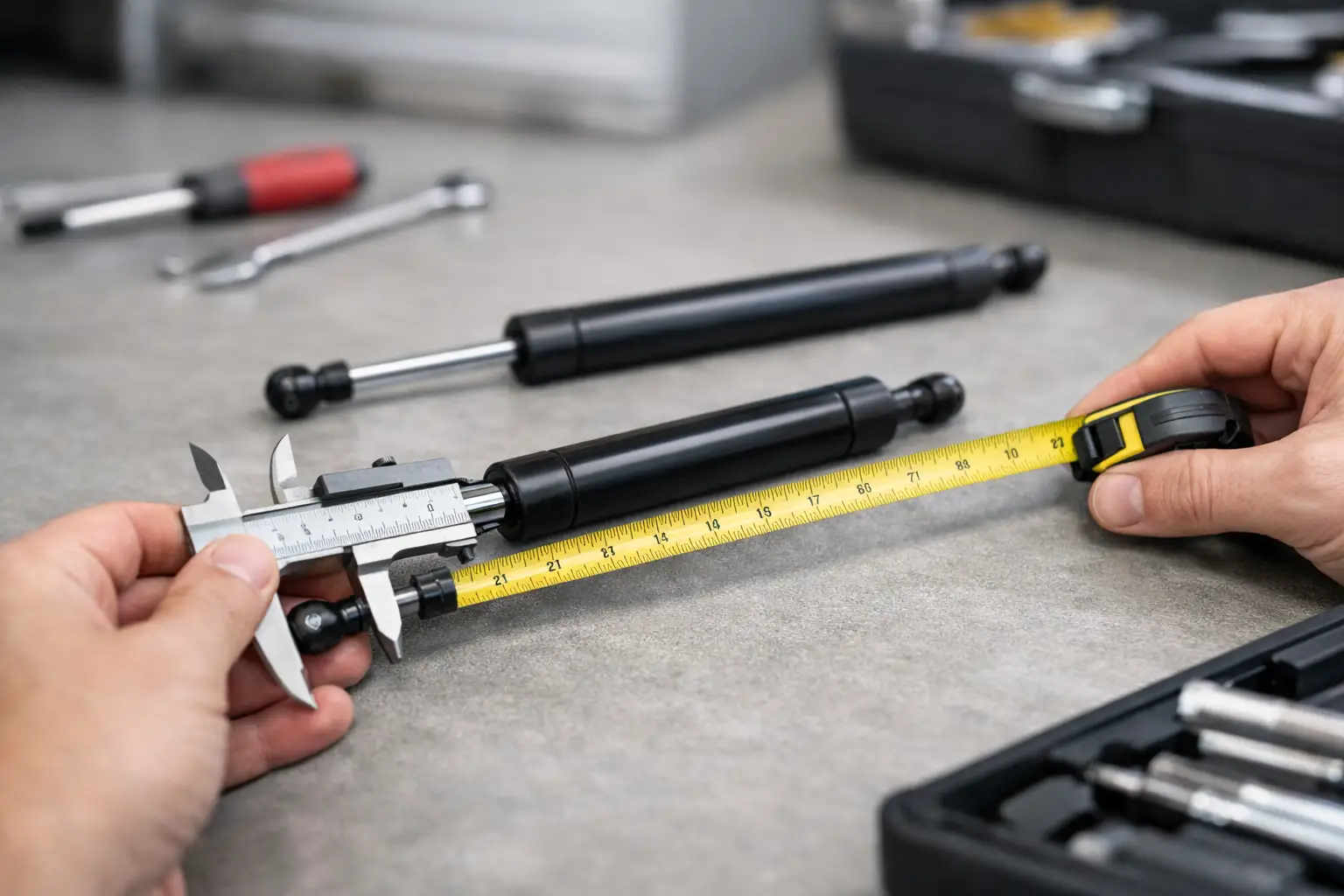
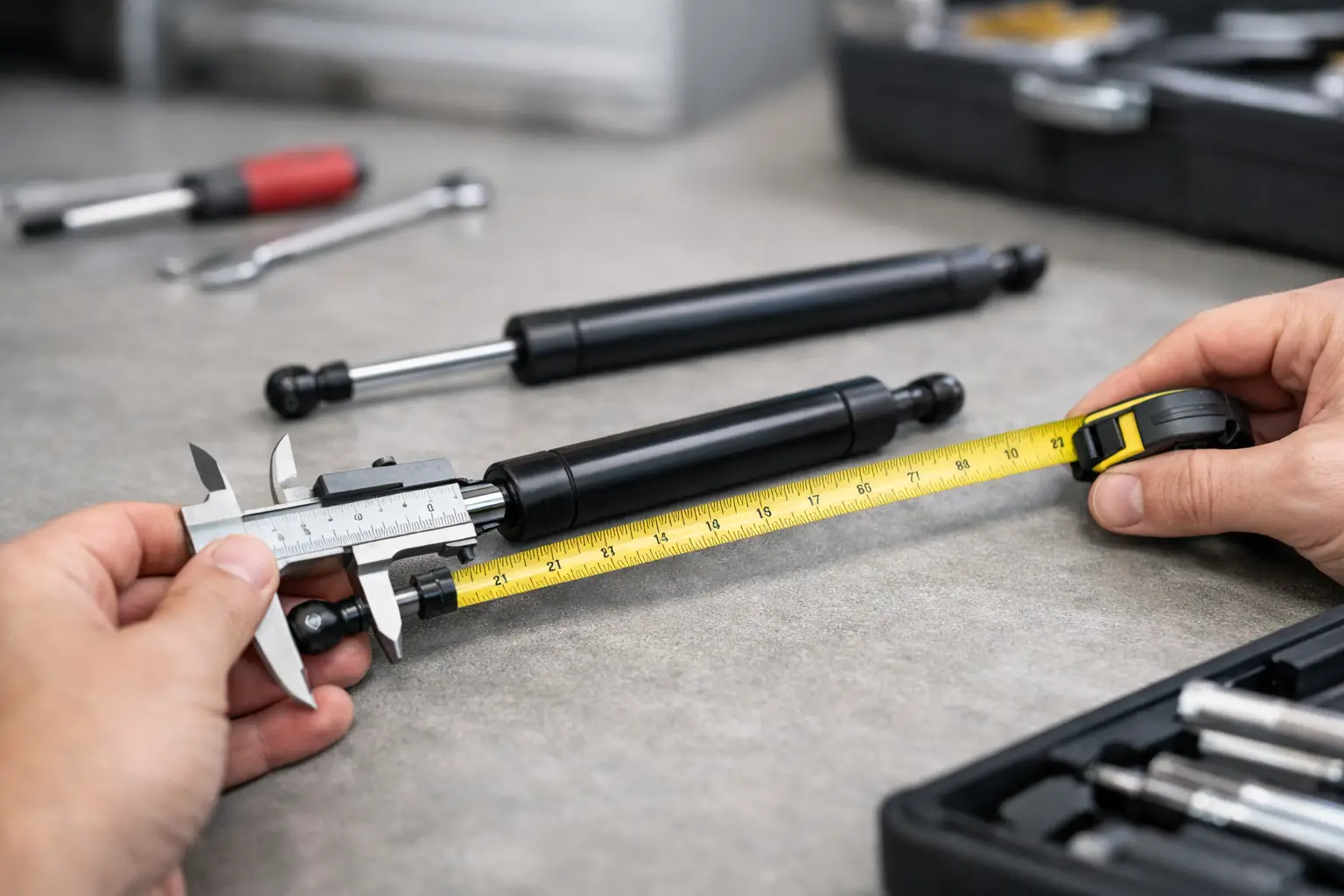
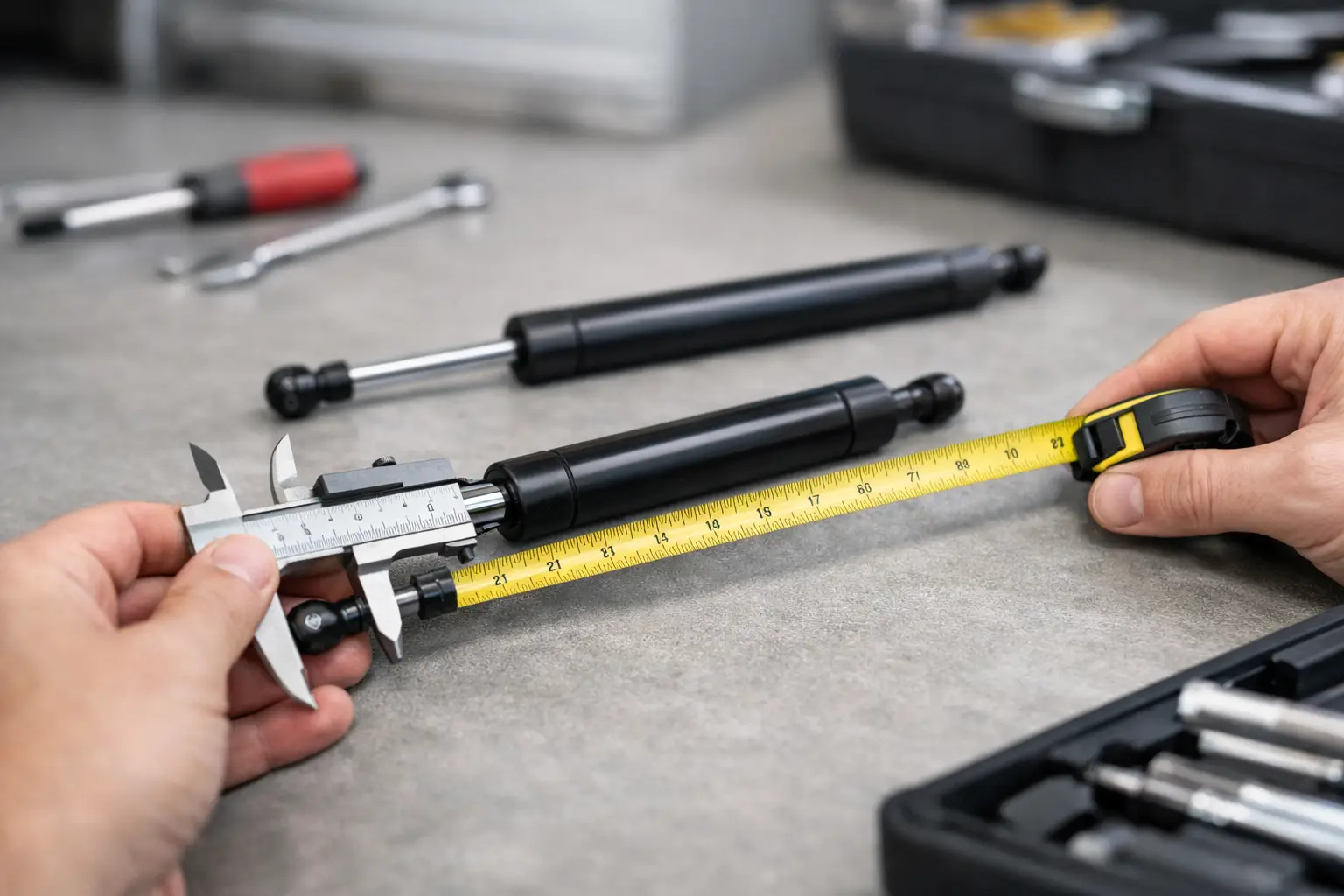
Extended length is the eye-to-eye, centre-to-centre or socket-to-socket distance when the strut is fully open. This is one of the most important measurements because it determines how far the application opens.
Stroke is the amount of shaft travel from fully closed to fully open. This tells you how much movement the strut actually provides. Two struts can have a similar overall length but very different strokes, so this figure should never be guessed.
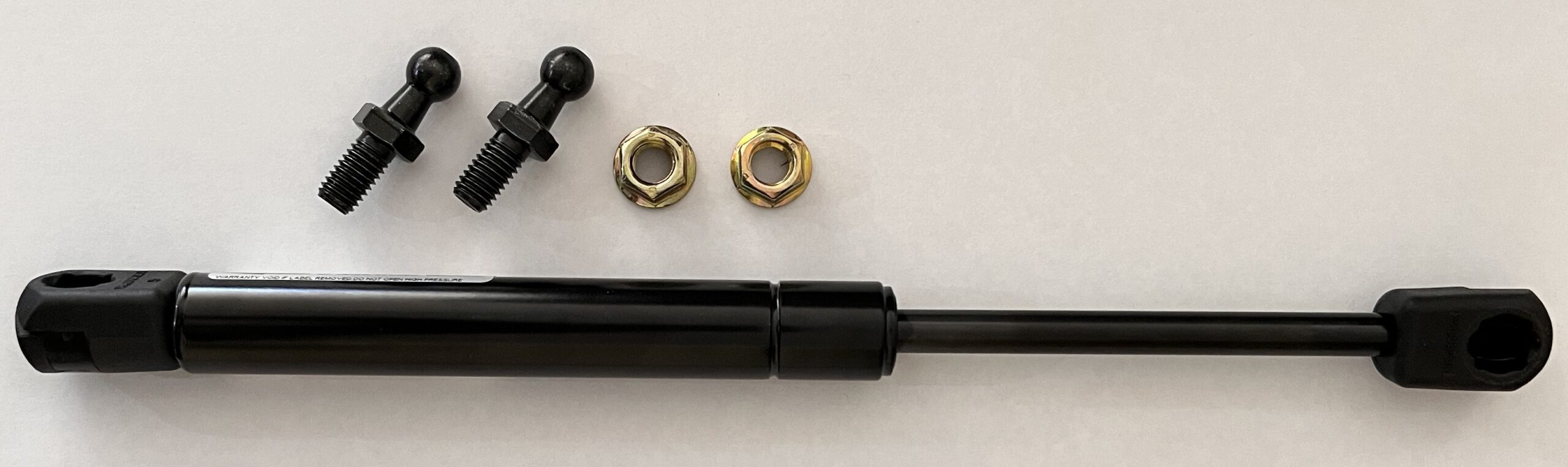
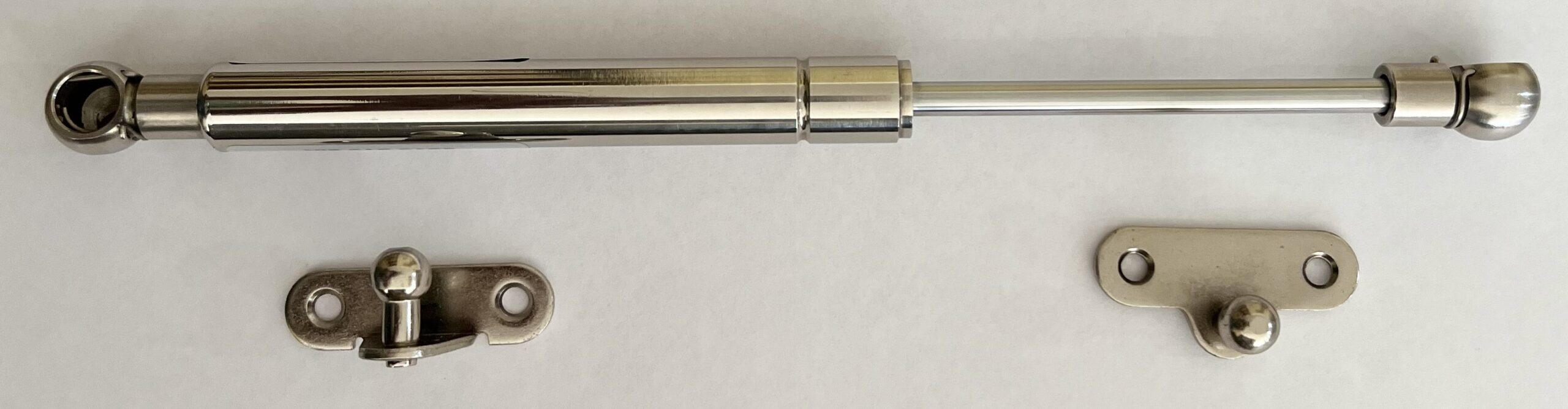
End fittings matter because a strut is only useful if it connects correctly to the existing mounts. Ball sockets, eyes, forks and brackets all affect fitment.
Force rating, usually shown in Newtons or N, determines how strongly the strut pushes. If the old strut has faded or failed, the printed number may still tell you what was originally fitted.
How to measure gas struts step by step
The easiest way to measure is with the old strut removed, although that is not always possible. If the old strut is still attached and under load, use care. Support the lid, hatch or panel securely before removing anything.
Measure the extended length
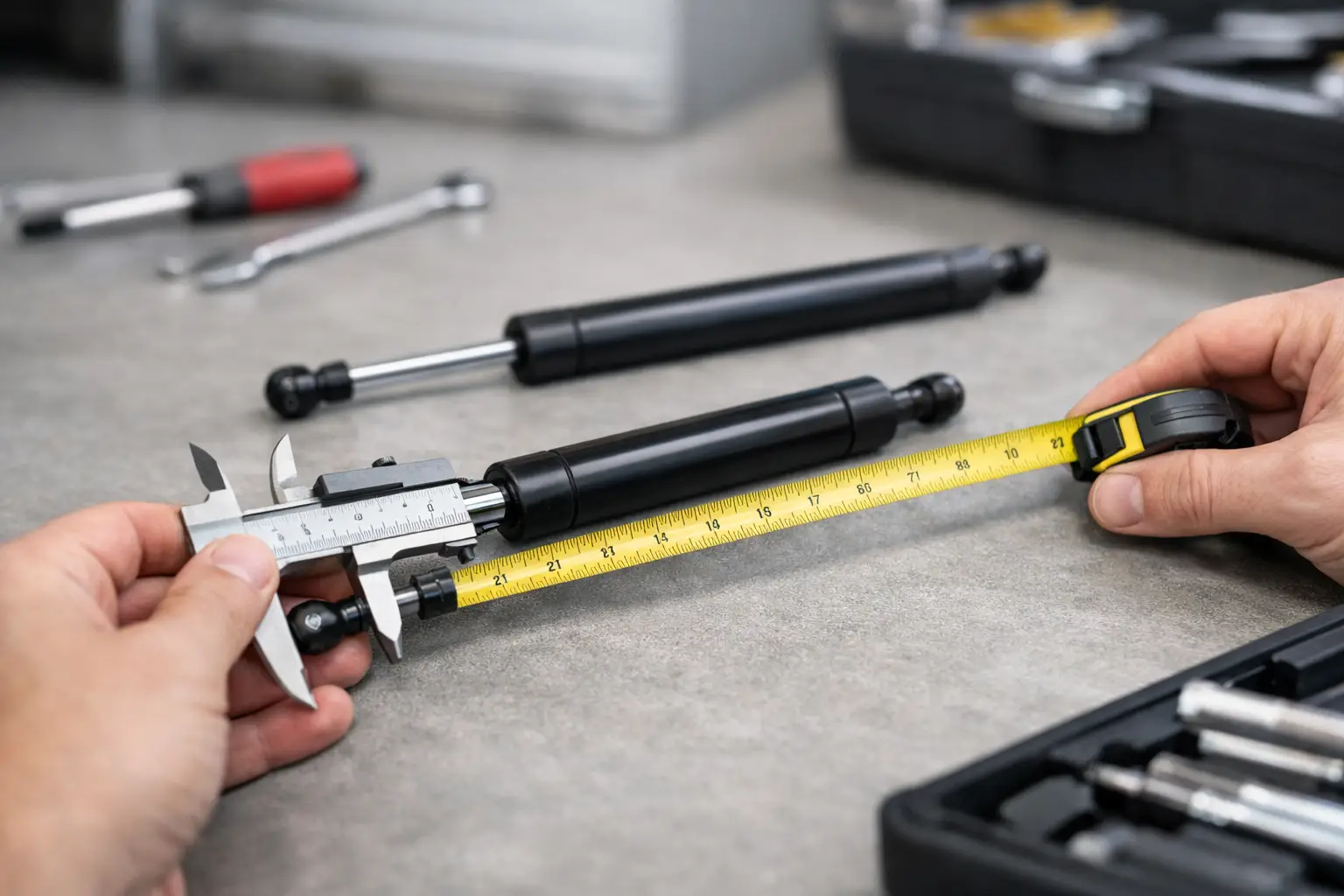
Open the strut fully, or use the existing open position if it is still installed. Measure from the centre of one mounting point to the centre of the other. If it has ball socket ends, measure from the centre of one ball socket to the centre of the other. If it has eyelets, measure centre to centre.
Do not measure just the steel cylinder or the rod. Suppliers need the full extended mounting length, not only the visible body dimensions.
Measure the closed length
Now compress the strut fully and measure the same way, from centre to centre. This gives you the closed length.
If the strut is too stiff to compress by hand, that is normal for many units. In that case, use the printed specifications if available, or provide the extended length and photos along with the application details.
Work out the stroke
Stroke is the difference between extended length and closed length. For example, if the strut is 500 mm extended and 300 mm closed, the stroke is 200 mm.
Some gas struts also have part numbers stamped or printed on the tube. If that label is still legible, it can confirm the stroke and save time.
Identify the end fittings
Look closely at both ends. Measure thread size if the fitting screws onto the strut. Common end styles include ball sockets, metal eyes and fork ends. Brackets also matter if they need replacing along with the strut.
A clear photo is often useful here, especially on older trailers, machinery, marine hatches or custom-built canopies where previous modifications may have changed the original hardware.
Check the force rating
Most gas struts have a force marking on the tube, such as 250N, 400N or 800N. Record that exact figure if you can still read it.
If there is no visible marking, the right force depends on the weight of the panel, the mounting geometry and where the strut attaches. This is where replacement is not always a straight like-for-like exercise. If a hatch has been modified, fitted with extra accessories or changed from one strut to two, the original rating may no longer be correct.
Common measuring mistakes
A lot of ordering errors come from one of a few simple mistakes. The most common is measuring the strut body instead of the full length between mounting centres. Another is estimating the force because the old unit feels weak. A worn-out gas strut does not tell you its original pressure by feel.
It is also easy to ignore end fittings and assume they are standard. They are not. A 10 mm ball socket and an eye end may suit entirely different mounting setups, even if the strut length is correct.
The other trap is measuring while the application is twisted or under uneven load. On dual-strut setups, one failed strut can cause the lid to sit crooked. That can throw out your measurement if you only check one side without supporting the panel squarely.
If the old gas strut is missing or unreadable
Sometimes there is no old part to copy. That is common on imported trailers, older machinery, custom toolboxes and second-hand caravans. In that case, measure the application rather than the strut.
Start by measuring the distance between the mounting points when the lid is fully open and fully closed. That helps determine the required extended and compressed lengths. Then note the weight of the lid or panel if possible, along with where the hinges sit and how many struts are being used.
This is also where mounting angle matters. A gas strut fitted close to the hinge works differently from one mounted further out. The same lid weight can require a different force depending on leverage. That is why application photos and measurements together are often enough for a specialist supplier to recommend the correct unit, even when the original part number is gone.
Measuring for different applications
The basics stay the same, but the job can vary depending on where the strut is used.
On automotive applications such as bonnets, boots and canopies, replacement is often straightforward if the original strut is still present. Matching length, stroke and end fittings usually gets you close, provided the force rating is known.
On caravans, campers and horse floats, lids and bed platforms are often customised. Added solar gear, storage modifications or heavier panels can change what force is needed.
On marine, agricultural and industrial equipment, corrosion resistance and duty cycle can matter as much as size. A strut in a saltwater hatch or dusty machinery enclosure may need different materials or sealing, not just the same dimensions.
For cabinets, toolboxes and access doors, space is tighter and bracket location becomes more critical. Even small differences in closed length can stop a lid from shutting properly.
What to send when ordering a replacement
If you want fast, accurate advice, send more than one measurement. The best starting point is the extended length, closed length, end fitting style and any visible part number or Newton rating. Add a couple of clear photos showing both ends and the full installation.
It also helps to include the application itself – for example, caravan front boot, toolbox lid, ute canopy side hatch, tractor window or generator enclosure. If the old strut has failed early, mention that too. It may point to an incorrect force rating or a mounting issue rather than just normal wear.
For custom jobs, include the lid dimensions, approximate weight, hinge position and how far you want it to open. That gives the supplier enough information to recommend a proper specification rather than guessing from length alone.
When replacement is not a direct match
There are times when the best replacement is not an exact copy of what came off. If brackets were fitted poorly, if the original strut allowed limited opening, or if the panel has changed weight, a revised spec may perform better.
That is especially relevant in trade and industrial settings where repeated opening cycles, vibration and weather exposure can shorten service life. A strut that technically fits is not always the right strut for the workload.
This is where specialist support matters. A supplier focused on gas struts can usually spot whether the issue is length, force, fitting type or mounting geometry from a good set of measurements and photos. At Gas Struts, that practical detail is what helps customers avoid ordering the same wrong part twice.
Getting the dimensions right at the start makes the whole job easier. If you can provide accurate measurements, photos and application details, you are far more likely to get a strut that fits properly, lifts safely and lasts where it is actually used.