A failed tailgate strut is not just inconvenient. On a ute canopy, rear door, bonnet or tool compartment, it can turn a routine job into an unsafe one. This automotive strut review looks at what separates a dependable gas strut from a part that sags early, does not fit correctly, or places unnecessary stress on hinges and mounting points.
For most automotive applications, the right replacement is not simply the one that looks similar. Extended length, compressed length, stroke, force rating, end fittings and mounting geometry all affect how the strut performs. Get one of these wrong and the panel may not open fully, may be difficult to close, or may fail to stay up when it matters.
First, know which type of automotive strut you need
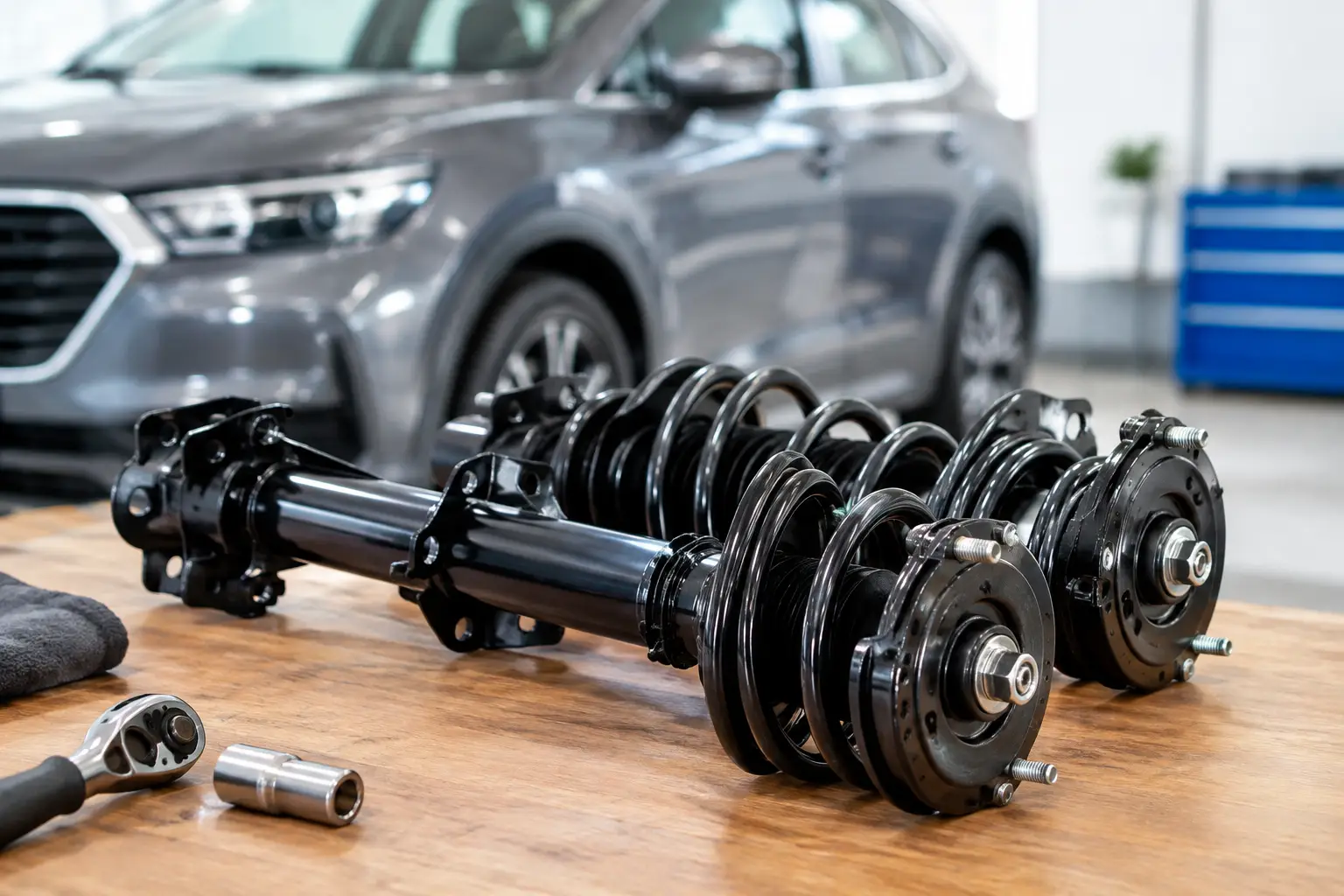
The term automotive strut can mean two very different components. Suspension struts are structural parts of a vehicle’s suspension system. Gas struts, also called gas springs or lift supports, are the pressurised cylinders used to assist lifting and holding panels, lids and doors.
This review concerns automotive gas struts. They are commonly fitted to bonnets, boots, tailgates, rear windows, canopies, camper trailers, toolboxes and access doors. Their job is straightforward: provide controlled lifting assistance and hold a load securely through its intended opening range.
That job becomes less straightforward once the vehicle is exposed to dust, corrugations, coastal air, heavy use or added accessories. A standard strut that works well on a passenger vehicle may not suit a canopy door carrying a spare wheel, a steel toolbox lid or aftermarket storage gear.
What a quality gas strut should deliver
A good gas strut should open smoothly, hold the panel at the required height and close without excessive resistance. Those basic outcomes rely on several technical details working together.
The cylinder must retain its gas pressure over time. The rod needs a durable surface finish that resists corrosion and avoids damaging the internal seal. Seals need to tolerate repeated cycles, temperature changes and vibration. End fittings must remain secure under load without binding as the panel moves.
Higher-quality units commonly use carefully controlled sealing and rod treatments to improve service life. Features such as Twin Vulcanised System sealing are designed to support pressure retention where the strut is repeatedly cycled or used in harsher conditions. Quality manufacturing standards, including ISO/TS 16949 certification where applicable, also provide useful assurance that production controls are suited to automotive component requirements.
None of this means every application needs the most heavily specified unit available. A lightly used sedan boot and a work ute canopy have different demands. The point is to match the strut to the operating environment, load and expected use rather than buying solely on price.
Automotive strut review: the specifications that matter
When assessing a replacement, use the existing strut as a reference where possible. Read the markings on the cylinder before removing it. Part numbers, force ratings and manufacturer codes can make identification faster, but measurements are still worth confirming.
Four details are essential when sourcing a gas strut:
- Extended length – measured centre-to-centre between the mounting points when the strut is fully extended.
- Compressed length – measured centre-to-centre with the rod fully closed into the cylinder.
- Force rating – usually shown in Newtons, such as 350N or 700N. This is not a direct kilogram rating.
- End fittings – including ball sockets, eyelets, pins, brackets or threaded ends, along with the thread size and mounting orientation.
Stroke is the difference between extended and compressed length. It determines how far the strut can travel and influences the opening angle of the lid or panel. A replacement with the correct force but an incorrect stroke can prevent full closure or overextend the hinges.
Force needs just as much attention. A weak strut will allow a bonnet or tailgate to drift down. A strut with too much force can make closing difficult, distort mounting brackets or cause a light panel to spring open aggressively. Added weight changes the calculation. A canopy door fitted with a roof rack bracket, internal shelving or a mounted spare may need a higher force rating than the original setup.
It also depends on strut position. A strut mounted close to the hinge has less leverage than one mounted farther away, so it may require more force to lift the same load. This is why copying the dimensions alone is not always enough for modified vehicles or custom builds.
Fitment is more than matching the ends
End fittings can appear interchangeable while differing in thread size, socket diameter, clip style or articulation range. A ball socket that is loose on the ball stud can detach under load. An end that cannot rotate freely may side-load the rod, accelerate seal wear and reduce service life.
Check whether the existing fittings are reusable. In many cases, a replacement strut can be supplied with compatible ends already fitted, but worn ball studs, corroded brackets and damaged clips should be addressed at the same time. Replacing only the cylinder while leaving compromised hardware in place often creates another failure point.
Mounting orientation also matters. Most gas struts are installed with the rod pointing down when the lid or panel is closed. This helps lubricate the internal seal and supports longer working life. There are exceptions, particularly in specialist equipment, so follow the requirements of the specific application rather than forcing a one-size-fits-all rule.
For automotive use, allow clearance for the full movement of the strut and panel. Check that the cylinder does not contact bodywork, wiring, trim, racks or cargo at either end of travel. On trailers, caravans and off-road vehicles, allow for movement caused by flex and vibration as well.
Durability under Australian conditions
Automotive gas struts work in exposed locations. Heat can reduce effective lifting force, while cold conditions may make movement slower. Dust and grit can damage an exposed rod if it is not kept clean. Salt air and road spray can corrode rods, brackets and fittings, particularly around coastal areas or on boat trailers.
A strut should never be painted, clamped, drilled or used as a handle. Damage to the polished rod can tear the seal and cause a rapid loss of pressure. Cleaning with a soft cloth is generally sufficient. If a strut is leaking oil, visibly pitted, bent, or no longer holds the load, replacement is the practical fix. Gas struts are sealed units and should not be re-gassed, opened or repaired by unqualified operators.
For work vehicles and equipment exposed to harsh conditions, select corrosion-resistant fittings and specify the environment when ordering. A strut used on a mining service body, agricultural machine or marine-adjacent trailer may need a different finish or hardware configuration from a standard passenger-vehicle installation.
Installation and safety checks
Gas struts are under pressure, even when they have lost much of their lifting ability. Do not cut, puncture, crush or expose them to high heat. Support the lid, hatch or bonnet independently before removing the old strut. A prop, suitable support stand or a second person prevents the panel dropping unexpectedly.
Replace struts in pairs when they are fitted as a matched left and right set. One new strut and one fatigued strut can create uneven lifting, twisting and inconsistent holding force. Single-strut applications can be replaced individually, provided the replacement matches the required dimensions and force.
After fitting, cycle the panel several times. It should open smoothly without binding, remain open at the intended angle and close under controlled pressure. Check clips are fully seated and that no part of the strut fouls during travel. If the panel lifts too quickly, does not stay open, or requires excessive force to close, stop and reassess the specification.
When standard replacement is not enough
A catalogue replacement is usually the fastest answer for an unmodified bonnet, boot or tailgate. Custom work is more appropriate where the original strut is unavailable, the vehicle has been modified, or the strut supports a non-standard automotive accessory.
Useful information for a custom specification includes the panel weight, mounting-point measurements, desired opening angle, available space, end fitting type and the conditions the vehicle operates in. Photos of the open and closed positions can also help identify geometry issues before a part is selected.
Gas Struts can assist with standard replacements and custom gas strut solutions where a vehicle, canopy, toolbox or trailer setup needs a more specific fit. Supplying accurate measurements at the start avoids delays and reduces the risk of ordering a strut that is close, but not correct.
The best replacement is the one that supports the real load, fits the mounting geometry and keeps working after repeated use. Measure carefully, inspect the hardware around it, and treat a weak or damaged strut as a safety issue rather than a minor annoyance.