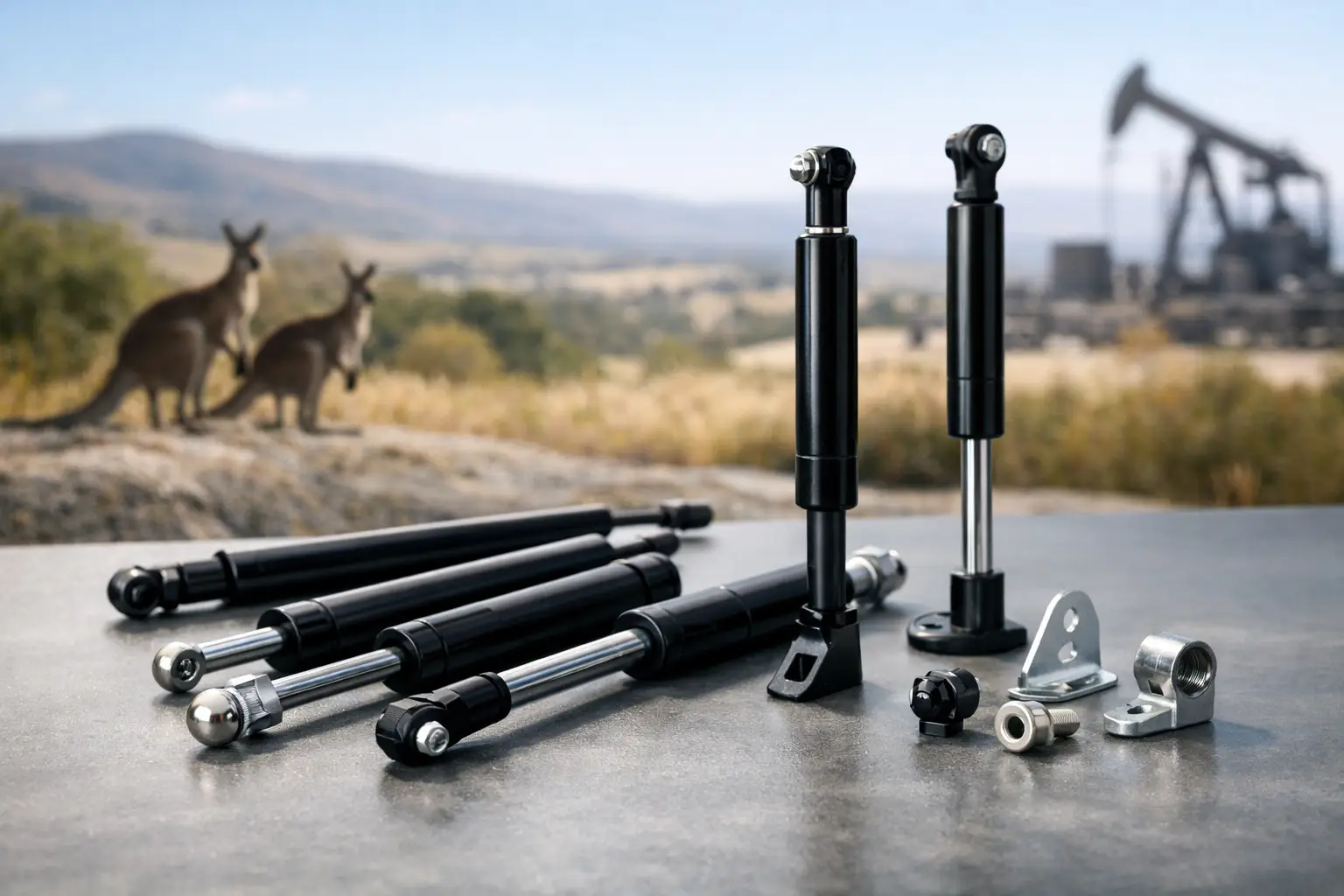
A failed strut usually shows up at the worst time – when a canopy lid drops, a toolbox won’t stay open, or a hatch suddenly feels heavier than it should. That is why buyers looking for gas springs Australia-wide are rarely browsing for interest. They need the right part, quickly, and they need it to work properly under real conditions.
Gas springs do a simple job, but choosing the correct one is not always simple. A few millimetres in length, the wrong end fitting, or too much force can turn a straightforward replacement into a poor fitment problem. For workshops, fleet operators, tradespeople and equipment managers, the practical question is not just what a gas spring is. It is how to get the right specification for the job the first time.
Where gas springs are used in Australia
Gas springs are fitted anywhere a panel, lid, hatch or platform needs controlled lifting and support. In automotive work, that can mean bonnets, boots, ute canopies and service bodies. In caravans and trailers, it often means storage doors, bed bases and access hatches. In industrial settings, they are commonly used on machine guards, access panels, cabinets and operator seating.
The same applies across agriculture, marine and mining applications, where equipment is exposed to dust, vibration, salt, mud and regular heavy use. In these environments, the gas spring is not a convenience item. It is part of safe access, efficient maintenance and day-to-day usability.
That range of applications is exactly why one-size-fits-all buying rarely works. A strut that suits a lightweight cabinet door will not suit a steel service hatch on a truck body. Even when two struts look similar, their force rating, travel and mounting geometry can be completely different.
Gas springs Australia buyers need to match correctly
The most common mistake in replacement orders is assuming the old part number is the only detail that matters. If that number is missing, worn off, or tied to an obsolete unit, you still need enough data to identify a proper substitute.
Closed length and extended length are the starting point. These measurements affect how the panel opens, where it stops, and whether the strut compresses or extends correctly through the full movement. Stroke is just as important, because it determines the travel between closed and open positions.
Force rating matters even more. Too little force and the lid will not stay open reliably. Too much force and it may be difficult to close, place stress on hinges, or cause the panel to spring upward too aggressively. On a caravan hatch or machinery guard, that is more than an annoyance. It can create a safety issue.
End fittings also need to match the application. Ball joints, eyelets, forks and brackets all affect how the strut sits and moves. If the connection point is wrong, the strut can bind, wear unevenly or fail early. This is why accurate measurement is usually faster than trial and error, even when the job looks straightforward.
Replacement gas springs versus custom solutions
For many jobs, a direct replacement is the best option. If the original strut performed well and the measurements are clear, matching the existing size, force and fittings is usually the most efficient path. This is common for vehicle applications, standard toolboxes, canopies and many cabinet installations.
But there are plenty of jobs where replacement is only part of the story. Equipment may have been modified. A lid may be heavier due to added racks, lining or accessories. Original parts may no longer be available. In those cases, a custom gas spring is often the better answer than forcing a near match to do the work.
Customisation becomes especially useful in trade and industrial environments. Workshop fit-outs, machine enclosures, marine hatches and specialised vehicle bodies often have unique opening angles, weight distribution or clearance limits. A strut that is technically close on paper can still perform poorly once installed. The right custom specification removes that compromise.
What affects gas spring performance in real use
A gas spring does not work in isolation. The panel weight, hinge position, centre of gravity and mounting angles all affect performance. This is why two hatches of similar size can require very different force ratings.
Temperature also plays a part. In hot conditions, gas pressure can increase. In cooler conditions, the same strut may feel slightly weaker. For general use, this variation is manageable, but in demanding applications it needs to be accounted for during selection.
Environmental exposure matters as well. Marine use introduces corrosion risk. Mining and agricultural settings add dust, grit and vibration. Frequent opening cycles on service vehicles or commercial equipment can accelerate wear if the strut quality is poor. That is where material quality, seal integrity and manufacturing standard make a noticeable difference over time.
A cheap strut can appear to solve the immediate problem, but if it loses force early or corrodes in service, the replacement cycle becomes more expensive than buying correctly in the first place. For buyers managing fleets or multiple assets, consistency matters just as much as unit price.
How to identify the right strut faster
If you are replacing an existing gas spring, the fastest path is usually to provide the information already on the strut body, along with a few clear measurements. A part number is useful, but it should not be the only reference point.
For a proper match, the most helpful details are the extended length from centre to centre, the closed length, the stroke, the force in Newtons if marked, and the style of end fittings. Photos of the installed strut and its mounting points also help, especially if the application is not standard.
If the old strut is missing or has completely failed, the application details become more important. The lid or panel weight, hinge location, mounting positions and desired opening angle all help determine the right specification. On custom jobs, these details are often the difference between a strut that merely fits and one that actually performs well.
This is where specialist support saves time. Gas springs are simple components, but the selection process is technical. Getting direct advice from people who deal with automotive, industrial, marine and heavy-use applications every day is often the quickest way to avoid ordering twice.
Why quality matters more in working environments
In domestic light-duty use, a failing gas spring is inconvenient. In commercial or industrial use, it can interrupt work, create access issues and increase risk during maintenance. That changes the buying criteria.
Quality should be assessed in terms of repeatable performance, not just whether the strut opens a hatch on day one. Buyers should look at build consistency, seal durability, corrosion resistance, warranty cover and whether the product is backed by technical support. Standards and manufacturing quality matter because they show up later, after the strut has been cycled hundreds or thousands of times.
For trade and fleet buyers, supply reliability is part of product quality too. If a supplier can support both common stock items and custom requirements, it reduces downtime and makes future replacement easier. That is especially useful when managing mixed assets such as trailers, service bodies, machinery covers and marine equipment across different sites.
When a quote request should include more detail
A vague enquiry often slows the process. If the request simply says need two gas struts for a trailer box, there is not enough information to specify the part with confidence. A good quote request should make the job easier for both sides.
Include measurements, photos, quantity, application type and any markings from the old unit. If there are known issues, mention them. For example, if the current struts are too strong, if the lid opens too far, or if clearance is tight near the hinge, that information can change the recommendation.
This is particularly important on custom applications or modified setups. A canopy with added solar gear, a marine hatch with stainless hardware, or a machinery guard altered during repair work may need a different specification than the original design. The more accurate the information, the better the fitment outcome.
Across gas springs Australia-wide, the difference between a quick replacement and an ongoing problem usually comes down to specification. Measure properly, match the application rather than the appearance, and ask for technical guidance when the job is not standard. If the strut supports safety, access or daily workflow, it is worth getting right before it ever goes on the vehicle or equipment.