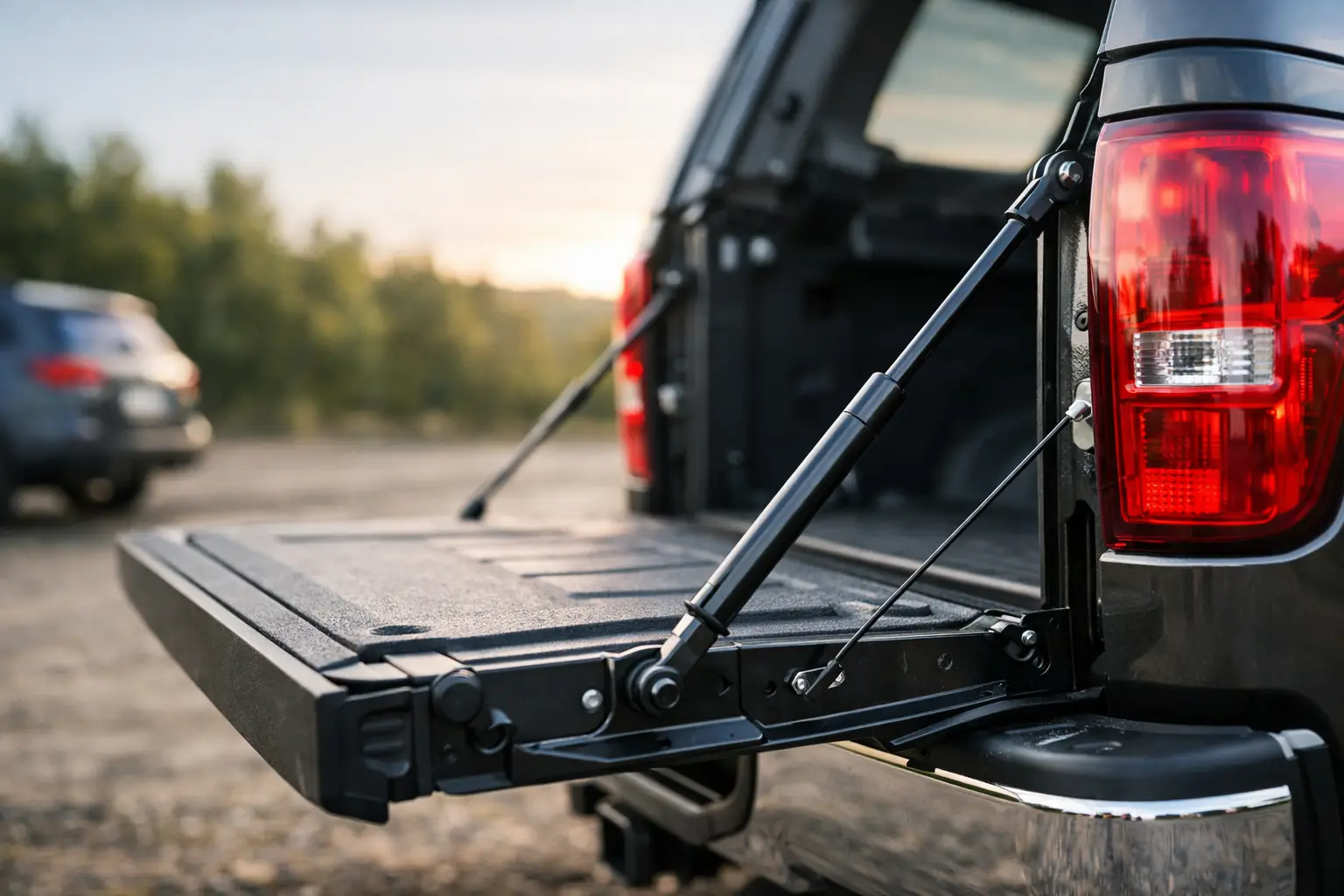
A tailgate that drops too fast, won’t stay up, or needs a shoulder to hold it open is more than an annoyance. If you are looking for the best petrol struts for tailgates, the right choice comes down to correct force, proper measurements, mounting geometry and build quality – not just finding something that looks close enough.
Tailgates work hard. On utes, trailers, canopies and service bodies, they are opened repeatedly, exposed to dust, vibration, weather and uneven loads, and expected to behave the same way every time. A petrol strut that is slightly wrong on paper can feel very wrong in use. That is why tailgate struts need to be matched to the application, not guessed.
What makes the best petrol struts for tailgates?
The best units are the ones that control movement safely and consistently in real operating conditions. That means enough force to support the tailgate through its range of motion, but not so much that it fights the user on closing or puts excess stress on hinges and brackets.
Material quality matters as well. Tailgates often live in harsh environments, so seal quality, rod finish, tube coating and end fittings all affect service life. Cheap struts may work initially, then lose pressure early or develop rough operation after exposure to dust, moisture or corrugations. For trade vehicles and heavy-use applications, reliability is usually worth more than saving a small amount upfront.
There is also a practical difference between a replacement strut and a properly specified strut. If the original setup worked well, matching the existing part is usually the fastest route. If the tailgate has changed weight because of accessories, tool storage, cladding or custom fabrication, the original force rating may no longer be right.
Start with the application, not the catalogue
A tailgate strut for a factory ute setup is different from one used on a custom trailer, service canopy or plant enclosure. The best result comes from understanding what the strut actually has to do.
If the goal is simple lift assistance, the strut needs enough extension force to take the weight and improve control. If the goal is damped lowering, the setup may need a different configuration or paired struts that balance support with smoother descent. Some tailgates are designed to open horizontally and need restraint more than lift. Others swing upward and need full support at the open position.
This is where many buying mistakes happen. People focus on length first because it is easy to measure, but force and mounting position are just as important. Two struts with the same extended and compressed lengths can behave very differently if the Newton rating is wrong.
The key specs that matter most
For most tailgate applications, there are four details that determine whether a strut will work properly.
Extended and compressed length
The extended length is the distance between the mounting centres when the strut is fully open. The compressed length is the same measurement when the strut is closed. Both need to suit the available travel. If the strut is too long when closed, it can bottom out before the tailgate shuts. If it is too short when open, it may not hold the tailgate at the desired angle.
Force rating
Force is measured in Newtons. This determines how strongly the strut pushes. Too little force and the tailgate will sag or fall. Too much and closing becomes difficult, especially on lighter panels. For paired struts, the total support is shared across both units, so the rating needs to be considered as a system.
End fittings and bracket style
Ball joints, eyelets, forks and custom end fittings all affect fitment. Even if the strut body is correct, the wrong end fitting can create alignment issues or require bracket changes. On working vehicles and trailers, clean alignment is important because side loading shortens strut life.
Mounting geometry
The angle and position of the brackets influence how the force is applied across the opening arc. This is why a strut with the right published force can still feel wrong if mounted differently. Geometry changes leverage. In practical terms, moving a bracket by a small amount can noticeably change how heavy or light a tailgate feels.
Choosing by tailgate type
Not every tailgate loads a strut in the same way, so the best choice depends on the setup.
Ute tailgates and canopy doors
These usually need predictable lift assistance and controlled closing. Factory replacements are generally straightforward if the original part number or dimensions are available. Custom canopies are less forgiving because door weight varies with shelving, central locking, spare wheel carriers or internal lining. In those cases, the strut should be selected to match the actual door weight and the bracket position.
Trailer and horse float tailgates
These can be heavier and may see more twisting load, especially if the frame flexes on uneven ground. A stronger strut is not automatically better. Heavy tailgates often need careful balancing so they open without shock loading the hinges and still close safely. Hardware strength matters here as much as the strut itself.
Toolbox and service body lids
These are often opened dozens of times a day. The best struts for this kind of use are not just the right force. They also need durability in constant cycling, solid corrosion resistance and stable operation through heat, dust and rain. A toolbox lid that does not stay up is a safety issue on site, not just a maintenance nuisance.
When to replace both struts
If one side has failed, replacing both is usually the better option. Gas struts wear gradually, so a surviving older strut is often weaker than its original rating even if it still functions. Mixing a new strut with an old one can create uneven lifting, twist the tailgate and increase wear on brackets or hinges.
This is especially relevant on larger doors and tailgates that rely on matched support. Balanced operation gives smoother movement and reduces point loading across the frame.
Signs the current strut is wrong, not just worn out
A tailgate that has never worked properly may have been fitted with an incorrect strut from the start. Common signs include needing excessive force to close, a tailgate that jumps upward in the first part of travel, poor hold in windy conditions, or brackets showing stress or distortion.
Temperature can also expose an incorrect selection. Gas struts tend to feel firmer in higher temperatures and weaker in colder conditions. If a tailgate only works acceptably in a narrow temperature range, the force rating or mounting geometry may need review.
Custom sizing often gives the best result
For standard vehicles and common replacement jobs, off-the-shelf struts can be the right answer. For modified tailgates, fabricated canopies, industrial lids or older equipment with obsolete parts, custom specification is often the better path.
A custom approach allows the strut to be matched to the actual duty rather than forcing the job to fit a near-enough part. That may mean changing force, adjusting stroke, selecting different end fittings or reviewing bracket placement. For trade and industrial users, that usually saves time compared with repeated trial and error.
If you are sourcing a replacement and want it right the first time, the most useful details are straightforward: extended length, compressed length, stroke, end fitting type, shaft and tube diameter, mounting orientation, and any part numbers marked on the original strut. If the original part is missing or unreadable, door weight and clear photos of the open and closed positions help narrow it down.
Quality is not just about the cylinder
The strut gets most of the attention, but the supporting hardware matters as well. Worn brackets, loose ball studs and poor alignment can make a good strut perform badly. On tailgates exposed to vibration and repeated use, hardware should be checked whenever the struts are replaced.
This is one reason specialist supply matters. Getting a strut with the right rating is only part of the job. Matching end fittings, confirming mounting points and checking whether the application needs a standard or custom solution can prevent repeated failures.
For Australian users dealing with dust, coastal exposure, heat and hard daily use, quality control is also worth considering. A tailgate strut is a small component, but when it fails, the inconvenience is immediate and the safety risk can be real.
How to get the right tailgate strut first go
The best petrol struts for tailgates are the ones specified for the actual load, travel and operating environment. That might be a direct replacement, or it might be a custom strut if the tailgate has been modified or the original setup was never ideal.
If you are unsure, avoid guessing based on appearance alone. A proper match starts with measurements and application details, then works back to force and fitment. Suppliers that deal in petrol struts every day, including custom applications, can usually identify problems quickly and recommend a workable option without overcomplicating the job.
A tailgate should open cleanly, stay where it is meant to stay, and close without a fight. When the strut is right, you stop thinking about it – and that is usually the clearest sign you chose well.