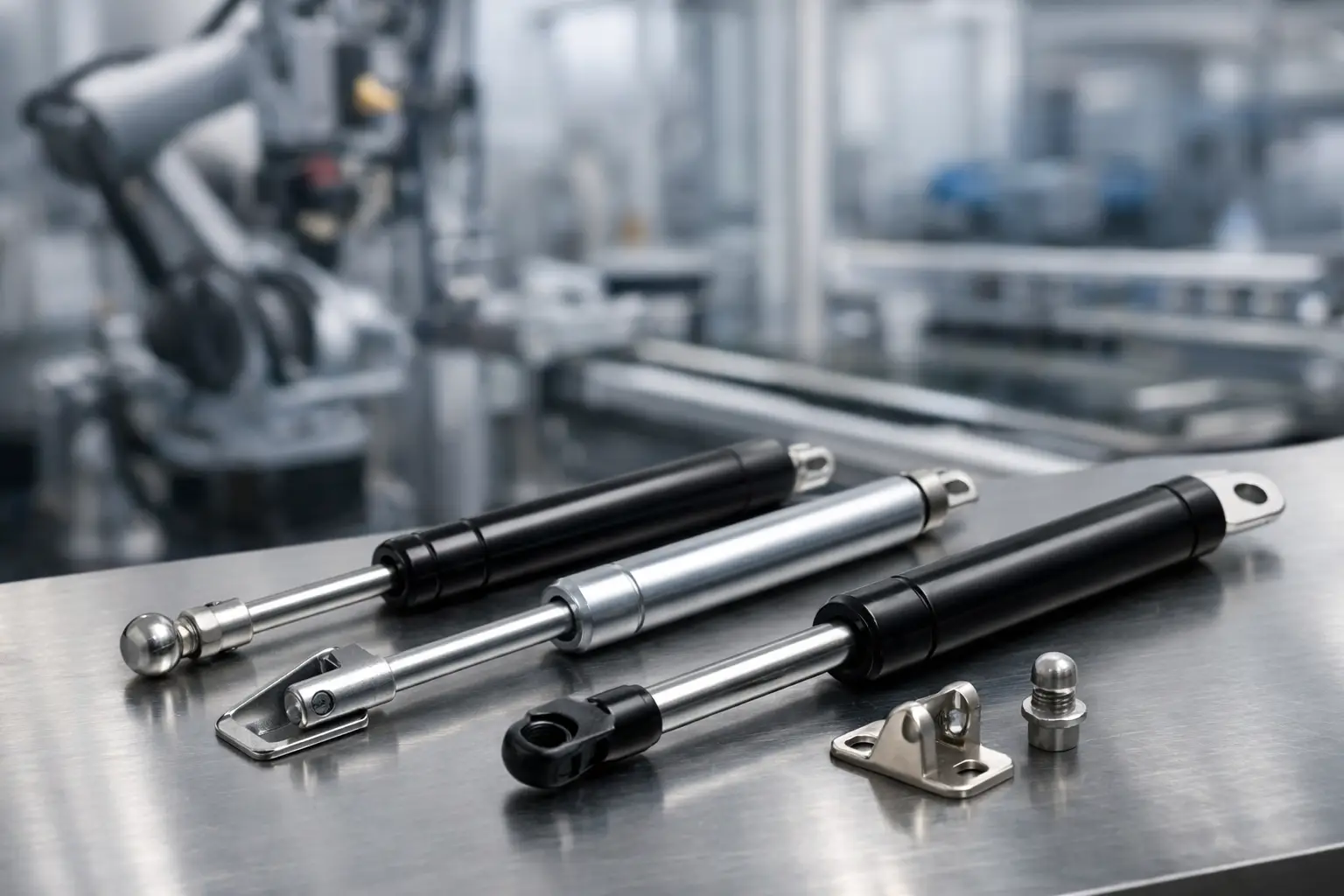
When a machine hatch drops, a guard panel won’t stay open, or an access lid takes two hands and too much effort, the problem is rarely the machine itself. It’s usually the motion control component doing the hard work in the background. Choosing the best gas springs for machinery comes down to more than matching length and force. The right unit needs to suit the load, the mounting geometry, the duty cycle and the environment it works in every day.
A gas spring that works well on a light enclosure may fail quickly on a dusty production line or struggle on a heavy engine cover that opens at an awkward angle. That is why machinery applications need a more careful approach than general replacement jobs. If reliability matters, the best choice is the one built around the actual operating conditions, not the one that looks close enough on paper.
What makes the best gas springs for machinery?
For machinery, a good gas spring does three things well. It supports weight safely, controls movement consistently and lasts in service without constant replacement. That sounds simple, but each part depends on specification.
Force is the starting point. If the spring is under-rated, the panel or hatch feels heavy and may not stay open. If it is over-rated, the lid can spring up too aggressively, put stress on hinges or become difficult to close. Machinery often carries heavier panels than automotive or cabinet applications, so force selection needs to be precise.
Stroke and extended length matter just as much. A gas spring can have the right force and still be wrong if it does not open the component to the required angle or if it bottoms out before the machine reaches full travel. Mounting position also changes how the force behaves through the lift. In many machinery setups, geometry matters more than raw Newton rating.
Then there is build quality. Heavy-use industrial applications benefit from sealed components, corrosion-resistant finishes and dependable internal construction. Where machinery is exposed to vibration, moisture, washdown, dust or chemical splash, a low-grade part becomes an expensive shortcut.
Matching the spring to the machinery
The best gas springs for machinery are selected around the application, not just the original part number. In some cases, a direct replacement is fine. In others, especially where the machine has been modified or the original setup was marginal, it makes sense to reassess the whole arrangement.
A service hatch on a compressor enclosure needs different performance from a steel access door on a processing machine. A compact panel that opens occasionally can use a lighter-duty unit. A large cover opened multiple times per shift needs better fatigue performance and more careful balancing.
This is where weight distribution comes into play. The actual panel weight is only one factor. You also need to consider where the centre of gravity sits, where the hinges are mounted and how far the spring mounting points are from the pivot. A long, narrow lid with weight concentrated at the far end behaves very differently from a square panel with even load distribution.
If the machinery includes guarding, operator access or maintenance points, safety also becomes a major factor. Gas springs should help hold the component open in a stable position, not just make it lighter to lift. On some setups, that may mean using twin springs, lockable units or a revised mounting arrangement.
Force rating is not the whole story
A common mistake is to chase the same Newton rating as the failed unit without checking why it failed or how the machine is meant to operate. Gas springs lose performance over time, so an old strut may no longer reflect its original force. Replacing like for like can work, but only if the original specification was right in the first place.
The opening angle matters. So does the hand force required to start and finish movement. Machinery covers often need a controlled feel rather than maximum lift. Too much force at the wrong part of the arc can make closing awkward or unsafe, particularly on larger covers handled by one operator.
Temperature also affects gas spring performance. In hotter environments, internal pressure rises and the spring can feel stronger. In colder conditions, it can feel weaker. For machinery used outdoors, in refrigerated areas or near heat sources, that variation should be allowed for during selection.
Materials and finishes for harsh conditions
Not every machine lives in a clean workshop. Agricultural, mining, marine and food-processing environments place very different demands on gas springs. The best unit for machinery in a protected indoor line may be the wrong choice for equipment exposed to salt, slurry, washdowns or abrasive dust.
Corrosion resistance matters where moisture or chemicals are present. Rod finish, tube coating and end fittings all affect service life. In dirty environments, sealing quality becomes critical because contamination can damage the rod surface or wear seals prematurely. Frequent failure in the same application often points to an environmental mismatch rather than a sizing problem.
For equipment that runs long hours, cycle life is another issue. A gas spring fitted to an access panel opened once a month has a very different workload from one fitted to a machine station opened many times a day. Higher-quality units usually justify their cost when downtime, replacement labour and operator frustration are taken into account.
Standard versus custom gas springs
Standard stocked sizes are often the quickest and most cost-effective option, especially for straightforward replacements. If the original gas spring length, stroke, fittings and force are known, a standard part may solve the issue fast.
But machinery is full of exceptions. Older equipment, imported machines, modified guarding, space-restricted installs and non-standard mounting points often need something more specific. In those cases, custom gas springs are usually the better answer because they let you match the real operating geometry rather than forcing a near fit.
Customisation can involve force adjustment, alternate end fittings, different compressed and extended lengths, or materials better suited to the environment. That matters when the machine needs dependable movement without redesigning brackets or compromising operator safety.
For trade buyers and maintenance teams, this is often the difference between a proper fix and another short-term workaround. A supplier with technical support can help confirm whether a stocked replacement is suitable or whether a custom unit will save time and repeat failures.
The measurements that actually matter
If you are replacing a machinery gas spring, accurate dimensions make the process much easier. Extended length is measured centre-to-centre between mounting points when the spring is fully open. Stroke is the amount of rod travel. End fittings need to match the existing hardware or the intended bracket setup.
Force should be recorded if known, usually in Newtons, but this should not be treated in isolation. It helps to provide the application type, panel dimensions, approximate weight and photos of the installed position. On machinery, mounting geometry often tells the real story.
If the strut has failed completely and markings are unreadable, measuring the old unit still gives a starting point. Where there is any doubt, details such as hinge location, opening angle and how the panel behaves during movement can help narrow down the right specification.
When lockable or damped options make sense
Some machinery applications need more than simple lift assistance. A standard gas spring supports and counterbalances, but it does not lock the load in place. For adjustable equipment, access points that must stay secure at variable positions, or operator stations with controlled positioning, a lockable gas spring may be more suitable.
Damping characteristics also matter. If a hatch or guard needs softer end-of-travel movement, a better-controlled unit can reduce shock loading on hinges and frame mounts. This is especially useful on heavier machine covers where repeated impact can damage surrounding hardware over time.
These are the cases where generic replacements often disappoint. The spring may fit, but the machine no longer behaves properly in service.
Buying for uptime, not just price
Cheap gas springs can look fine on day one. The problem shows up later in inconsistent lift, shortened service life or early seal failure. On machinery, the cost of a poor-quality component is rarely limited to the part itself. It can mean operator complaints, safety concerns, maintenance callouts and unnecessary downtime.
That is why buyers usually get better value by focusing on specification accuracy, material quality and supplier support. A two-year warranty and access to technical advice are useful, but only if the supplier understands industrial applications and can help with unusual setups.
For Australian workshops, plant operators and equipment managers, fast supply also matters. When a failed strut leaves a machine awkward or unsafe to use, waiting weeks for a vague replacement is not practical. A specialist supplier with broad stock and custom capability is usually the safer path.
If you are trying to choose the best gas spring for machinery, start with the real job the strut has to do. Weight, angle, environment, frequency of use and mounting points tell you more than the old label ever will. Get those details right, and the gas spring stops being a recurring problem and goes back to doing what it should – supporting the machine reliably, every day.