When a bonnet stops staying up, it stops being a small problem
A weak bonnet strut is easy to ignore until the bonnet drops while you’re checking oil, swapping a battery or working in the engine bay. At that point it is not just inconvenient – it is a safety issue.
Choosing replacement bonnet petrol struts sounds simple, but the wrong part can leave the bonnet too heavy to lift, too forceful to close, or sitting under constant stress at the hinges and mounting points. If you want a proper fit, the job starts with matching the original strut properly rather than guessing from the vehicle alone.
What replacement bonnet petrol struts actually need to do
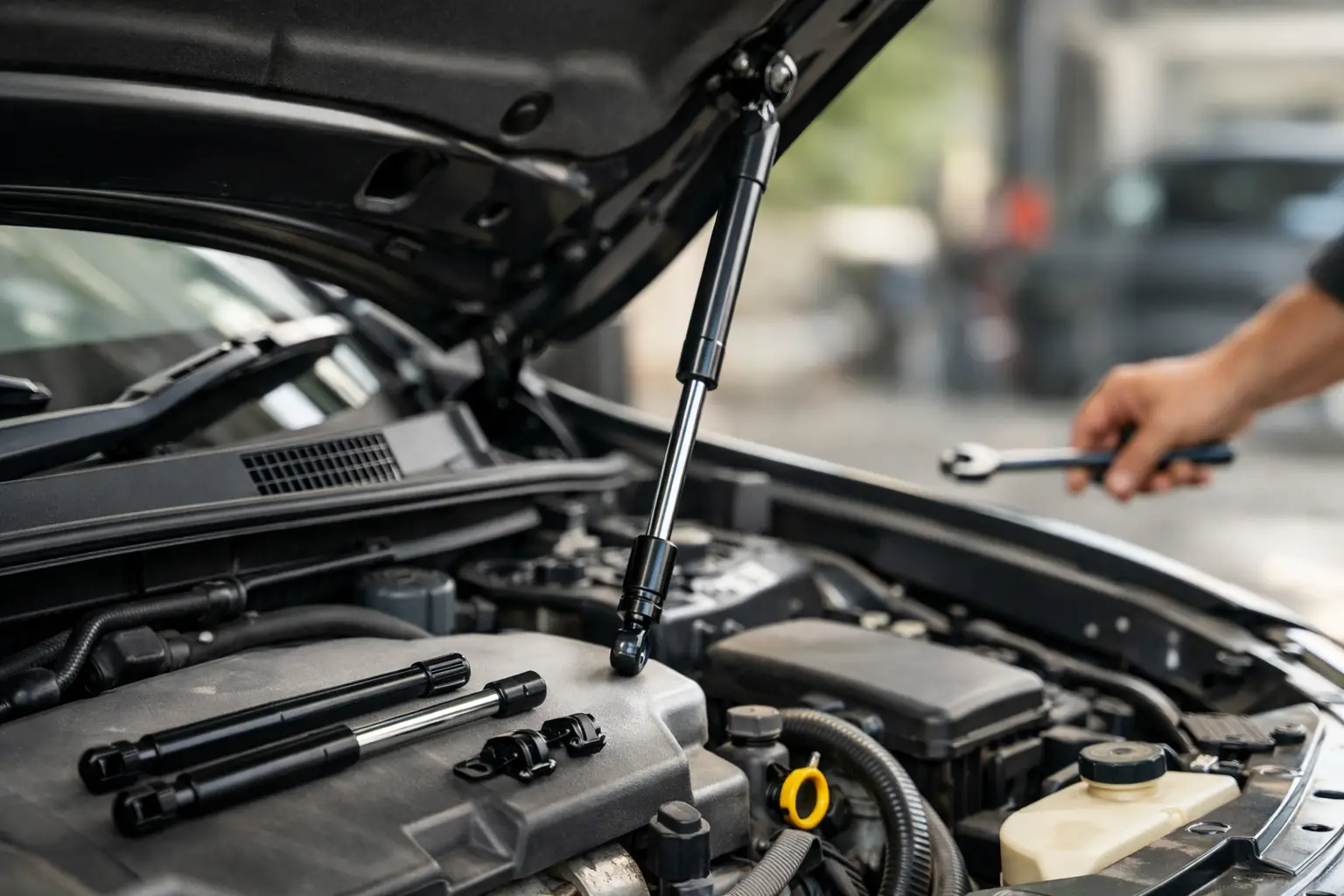
Bonnet struts are designed to control lift and hold the bonnet open through a specific range of movement. That means the correct strut is not just about length. It also needs the right force, stroke, end fittings and orientation for the vehicle.
A bonnet on a light passenger car and a bonnet on a 4WD, ute or commercial vehicle can look similar in size, but the weight distribution can be very different. Bonnet construction, insulation, accessories and hinge geometry all change the force requirement. Even two vehicles from the same model range can need different struts if one has a heavier bonnet setup.
That is why direct replacement matters. A strut that is close enough on paper can still perform badly once installed.
How to identify the right replacement bonnet petrol struts
The fastest path is usually to read the details printed on the old strut. Many existing units will show a part number, extended length and force rating in Newtons. If that information is still legible, it gives you a solid starting point.
If the print has worn off, measure the old strut carefully while it is removed from the vehicle. You need the extended length from centre of fitting to centre of fitting, the compressed length, the stroke, and the end fitting type. Ball sockets, eyelets and brackets are not interchangeable unless the mounting hardware is changed to suit.
Force matters just as much as physical size. A bonnet strut that is too weak will not hold safely at full extension. One that is too strong can make the bonnet jump upward, become harder to close, or put unnecessary load on sheet metal and hinge points.
For anyone replacing a pair, it is best practice to change both struts at the same time. When one fails, the other is usually well into the same wear cycle. Replacing only one often leaves you with uneven lifting and shortened service life for the new unit.
Why matching by vehicle alone is not always enough
Vehicle make, model and year are useful, but they do not always tell the whole story. Running changes, imported variants, aftermarket bonnet conversions and accessory fit-outs can all affect what is fitted.
This comes up regularly with 4WDs, work utes and modified touring vehicles. Bonnet protectors, insulation, under-bonnet equipment and prior hardware swaps can change the original setup. In workshop and fleet settings, vehicles may also have had struts replaced before with something that was never quite correct.
That is why a proper supplier will often ask for measurements, photos or the number stamped on the old strut rather than relying only on registration details. It is a more accurate way to avoid ordering a part that is almost right but not right enough.
Common signs your bonnet struts are due for replacement
The obvious sign is a bonnet that no longer stays open on its own. Sometimes the failure is more gradual. The bonnet may lift part way and then slow down, or it may need extra effort to reach full height.
Cold weather can make worn struts feel worse because petrol pressure drops with temperature. If the bonnet behaves properly only on warm days, the struts are usually already on the way out. Oil residue around the rod seal, bent shafts, damaged sockets or cracked brackets are also clear signs that replacement should not be delayed.
If the bonnet opens unevenly or one side seems to lag behind the other, stop forcing it. That can point to one failed strut, a mounting issue, or a mismatch in force between the pair.
The measurements that matter most
When ordering replacement bonnet petrol struts, there are four details that matter most.
First is extended length. This affects how high the bonnet opens and whether the strut reaches the mounting points correctly. Second is compressed length, which determines whether the bonnet can close fully without bottoming out the strut. Third is stroke, which is the travel between those two positions. Fourth is force rating, shown in Newtons, which determines lifting assistance and holding strength.
After that, check the rod diameter, tube diameter and fitting style. These details become especially important when the application is older, modified or outside standard passenger vehicle setups.
If you are unsure, photos of both ends of the old strut and the mounting points can save time. A clear image often confirms fitting style faster than a written description.
Standard replacement or custom solution?
For many vehicles, a standard direct-fit strut is the cleanest option. It keeps installation straightforward and avoids changes to brackets or hinge geometry.
But there are cases where a custom solution is the better choice. That includes imported vehicles with limited local parts coverage, modified bonnets, engine bay conversions, specialist fleet applications or older equipment where original parts are no longer practical to source.
In those situations, the correct approach is not to force a near match. It is to work from actual dimensions and load requirements so the replacement performs properly in service. That is particularly important in trade, agricultural, mining and industrial environments where downtime or unsafe access is not acceptable.
Installation is simple, but details matter
Bonnet struts are generally straightforward to replace, but there are a few points worth getting right. Always support the bonnet securely before removing the old struts. Do not rely on one tired strut to hold while you disconnect the other.
Check whether the original strut is mounted rod-down or rod-up. In most applications, rod-down mounting helps keep the internal seal lubricated and extends service life. If the vehicle is designed for a specific orientation, follow that layout.
Inspect the ball studs, brackets and surrounding panelwork while the struts are off. If sockets are loose or mounting points are distorted, fitting a new strut alone may not solve the problem. The new part can only perform properly if the hardware it connects to is sound.
Once installed, test opening and closing through the full range. The bonnet should rise smoothly, hold securely and close without excessive effort. If it feels wrong, stop and recheck the specification before forcing repeated cycles.
What separates a reliable strut from a short-lived one
Not all petrol struts are built to the same standard. For a bonnet application, consistency matters. The unit needs stable gas pressure, good seal quality, durable end fittings and proper surface protection on the rod and tube.
Cheap struts can look fine out of the box but lose pressure early, corrode faster or develop rough movement that puts strain on mounts. That becomes expensive when the vehicle is in regular use or forms part of a working fleet.
A better-quality replacement is usually the cheaper option over time because it reduces repeat failures and keeps the bonnet safe to use. Warranty support, technical guidance and access to application advice also matter. If there is any doubt around force or fitment, having specialist support available saves guesswork.
For buyers who need quick, accurate supply across automotive and heavy-use applications, Gas Struts supports both standard replacements and custom specification work through https://gasstruts.net.au/.
When to ask for technical help
If the old strut has no readable markings, the bonnet has been modified, the vehicle is uncommon, or previous replacements have never worked quite right, it is worth getting specialist advice before ordering.
The same applies if you are buying for a workshop, fleet or equipment maintenance program. A single bonnet strut for a private vehicle is one thing. Multiple vehicles across different configurations is another. In that case, technical accuracy and repeatable fitment matter more than simply finding a close match.
A good supplier should be able to work from measurements, photos, mounting details and application notes to narrow the correct option quickly. That reduces delays and lowers the risk of fitting the wrong strut twice.
The practical way to get it right first time
If you need replacement bonnet petrol struts, treat the job like any other functional component replacement. Match the dimensions, match the force, match the fittings, and do not assume every bonnet setup is identical just because the badge says it should be.
That extra care at the ordering stage is what gives you a bonnet that lifts cleanly, stays up safely and does not create a new problem at the hinges or mounts. A proper strut should feel unremarkable in use – and that is exactly the point.