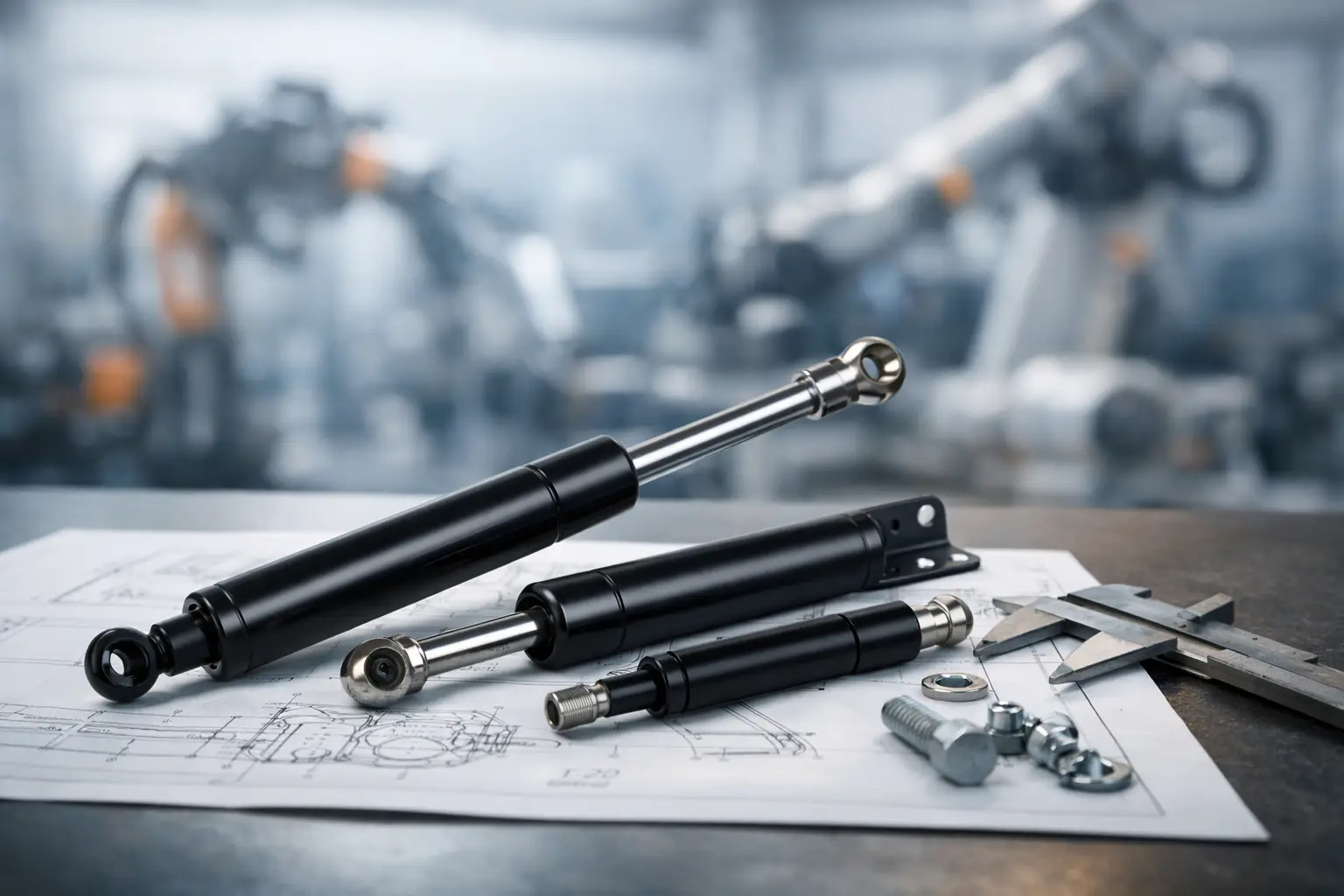
A failed hatch on a service body, access panel or machine guard is not a minor annoyance. It slows the job, creates a safety risk and usually points to one problem – the strut was underspecified, poorly matched or simply worn out. This industrial gas spring review looks at what actually separates a dependable unit from one that causes repeat issues in the field.
Industrial gas springs are often treated as simple replacement parts. In practice, they are load-control components. The right one needs to match the application, mounting geometry, operating environment and duty cycle. If any of those are off, even a good-quality strut can perform badly.
What an industrial gas spring review should assess
A proper industrial gas spring review should go beyond whether the strut lifts or not. The real question is whether it lifts the load safely, consistently and for a reasonable service life. Buyers in workshops, fleet maintenance, fabrication and plant operations usually care about three things: fit, reliability and lead time. All three matter, because the best specification on paper is not much use if the part arrives late or needs rework to fit.
Build quality is the first check. A decent industrial gas spring should have a clean rod finish, consistent end fittings, proper sealing and stable force output. Cheap units often fail at the seals or lose pressure early, especially in equipment exposed to dust, vibration or weather. That may not show up on day one, but it shows up fast in hard-use environments.
Force accuracy is the next issue. Too little force and the panel drops or needs constant manual support. Too much force and it becomes difficult to close, stresses hinges and brackets, or creates unsafe rebound at full extension. In industrial settings, that trade-off matters more than buyers sometimes expect.
Performance under real working conditions
Gas springs do not work in isolation. They work as part of a mechanism. That is why field performance depends on more than the nominal Newton rating stamped on the body.
Temperature has a direct effect on gas pressure. A strut that behaves acceptably in a controlled workshop can feel different in a hot plant room, on a mine site or in a cold morning service call. Corrosion exposure also changes the picture. Marine use, washdown areas and outdoor equipment need better material selection than sheltered indoor cabinetry.
Mounting orientation matters as well. Most standard gas struts are designed to sit rod-down when closed so the internal seal stays lubricated. Install the same unit the wrong way around and service life can shorten. That does not mean every application can use the ideal orientation, but it does mean the specification should account for it.
Then there is cycle rate. A strut used a few times a week on a toolbox lid has very different demands from one fitted to machinery access doors opened repeatedly through a shift. If your application is high-cycle, vibration-heavy or exposed to contamination, you need to review fatigue resistance and sealing quality more carefully than price alone.
Industrial gas spring review: key buying criteria
For most buyers, the strongest review criteria come down to a short set of technical checks. Extended length and compressed length must match the existing geometry. Stroke must allow the panel or mechanism to move through the required range. Force must suit the real load at the actual mounting points, not just the object weight. End fittings need to match both thread and mounting style. Shaft and body diameter should suit the duty level, and material choice should reflect the environment.
This is where many replacements go wrong. A buyer measures the old strut, matches the length and guesses the force. Sometimes that works. Often it leads to a lid that opens too aggressively, stops short, or places extra strain on hinge points. If the original strut failed because the application was marginal from the start, copying it exactly may just repeat the problem.
That is why technical support matters in any serious review. A supplier who can assess dimensions, mounting position and use conditions adds real value, especially for custom or unusual installations. In industrial work, a part that is technically close is not always close enough.
When standard struts are enough
A standard industrial gas spring is usually the right choice when the application is common, the geometry is known and replacement speed matters most. Toolboxes, access doors, canopies, cabinets, storage compartments and many equipment covers fall into this category. If the dimensions, fittings and force are established, stocked units can solve the issue quickly and cost-effectively.
The advantage here is straightforward availability. For maintenance teams and workshop operators, fast turnaround can matter as much as marginal performance differences. If the unit is properly matched and built to a decent standard, a stocked replacement is often the sensible option.
When custom specification makes more sense
Custom struts are worth considering when the application is awkward, safety-critical or outside common dimensions. Heavy machine guards, specialist vehicle bodies, agricultural equipment, marine compartments and fabricated enclosures often need more than a shelf-stock part.
In these cases, small geometry changes can make a large difference to hand force and lift behaviour. A custom solution may involve altered force, different end fittings, corrosion-resistant materials or revised lengths. It may cost more upfront, but it can save repeated failures, damaged mounts and time spent trialling near matches.
Quality markers that are worth paying for
Not every industrial gas spring with a neat finish is built for sustained use. Buyers should look for signs that quality is backed by process, not just presentation. Consistent manufacturing standards, proven sealing systems and clear warranty support all count.
A two-year warranty is useful because it shows the supplier is prepared to stand behind normal service performance. Certification also matters where buyers need more assurance around manufacturing quality. It is not the only indicator of reliability, but it helps separate serious supply from commodity product.
There is also a practical point here. Better-quality gas springs tend to hold force more consistently over time. They are less likely to turn into a maintenance nuisance after a few months. That matters in any setting where access equipment, compartments or guards need predictable operation every day.
Common mistakes buyers make
The most common mistake is assuming all gas struts of the same length are interchangeable. They are not. Length is only one part of the specification.
The next mistake is ignoring the mounting hardware. Ball joints, brackets, eyelets and thread sizes need to match properly. Improvised fitment can create side load, and side load is one of the quickest ways to shorten gas spring life.
Another common issue is overlooking the actual load path. The weight of the panel does not equal the force needed from the strut. Mounting position changes leverage, and leverage changes required force. This is why a large but well-balanced lid may need less force than a smaller awkwardly mounted one.
Finally, some buyers treat gas spring replacement as purely reactive. If a strut fails in a harsh environment, it is worth checking whether the original spec was ever right for dust, salt, moisture or heavy cycling. Simply replacing the failed unit with the same part may not solve the underlying issue.
Who this review applies to
This industrial gas spring review is most relevant for buyers dealing with practical, load-bearing applications rather than light domestic fittings. That includes fleet operators, tradespeople, maintenance teams, manufacturers and equipment owners who need dependable opening and closing support on working gear.
For Australian users, supply support can be a bigger factor than it seems. Downtime on a ute body, trailer compartment, machine cover or field service setup can cost more than the strut itself. Working with a specialist supplier such as Gas Struts can make the process faster because the discussion starts with measurements, force and fittings instead of guesswork.
Final view on industrial gas spring performance
The best industrial gas spring is not the cheapest, the strongest or the fastest to buy. It is the one that suits the application properly and keeps doing the job without fuss. If you are replacing a failed unit, take the extra few minutes to check dimensions, force, fittings, orientation and operating conditions. That small step usually makes the difference between a one-time fix and another avoidable callback.
If the application is awkward, high-use or safety-sensitive, get the specification checked before ordering. A gas spring should make equipment easier and safer to use, not become the weak point in the system.