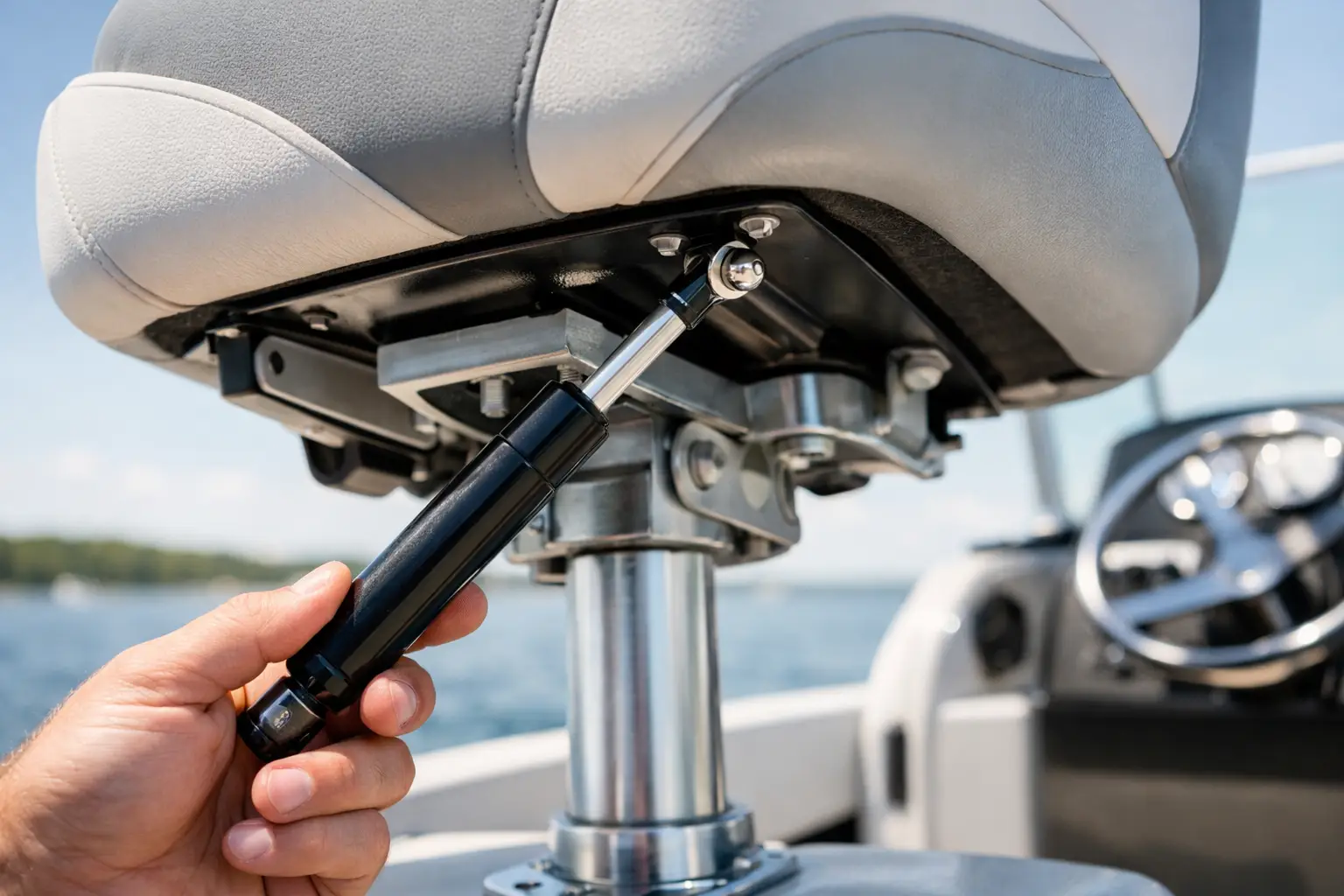
A folding helm seat that won’t stay up is more than a nuisance. When boat seat petrol struts lose pressure, corrode, or were never sized properly in the first place, access becomes awkward, lids drop without warning, and routine storage or battery checks turn into a two-handed job.
In marine seating, the strut is doing a simple job under harsh conditions. It has to lift and hold a seat base or hatch smoothly, cope with vibration and salt exposure, and keep working after repeated opening cycles. That means the right replacement is not just about matching something that looks similar. It has to match the application.
Why boat seat petrol struts fail early
Marine environments are hard on moving hardware. Salt, spray, humidity and heat all work against the seals, rod finish and mounting points. Even on inland boats, moisture and UV exposure can shorten service life if the strut quality is poor or the seat frame flexes under load.
A common issue is corrosion beginning around the rod or end fittings. Once the rod surface is marked, the seal can wear quickly and the strut starts losing force. Another problem is side loading. Petrol struts are designed to work in line with their stroke. If the geometry forces the strut to twist or carry sideways pressure, service life drops fast.
Incorrect force is another frequent cause of trouble. If the strut is underpowered, the seat won’t stay open reliably. If it is too strong, the seat can spring up aggressively, put stress on hinges and brackets, or become difficult to close. In marine seating, where seat bases may include storage compartments, batteries or safety gear underneath, that difference matters.
How to identify the right boat seat petrol struts
The best starting point is the existing strut, if it is original and the seat has been operating correctly. Most units will have a part number, force rating in Newtons, and basic size information printed on the tube. If those markings are gone or the strut was never right, you need to work from measurements and the application itself.
Measure the extended and compressed length
Measure from the centre of one mounting point to the centre of the other. Take one measurement with the seat fully open and another with it closed. These dimensions tell you the strut length and stroke range the seat geometry needs.
This is where many replacement attempts go wrong. A strut that is close in length may still bottom out before the seat closes, or it may not extend far enough to support the seat in the open position. A few millimetres can make the difference between smooth operation and a poor fit.
Check the end fittings and mounting style
Boat seat petrol struts are fitted with a range of end types, including ball sockets, eyelets and forks. The mounting hardware also needs to suit the brackets already on the seat and base. If you are changing fittings, make sure the bracket position and clearance still work through the full movement.
It is also worth checking for wear in the brackets themselves. If the mounting points are loose, bent or rusted, replacing the strut alone may not fix the problem.
Confirm the force rating
Force rating is usually marked in Newtons, often shown as N. This figure needs to suit the seat weight, the hinge location and the angle of installation. Two seats that look similar can need very different force ratings depending on how the load is distributed.
If the original strut lifted the seat properly and the layout has not changed, matching the same force is often the safest option. If the seat has been modified, re-trimmed, fitted with extra gear underneath or had bracket positions changed, a fresh force assessment is the better path.
Marine conditions change the buying criteria
A boat is not the place for a generic strut chosen on length alone. Corrosion resistance matters. Seal quality matters. End fittings and brackets need to cope with vibration and regular movement, not just occasional indoor use.
For marine seating, material selection should be taken seriously. A strut with poor rod protection or low-grade fittings may fit on day one but fail early in service. This is particularly relevant for trailer boats, fishing vessels and workboats that are washed down regularly or exposed to spray.
The application also affects how the strut should be oriented. In many installations, fitting the rod downwards in the closed position helps keep the internal seal lubricated. That can improve service life, provided the geometry allows it. There are exceptions, so it depends on the seat design and available mounting space.
When a standard replacement works, and when it doesn’t
If you have a straight replacement job with clear measurements, visible part markings and standard mounting points, an off-the-shelf solution often does the job well. That is the fastest path when the seat design is common and the original setup performed properly.
Where things get more complicated is with imported seating, older boats, modified helm seats or custom storage bases. In those cases, the original strut may no longer be available, or it may have been an imperfect substitute fitted years ago. That is where technical guidance saves time.
A proper replacement may require matching not only the length and force, but also the end fitting combination, corrosion-resistant finish and opening behaviour of the seat. For workshops and marine fabricators, that level of accuracy reduces rework and avoids trial-and-error ordering.
Signs your boat seat petrol struts need replacement
Most failed struts do not stop overnight. They fade. The seat gets heavier to lift, won’t stay up in wind or vibration, or drops sooner than it used to. That gradual decline is easy to ignore until someone gets a knock on the hand or the seat base slams shut.
Visible oil residue around the rod seal is another warning sign. So are rust marks, pitting on the rod, stiff movement, or end fittings that have developed play. If one strut on a twin-strut setup has failed, the other is often close behind, especially if both have seen the same service conditions.
For commercial or high-use marine applications, replacing before complete failure is often the smarter maintenance decision. It reduces safety risk and keeps access points working as intended.
What to have ready before ordering
If you are sourcing a replacement, good information speeds the process. The most useful details are the extended length, compressed length, stroke, end fitting type, force rating and clear photos of the installed strut and brackets. If the seat has no existing strut, then photos and key dimensions of the seat base, hinge point and opening angle help determine what will work.
It also helps to note whether the boat operates in saltwater, whether the seat is a helm seat or storage base, and whether the setup uses one strut or a pair. Those details affect both product choice and service life expectations.
For trade buyers, maintenance teams and repairers, consistent measurement records make future replacements much easier. If you manage a fleet or service multiple vessels with similar seating layouts, standardising those details reduces downtime later.
Why technical support matters on marine seat struts
Petrol struts are simple components, but the application is rarely as simple as the catalogue page. The wrong force can stress the seat. The wrong length can stop it closing. The wrong finish can shorten life in a marine environment.
That is why specialist support is useful, especially when the original part number is missing or the seat setup is non-standard. A supplier focused on petrol struts can help match measurements, assess likely force requirements and advise on fittings or custom solutions where standard stock is not enough. For buyers who need a practical answer rather than guesswork, that is a better outcome than ordering by appearance.
At petrolstruts.net.au, that is exactly where a specification-led approach helps. You are not trying to make a near enough part work. You are trying to get the seat operating safely and reliably with the right strut for the job.
Boat seat petrol struts are small components, but they carry a lot of the workload in a wet, high-wear environment. Get the measurements right, account for corrosion and mounting conditions, and you will usually avoid the cycle of early failure and awkward fitment that wastes time on the water and in the workshop.